Biman Retains Cargo Monopoly
CAAB overturns earlier position on 3rd terminal as Biman retains exclusive cargo handling role
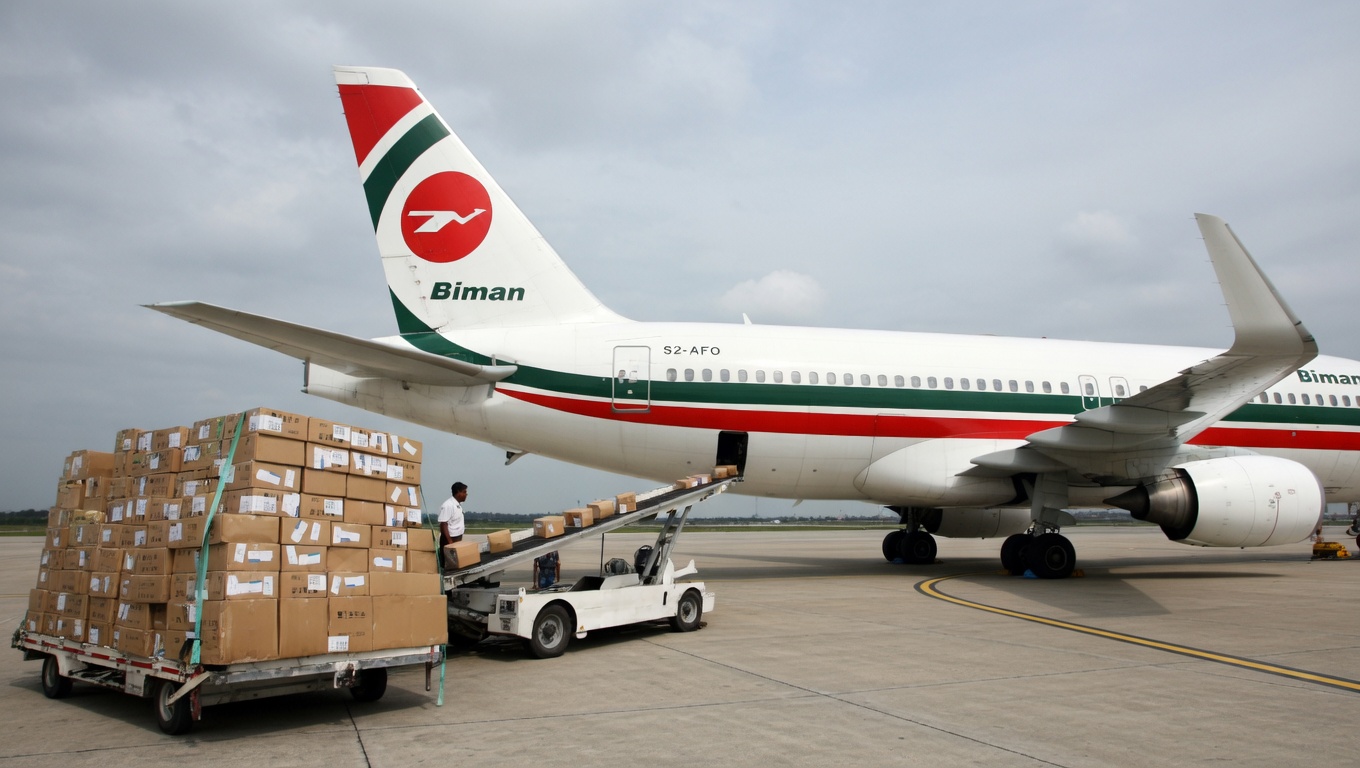
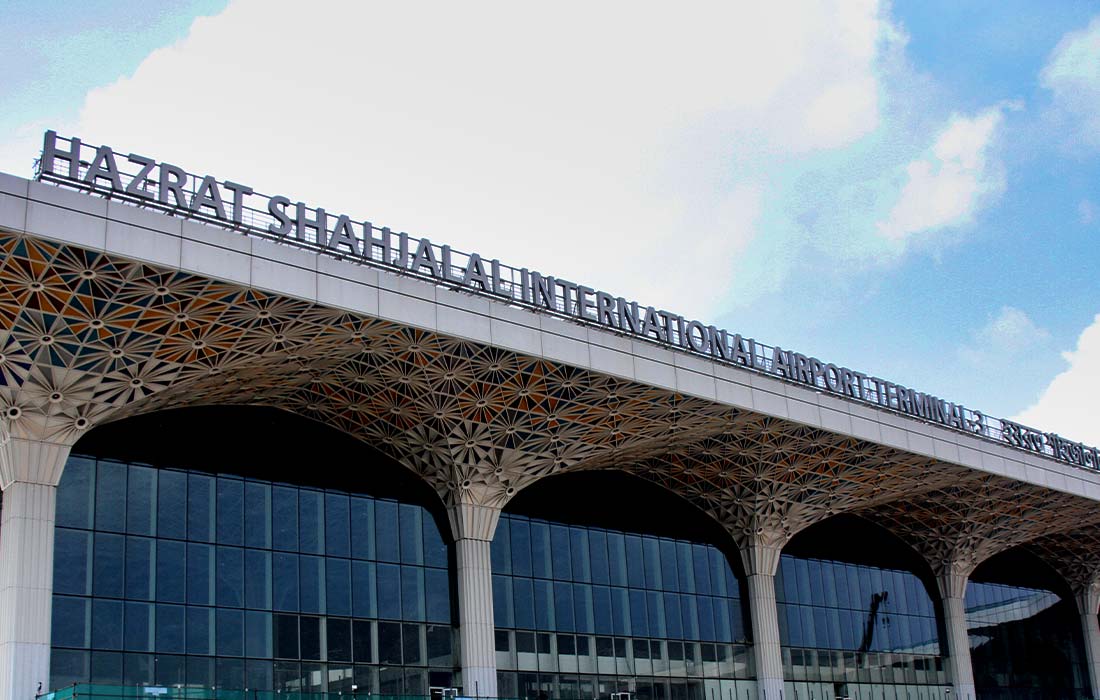
The Civil Aviation Authority of Bangladesh (CAAB) has decided to retain Biman Bangladesh Airlines as the sole cargo handling operator at Hazrat Shahjalal International Airport's Third Terminal, preserving the national carrier's monopoly over one of the aviation sector's most lucrative businesses.
The decision marks a significant reversal of CAAB's earlier position that the Japanese consortium managing the new terminal would be allowed to appoint a second ground handler, raising fresh questions about competition, efficiency and transparency at Bangladesh's largest aviation gateway.
A senior CAAB official involved in the negotiations confirmed to Aviation Express that while a second ground handling operator may still be appointed for passenger- related services, cargo handling at the new terminal will remain exclusively under Biman's control.
"The second handler, if appointed, will be limited to passenger and ground handling activities. Cargo handling will remain solely with Biman," the official said.
Monopoly preserved
The latest decision means competition at the Third Terminal will be narrower than many international airlines had anticipated.
For years, foreign carriers operating in Bangladesh have advocated for multiple handling operators, arguing that competition would improve service quality, reduce turnaround times, lower costs and enhance operational efficiency.
A previous survey conducted among international airlines reportedly found overwhelming support for introducing alternative ground handling providers at the Third Terminal.
Instead, CAAB has opted for a hybrid model. Competition may be introduced in passenger handling services, but cargo operations, one of the most profitable segments of airport handling, will remain under Biman's exclusive control.
The national carrier currently handles virtually all passenger, baggage and cargo operations for airlines operating in Bangladesh, generating annual revenues estimated between Tk 1,000 crore and Tk 1,200 crore.
For Biman, retaining cargo handling secures a critical source of non-ticket revenue. For many industry stakeholders, however, the decision raises fresh questions about competition, efficiency and Transparency.
Lessons from cargo fire
The debate gained urgency following last year's devastating fire at HSIA's Cargo Village, which exposed vulnerabilities in cargo management and prompted renewed calls for structural reforms.
An investigation committee formed after the incident reportedly recommended limiting Biman's role to airline operations and gradually transferring ground handling activities to specialised operators with international expertise.
Although those recommendations were never formally adopted, they intensified industry debate over whether Bangladesh should continue depending on a single operator for such a critical function.
The issue has become even more significant with the arrival of the Third Terminal, which incorporates advanced automated systems and modern cargo processing technologies previously unavailable at HSIA.
Former CAAB Chairman Air Vice Marshal (retd.) Muhammad Mafidur Rahman believes the transition to a highly automated environment presents both opportunities and risks.
"We have installed state-of-the-art equipment that requires world-class operators with experience," he said.
"If Biman has not acquired that experience, there are risks. The lifespan of the facilities could be
reduced, equipment could be damaged and airlines may become reluctant to use the cargo facilities."
He argued that Bangladesh, as the world's second-largest garment exporter, cannot afford inefficiencies in air cargo operations at a time when competing regional airports are aggressively expanding capacity.
"It would have been better if an experienced international operator had worked alongside Biman initially so that knowledge could be transferred before moving to a fully local operation," he added.
Calls for global expertise
K M Mozibul Hoque, Chairman of TAS Aviation Group and a veteran aviation entrepreneur, believes Bangladesh requires a fundamental shift in how airport services are managed.
"Cargo villages and ground handling operations should be managed by internationally experienced operators," he said.
"Ownership may remain with the government, but operations should be entrusted to proven global companies. Professional operators can improve efficiency, safety, compliance and service quality while transferring knowledge to local manpower."
Hoque argued that airports often serve as a country's first impression for investors and visitors and therefore require world-class standards.
"There are sufficient questions about whether Biman's cargo handling is up to international standards. There are serious concerns regarding both capability and integrity," said Mofizur Rahman, Managing Director of Novoair and Secretary General of the Airline Operators Association of Bangladesh (AOAB).
"I think the issue deserves careful consideration, even if it is addressed at a later stage. For now, however, I am happy that competition is at least being introduced in passenger handling services," he said.
Capacity without competition?
Aviation analyst ATM Nazrul Islam questions whether maintaining a monopoly will help Bangladesh unlock its cargo potential.
"Biman has more than five decades of experience, but the rest of the world has moved to automation while we have not," he said.
He noted that cargo handling costs in Bangladesh remain significantly higher than in several neighbouring markets, encouraging exporters to use alternative gateways.
"Currently, it is cheaper in some cases to route cargo through neighbouring countries than to ship directly from Bangladesh. If costs remain high, exporters will continue looking elsewhere."
According to industry estimates, Bangladesh has the potential to handle between 400,000 and 700,000 tonnes of air cargo annually, particularly driven by the ready-made garment sector.
New cargo village, old questions
CAAB officials said discussions are underway to invite an experienced international operator to invest in and develop a new cargo facility in the airport's cargo village area following the recent fire.
The proposal would allow foreign expertise and investment in cargo infrastructure while leaving cargo handling authority at the Third Terminal under Biman.
However, important questions remain unanswered, including ownership structures, operational responsibilities and the selection process.
Those uncertainties have fuelled industry concerns that cargo operations could eventually be subcontracted to a foreign company without a transparent international tender. Neither CAAB nor Biman has publicly addressed the allegations.
Analysts cautioned that any future partnership involving the country's largest cargo gateway must be conducted through a transparent and competitive process to ensure accountability and maximise value for the industry.
Biman defends readiness
Biman, however, insists it is fully prepared. General Manager (Public Relations) Boshra Islam told Aviation Express that the airline has already procured the necessary ground handling equipment and recruited more than 1,000 additional personnel to support operations at the Third Terminal.
"We are ready to conduct passenger and cargo handling operations at the Third Terminal," she said.
She added that Biman is working with the Japanese consortium regarding cargo handling arrangements and has not yet received any official communication regarding the appointment of a second handler.
The cargo handling decision arrives at a critical stage in negotiations over the operation and maintenance of the Third Terminal, one of Bangladesh's largest infrastructure investments.
The Japanese consortium comprising Japan Airport Terminal Company, Sumitomo Corporation, Nippon Koei and Narita International Airport Corporation is expected to assume operational responsibilities of the new terminal after a final agreement is concluded.

Make Comment
Login to CommentPopular News





Subscribe to News Letter
Latest News