Chattogram's grand Mejban: 40-maund meat feast with finance minister
In Chattogram, hospitality isn’t just a gesture. It's a century-old statement carved in meat, spices, and the sweat of master chefs
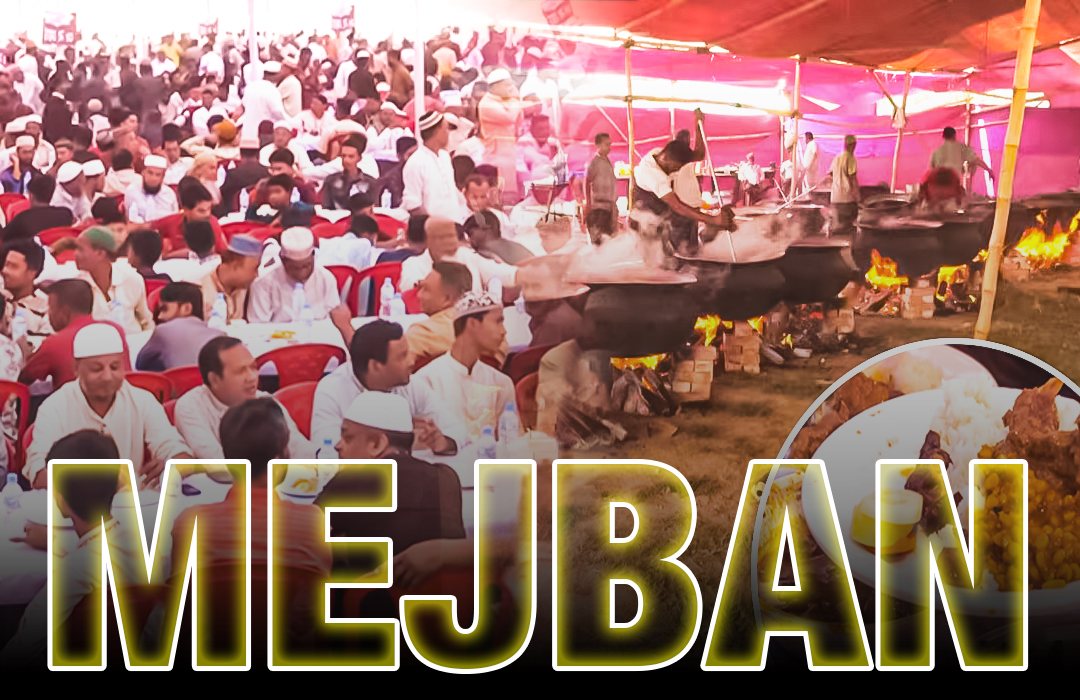
Collage: Aviation Express
The air above Bandar Stadium in Chattogram is thick, not with the usual salt breeze from the Bay of Bengal, but with something far more intoxicating: the aroma of forty maunds of beef and mutton simmering in over a hundred massive harees (cauldrons). Inside each haree, a symphony of ginger, garlic, cumin, poppy seeds, and the irreplaceable sorsher tel (mustard oil), the soul of Chattogram cuisine, transforms raw meat into something approaching the divine.
This is no ordinary Friday iftar. This is mezbaan, Chattogram’s answer to the question 'how do you honor a son of the soil who has risen to become the nation’s Finance and Planning Minister?'
For Amir Khosru Mahmud Chowdhury, the newly appointed guardian of country’s economic future and a proud Chatgaiya, his community has rolled out the ultimate red carpet with a feast designed to feed 10,000 to 12,000. Not in some air-conditioned banquet hall with assigned seating and name cards, but in the ancient, egalitarian tradition of mezbaan, where the CEO sits beside the rickshaw puller, where the elite and the average share the same plate, the same rice, the same steaming chunks of meat swimming in nolir jhol (bone marrow gravy).
The Anatomy of a Mega-Mezbaan
Walk through the organized chaos unfolding at Bandar Stadium, and you witness something that feels almost archaeological, a living relic of ninth-century hospitality rituals being performed with military precision in 2026.
Thirty to thirty-five cooks, led by a head chef whose authority rivals that of a ship’s captain, orchestrate the culinary ballet. Their hands move with practiced certainty with slicing, stirring, tasting, adjusting. “This is more than cooking,” says one baburchi (chef), sweat glistening on his forehead despite the evening cool. “From yesterday evening until now, we've been at it. But when thousands of people eat and smile? That’s the joy (Oitai anondo)”.
The mathematics of the mezbaan are staggering. 7 cows and 15 goats have surrendered themselves to this cause. The meat, marinated in layers of tradition as much as spice, is accompanied by chola (chickpeas) and moog dal (mung lentils), the texture and protein balance that turns a meat dish into a complete meal.
But here’s where this particular mezbaan diverges from template with separate arrangements, a dedicated pandal (tent), for the Hindu community.
“Our Sanatan brothers stood with us during the election”, explains one organizer, his voice carrying both pragmatism and warmth. “Strengthening that bond of harmony (sompriti), isn’t just politics. It’s Chatgaiya tradition.”
A Thousand Years of Feeding Strangers
To understand why Chattogram throws feasts while Dhaka throws press conferences, you need to rewind to the ninth century. Arab merchants, those original globalizers, didn’t just trade goods with Chattogram’s Muslim businessmen; they traded customs. The concept of mezbaan likely sailed into the port city along with Persian carpets and Arabian incense.
The word itself, mezbaan, comes from Persian: mez (table) and ban (keeper), literally, ‘keeper of the table’. But in Chattogram, it evolved into something grander with a social contract written in ghee and sealed with rice.
‘Once upon a time’, recalls an elderly attendee, adjusting his panjabi as he waits for iftar, ‘they’d beat drums in the market to announce a mezbaan. Now it’s phone calls and WhatsApp group messages. But the appeal? That hasn’t diminished even a fraction’.
What makes mezbaan democratically radical is its fundamental premise. When you throw a mezbaan, you don't send selective invitations. The rich man who can afford to slaughter multiple cows doesn’t restrict his guest list to other rich men. The poor arrive. The middle class arrives. Politicians and porters, teachers and tempo drivers, all arrive. And crucially, all are served the exact same food from the exact same pots.
This isn’t charity with its inherent hierarchies. This is hospitality (atitheyota) as a great equalizer, a temporary suspension of Bangladesh’s otherwise rigid social strata.
Why Meat Matters (And Why It’s Always Mustard Oil)
Let’s talk about the food itself, because to discuss Chattogram’s mezbaan without discussing the meat is like discussing the Bay of Bengal without mentioning water.
The preparation begins not hours but days in advance. The meat must be fresh, halal, and crucially, from animals of a certain size and health. Forty maunds, approximately 1,500 kilograms, of meat requires not just purchasing power but relationships with suppliers, butchers who understand the stakes.
Then comes the marinade with ginger and garlic paste (ada-roshun bata), cumin (jeera), poppy seeds (posto), nuts, and the enigmatic ‘personal’ blend every head chef guards like nuclear codes. But the non-negotiable element is Sorsher tel. That pungent, golden liquid is to Chattogram cuisine what soy sauce is to Chinese food, theoretically optional, practically sacrilegious to omit.
“Sorsher tel na thakle mezbaan hoy na”, insists a cook, his statement absolute. Without mustard oil, it simply isn’t mezbaan.
The cooking method itself is an endurance test. Massive wood fires, constantly tended. Stirring with ladles the size of cricket bats. Tasting, adjusting seasoning, tasting again. The meat must be tender enough to fall apart at the gentlest prodding, yet substantial enough to feel like a meal. The gravy, jhol, must have body, a richness derived from bone marrow and time, not from artificial thickeners.
When finally served atop steaming white rice, with the nolir jhol pooling around the grains, it becomes more than food. It becomes memory, identity, home.
The Political Palate
But let’s not be naive. This mezbaan, while rooted in tradition, unfolds in 2026’s political theater. Amir Khosru Mahmud Chowdhury isn’t just any Chatgaiya. He’s the Finance and Planning Minister, a position that controls budgets, allocations, and economic strategy for 17 crore Bangladeshis.
When local organizers throw a 10,000-person feast in his honor, it's simultaneously, a genuine celebration; because Chattogram takes fierce pride in its son rising to national prominence, a political statement, a demonstration of local support and organizational capacity; cultural preservation, an excuse to perform tradition on a grand scale and social cohesion, bringing together diverse communities under one culinary tent.
“Not only in Bangladesh, but outside Bangladesh too, Chattogram’s mezbaan has a separate identity, a special characteristic”, notes one organizer, his chest visibly swelling with regional pride. “People have always been curious about it”.
The deliberate inclusion of the Hindu community, complete with separate arrangements to respect dietary practices, adds another layer. In Bangladesh’s frequently polarized religious landscape, sharing a mezbaan becomes a quiet counter-narrative, an insistence that sompriti isn’t just a buzzword but a practice, literally plated and served.
The Egalitarian Plate
Perhaps the most subversive aspect of mezbaan is what happens when people actually sit down to eat. In a society where your family name, your university, your neighborhood determine your social trajectory, mezbaan temporarily scrambles the algorithm.
“Leaders and workers (neta-kormí), everyone together, enjoying this mezbaan as iftar,” explains an attendee, his description matter-of-fact but profound. Rich and poor, dharmik (religious) and secular, old and young, all seated not according to status but according to when they arrived and where there’s space.
The plate itself is often shared with three, four, sometimes five people around one large thala (plate), containing hand-mixed rice and meat in companionable silence or animated conversation. There’s no pretense here, no performance. Just the primal human act of eating together, which anthropologists tell us is how we first learned to trust strangers.
Death, Birth, and Everything Between
Mezbaan marks life’s major coordinates in Chattogram. Death anniversaries (mrittu barshiki), baby naming ceremonies (akika), kulkhani rituals, iftar gatherings, welcoming new guests, any event that deserves commemoration can host a mezbaan.
“This tradition of feeding people until their bellies are full has been continuing for ages,” reflects an elderly participant, his tone carrying both nostalgia and gratitude.
What’s changed isn’t the essence but the logistics. Those market-square drum announcements have migrated to mobile phones. The guest lists, once determined by who heard the drums, now spread through family WhatsApp groups and community networks. The scale has grown with population and wealth, forty maunds today might have been ten maunds a generation ago.
But walk through any mezbaan in Chattogram, including this ministerial mega-feast at Bandar Stadium, and you’ll find the core unchanged. The insistence on abundance, the rejection of exclusivity, the positioning of food as social glue rather than status marker.
The Legacy in a Ladle
As the call to iftar echoes across Bandar Stadium and 10,000 people lift their first morsels of meat, rice, and jhol to their mouths, something ancient and something very modern collide.
In ancient times, a hospitality tradition that predates Bangladesh, predates even the concept of Bengal, reaching back to merchant sailors and port cities where feeding strangers was both courtesy and commerce.
But in modern days, a political ecosystem where a minister’s local support gets measured not in poll numbers but in cauldrons, where secular and religious communities share space and sustenance, where regional identity asserts itself through culinary confidence.
Amir Khosru Mahmud Chowdhury, navigating spreadsheets and GDP projections in Dhaka, might sometimes forget the taste of perfectly cooked mezbaan. But Chattogram won’t let him. This feast, with its thirty-five chefs and seven cows and fifteen goats and rivers of mustard oil, means many things like honor, celebration, political statement and cultural preservation.
But mostly, it’s a reminder, to the minister, to Bangladesh, to anyone paying attention, that some traditions aren't quaint relics to be archived and forgotten. They’re living practices that still have something to teach us about who we are, who we’ve been, and who we might yet become.
One plate at a time.

Make Comment
Login to CommentPopular News




Subscribe to News Letter
Latest News