Climate change, El Niño may raise turbulence risk: study cited
 Desk Report
| Published: Wednesday, November 25, 2026
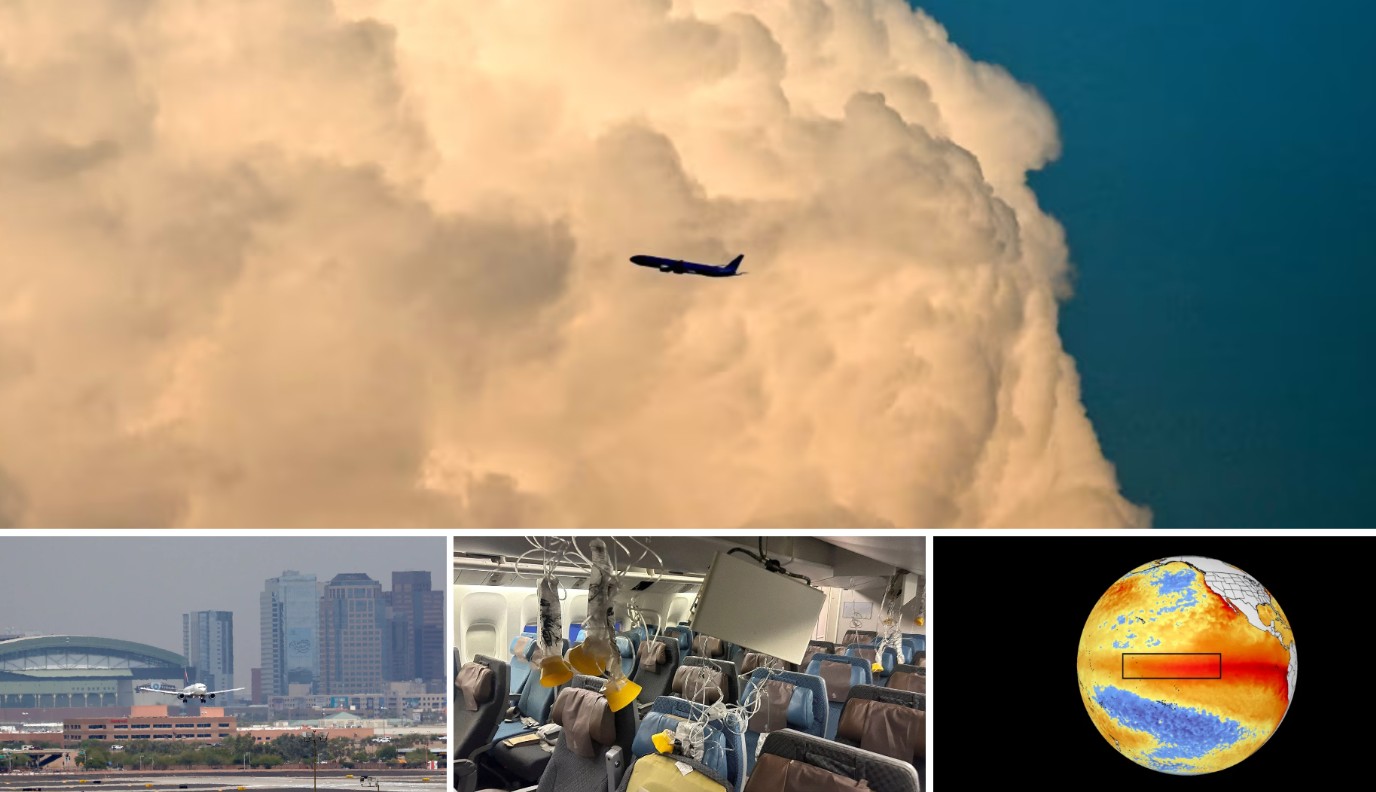
-Collage
A strong El Niño and a warming climate could make aviation weather hazards such as turbulence, icing, and extreme heat more frequent and harder to predict, US network CNN reported, citing scientists.
CNN opened with the November 1 Learjet 60 crash in Florida, which killed all nine people aboard. Its co-pilot reported light ice buildup and moderate turbulence less than two minutes before a mayday call, the report said. Investigators are still working to establish the cause and are looking closely at the weather, it said.
Turbulence
CNN said that wind shear near the jet stream causes clear-air turbulence, which appears without warning and is invisible to standard aircraft radar. A 2023 study found that climate change had increased severe clear-air turbulence over the North Atlantic by 55 percent since satellite observations began in 1979, it reported.
Paul Williams, a professor of atmospheric science at the University of Reading, said some locations could see three times as much of this kind of turbulence in the coming decades, which could mean many more bumpy flights if forecasting does not keep up. He said El Niño also increases wind shear at flying altitudes, with a roughly 20 percent rise during forceful events. A super El Niño in winter 1997-98 saw a spike in pilot reports of turbulence over the US and North Atlantic. Williams said the current event is "undoubtedly going to lead to a lot more moderate and severe turbulence."
The report pointed to Singapore Airlines flight SQ321 in May 2024, which hit severe turbulence over Myanmar and made an emergency landing in Bangkok with more than 70 people injured. A passenger death on that flight is believed to be the first on a commercial flight caused solely by turbulence in decades, the report said. It said the previous recorded case was a United Airlines flight in December 1997, also during a strong El Niño.
It said the injury risk remains low, especially on large airliners, which are designed to absorb turbulence. Williams advised keeping seatbelts fastened and sitting near the middle of the aircraft.
Icing
Icing occurs when an aircraft meets supercooled water droplets, which freeze on impact and can reduce lift, add weight and drag, and block sensors or reduce engine power, the report said. Julie Haggerty, a scientist at the US National Center for Atmospheric Research, said research on icing was driven by the 1994 American Eagle Flight 4184 crash in Indiana, which killed all 68 people aboard.
Scientists are not yet sure how climate change will affect icing, CNN said. A recent report by the European Union Aviation Safety Agency (EASA) said it could change how often icing happens, where, and at what altitude. "A warmer planet does not automatically mean less aircraft icing," an EASA spokesperson said.
Heat
Hotter air is less dense, making it harder for aircraft to generate lift. On very hot days, especially at airports with short runways, airlines may have to offload passengers or cargo. It cited Florence, Italy, where a London-bound flight last year had to offload 20 passengers when temperatures reached 95°F (35°C). In the Middle East, airlines commonly schedule long-haul flights for early morning or late at night, it said.
Forecasting
Forecasters combine weather forecasts, radar data, and pilot reports to predict turbulence, but models can miss small, fast-developing systems around mountains and thunderstorms. LIDAR could make clear-air turbulence visible, but Williams said it is expensive and adds weight. It also described a machine-learning system called ALPHA for identifying areas with high ice content and a new US forecasting system launched in March by the National Oceanic and Atmospheric Administration that updates with radar data every 15 minutes. Whether technology can keep pace with the weather hazards ahead is the key question, the report said.

Make Comment
Login to CommentPopular News



Subscribe to News Letter
Latest News