Dubai airport drone attack ignites global aviation crisis
Drone strikes near Dubai airport deepen worldwide flight disruptions as US-Israel war against Iran enters thirteenth day
 Desk Report
| Published: Friday, March 13, 2026
Desk Report
| Published: Friday, March 13, 2026
File photo
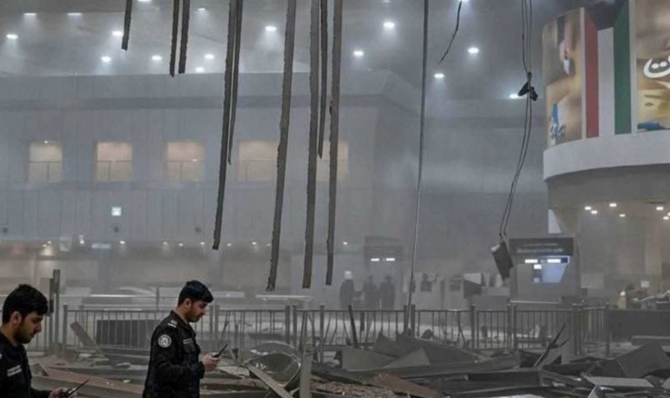
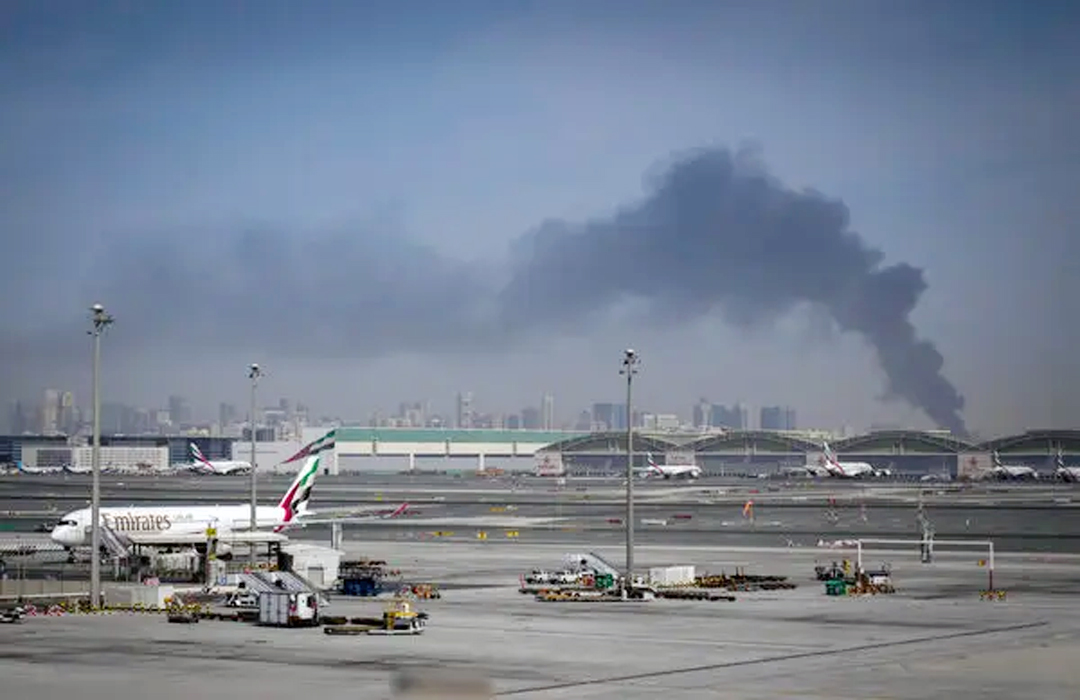
Two drones fell near Dubai International Airport on Wednesday, injuring four people and highlighting escalating threats to Gulf aviation infrastructure as US-Israel military operations against Iran plunge global air travel into its worst crisis since Covid-19 pandemic.
The incident and wider Gulf aviation crisis pose economic, social, and mobility risks for Bangladeshis, especially migrant workers and travellers, even though immediate physical impact is limited to one Bangladeshi so far.
Dubai’s media office confirmed incident occurred near world’s busiest hub for international passengers but stated air traffic continued operating normally. Reuters witnesses reported no visible damage to airport facilities.
One Bangladeshi national was among the four people injured when two drones fell near Dubai International Airport, though reports describe the injuries as minor.
Conflict, now in its 13th day, has caused tens of thousands of flight cancellations, rerouting and schedule changes worldwide. Middle East airspace, including Qatar’s, remains largely closed due to missile and drone threats disrupting critical transit points for long-haul international travel.
Flights at Dubai resumed and are officially ‘operating as normal’, so there is no current mass-stranding of Bangladeshi passengers specifically at DXB from this single attack, unlike full closures seen earlier in the conflict. There were no flights to Dubai or any other UAE destination between February 28 and March 3. From March 4 to Friday, 58 flights were planned or operated from Dhaka airport.
Bahrain’s Civil Aviation Affairs announced on Wednesday that several Gulf Air aircraft without passengers and some cargo planes were relocated to alternative airports to ‘ensure continuity and efficiency of air operations’ during crisis. Tracking data on FlightRadar24 showed multiple passenger jets moving to Saudi Arabian locations over past 24 hours.
As of Wednesday, Gulf carriers such as Emirates, Etihad, and Qatar Airways, which normally carry about 90 thousand passengers per day through their hubs, are operating significantly below normal capacity; this squeezes seat availability for Bangladeshi passengers who rely on these hubs for onward travel.
Attack marked renewed threat after Dubai airport sustained damage on first day of conflict alongside Abu Dhabi and Kuwait’s international airports. Regional carriers including Dubai's Emirates, Abu Dhabi's Etihad and Qatar Airways have resumed limited flights but remain well below normal capacity.
Daily flights by main UAE airlines exceeded 600 over weekend but rising numbers flattened before dipping slightly on Tuesday, according to Flightradar24 data. Time-sensitive air cargo operations have been heavily affected.
Millions of Bangladeshi migrants work in GCC states (UAE, Saudi Arabia, Qatar, Kuwait, Bahrain, Oman), forming a critical remittance backbone for Bangladesh’s economy. Repeated attacks on Gulf aviation infrastructure raise the risk of stricter security, temporary closures, and more volatile flight schedules, which can delay workers’ departures, contract renewals, and emergency trips home (e.g., family illness, funerals).
If employers perceive long-term instability or face higher operating costs, there is a medium‑term risk of slower new recruitment or non‑renewal of some contracts, especially in sectors like aviation support, logistics, hospitality, and construction around airports.
Conflict has disrupted key oil export corridor, triggering spike in jet fuel prices. Higher fuel costs are pushing airfares upward on some routes, deepening concerns about broader impact on travel demand globally.
Vietnam government warned Wednesday that domestic airlines may face fuel shortages as soon as next month, highlighting ripple effects extending beyond Middle East region.
Jet fuel prices have spiked because the conflict affects a key oil export corridor, putting upward pressure on airfares; Bangladeshi migrant workers and students, who are very price‑sensitive, may face higher ticket costs and fewer cheap options via Gulf hubs.
Dubai International Airport reportedly loses an estimated USD 10 lakh (nearly 12 crore 50 lakh) for every minute it remains closed. Full 24-hour shutdown could potentially result in losses reaching USD 144 crore (about TK 1,77,290 crore 78 lakh 40 thousand), according to Daily Mail UK.
A prolonged crisis could indirectly slow economic activity in Gulf economies (tourism, trade, logistics), which in turn can reduce demand for low‑wage migrant labour from countries like Bangladesh.
For Bangladesh, this situation underscores the need to diversify migrant destinations beyond the GCC, strengthen consular protection and crisis‑response mechanisms for workers in the Gulf, and improve direct air links (e.g., more non‑stop flights avoiding the most volatile airspace where possible) to reduce dependence on a small number of hubs.
Economic implications extend beyond airport operations, impacting airlines, businesses and broader economy reliant on flow of people and goods. Closures trigger ripple effect throughout interconnected global transportation networks.
Stakeholders face pressure to strategize effective contingency plans for minimizing downtime and maximizing operational efficiency. Dubai’s status as premier international destination makes operational continuity critical for global connectivity.
Travellers planning journeys through Dubai and Gulf region must stay informed about operational status to mitigate disruptions in travel plans.
Notably, for Bangladesh specifically, the UAE has recently become a top, or in some periods the top, remittance source. According to April 20, 2024 media report, Bangladesh Bank data show that Bangladeshi workers in the UAE sent about USD 327-365 crore over July–March and July–April of FY2023–24, representing roughly 19% of Bangladesh’s total remittances in that period. Another Bangladesh Bank–based report, published in the media on Sep 28, 2024, puts remittances from the UAE at USD 207 crore in FY22, USD 303 crore in FY23, and about USD 463 crore in FY24, confirming a strong upward trend in money sent home by Bangladeshi expatriates in the UAE.
As long as Bangladeshi migrants in the UAE can keep their jobs and get paid, aggregate remittance flows should continue, even if flights are disrupted or rerouted; money moves through banking and exchange channels that do not strictly require stable passenger traffic.
However, repeated attacks and airspace closures can create logistical delays (workers’ travel home, return from leave, new recruits) which may cause timing shifts in remittance inflows, some months lower, some months unusually high, without necessarily changing the annual total very sharply.
Source: Reuters, Daily Mail UK, CBS News

Make Comment
Login to CommentPopular News





Subscribe to News Letter
Latest News