Korean Air, Asiana Cut December Fuel Surcharges as Oil Prices Fall
 Desk Report
| Published: Tuesday, November 17, 2026
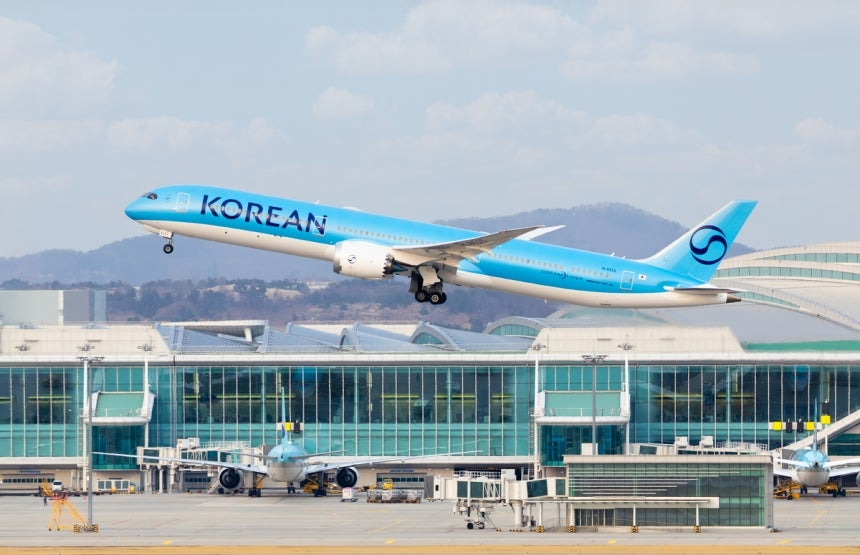
Photo courtesy of Korean Air
Fuel surcharges on international flights will fall next month as global oil prices decline on expectations of an end to the U.S.-Iran war and forecasts of a supply glut. International tickets issued in December will carry a fuel surcharge at level 25, down two notches from level 27 applied this month, according to industry sources on the 16th. Round-trip tickets to the U.S. East Coast issued next month are expected to cost about 60,000 won less as a result.
Korean Air announced on the same day its fuel surcharges for international flights departing South Korea, effective from Dec. 1 to 31. Based on great-circle distance by route, one-way charges were set at between 50,800 won and 377,800 won.
One-way surcharges by route were set at 50,800 won for the shortest Northeast Asian routes such as Fukuoka and Qingdao (under 499 miles); 69,500 won for major Northeast Asian routes such as Tokyo and Beijing (500 to 999 miles); 169,600 won for major Southeast Asian routes such as Bangkok, Singapore and Ho Chi Minh City (2,000 to 2,999 miles); 336,400 won for Western European and U.S. West Coast routes such as London, Paris and Los Angeles (5,000 to 6,499 miles); and 377,800 won for U.S. East Coast routes such as New York and Washington (6,500 to 9,999 miles).
Compared with this month's surcharges of 55,600 won to 408,100 won, the minimum and maximum amounts fell 8.6% and 7.4%, respectively. One-way reductions by major route were 4,800 won for the shortest Northeast Asian routes, 6,500 won for major Northeast Asian routes, 16,200 won for major Southeast Asian routes, 33,700 won for Western European and U.S. West Coast routes and 30,300 won for U.S. East Coast routes. Round-trip surcharges on U.S. East Coast routes such as New York will therefore fall by 60,600 won.
Asiana Airlines Also Lowers Charges
Asiana Airlines also announced on the same day its fuel surcharges for international tickets departing South Korea issued from Dec. 1 to 16. Based on great-circle distance by route, one-way charges were set at between 57,500 won and 322,400 won. Fuel surcharges are normally announced for one month based on the ticketing date, but Asiana's December surcharges apply only through the 16th. From the 17th, tickets will be issued under the merged Korean Air system, and Korean Air's December surcharges will apply.
One-way surcharges by route were set at 57,500 won for the shortest Northeast Asian routes such as Fukuoka and Qingdao (great-circle distance under 499 miles); 84,300 won for major Northeast Asian routes such as Tokyo and Beijing (500 to 999 miles); 164,600 won for major Southeast Asian routes such as Bangkok and Ho Chi Minh City (2,000 to 2,499 miles); and 322,400 won for European and U.S. East and West Coast routes such as London, Paris, Los Angeles and New York (5,000 miles or more).
Compared with this month's surcharges of 62,400 won to 351,100 won, the minimum and maximum amounts fell 7.9% and 8.2%, respectively. One-way reductions by major route were 4,900 won for the shortest Northeast Asian routes, 7,900 won for major Northeast Asian routes, 14,300 won for Bangkok and Ho Chi Minh City routes and 28,700 won for European and U.S. East and West Coast routes. On a round-trip basis, surcharges on European and U.S. routes will fall by 57,400 won.
The two carriers cut their surcharges because the average price of Singapore jet fuel (MOPS), the benchmark for calculating December surcharges, came in at $165.66 a barrel for the period from Oct. 16 to Nov. 15, down 4.7% from $173.89 a barrel in the previous calculation period.
After the U.S.-Iran war broke out on Feb. 28, the international fuel surcharge rose from level 6 in March to level 18 in April and then to level 33 in May, the highest level on record. It then fell for three consecutive months in line with declining MOPS prices, to level 27 in June, level 19 in July and level 14 in August. It subsequently climbed for three straight months, to level 21 in September, level 23 in October and level 27 in November, before falling for the first time in four months.
Fuel surcharges on international flights are a mechanism under which airlines pass part of the cost burden from rising oil prices on to fares, and they are billed separately from the ticket price. The actual amount charged varies by airline and flight distance.

Make Comment
Login to CommentPopular News




Subscribe to News Letter
Latest News