World’s first megawatt-class hydrogen turboprop engine completes maiden flight test
The AEP100 hydrogen engine completed a 16-minute maiden flight, marking a key step toward cleaner aviation.
 Desk Report
| Published: Tuesday, April 07, 2026
Desk Report
| Published: Tuesday, April 07, 2026
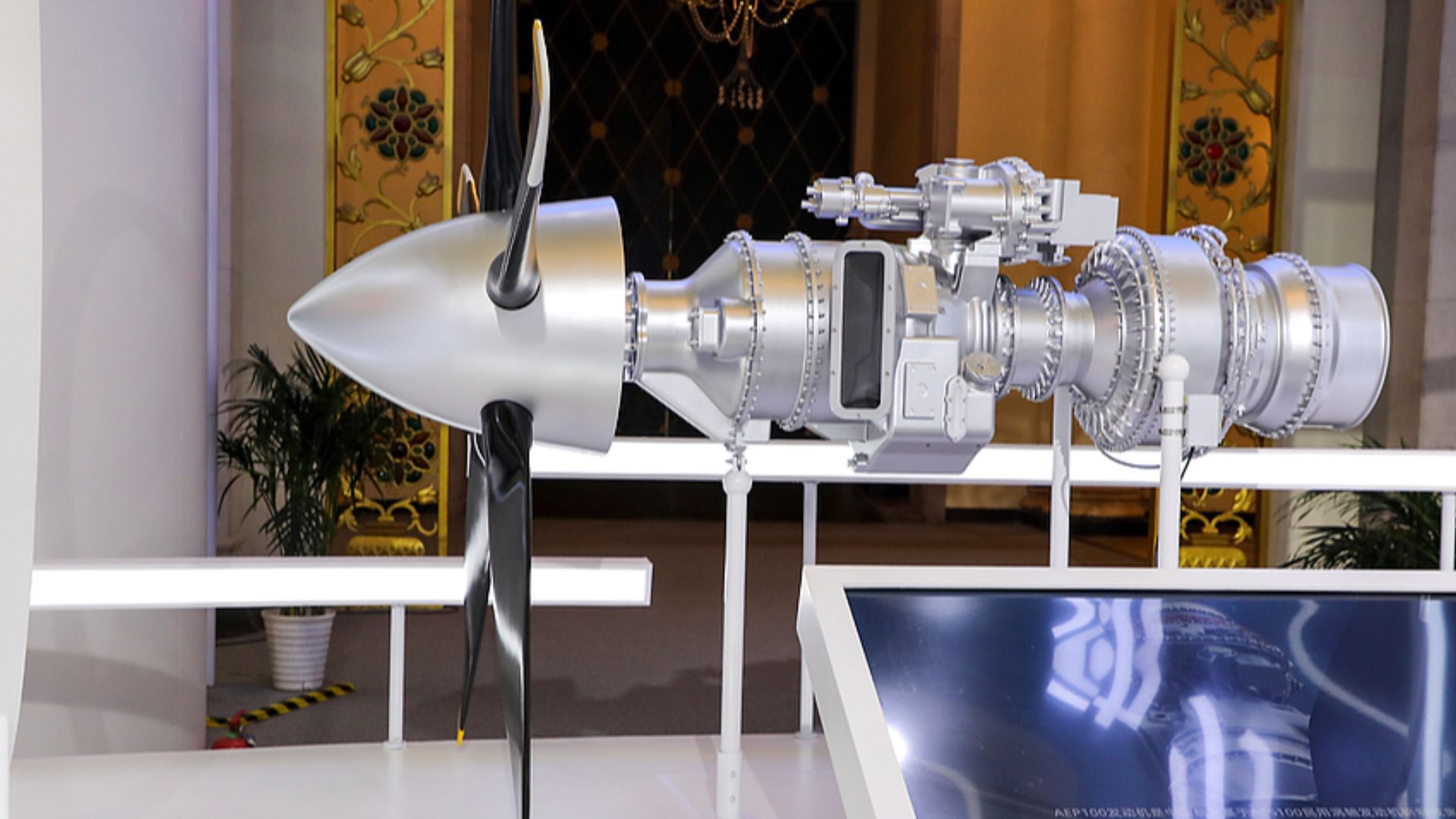
An AEP100 engine. Photo: Collected
China has completed a landmark test in hydrogen-powered aviation, as a large unmanned cargo aircraft successfully flew using a megawatt-class hydrogen-fueled turboprop engine.
The maiden flight took place on Saturday at an airport in Zhuzhou, Hunan province, marking the first time such a powerful hydrogen aviation engine has been tested in real flight conditions.
The aircraft, weighing about 16,535 pounds (7.5 metric tons), was powered by the domestically developed AEP100 engine. The flight marks a key step forward in efforts to build cleaner, more sustainable aviation systems.
First real-world test of powerful hydrogen turboprop engine
The 16-minute test flight covered a distance of about 22 miles (36 kilometers). The aircraft reached a speed of approximately 137 mph (220 km/h) and maintained an altitude of around 984 feet (300 meters).
According to the Aero Engine Corporation of China, the engine operated smoothly throughout the flight and remained in stable condition. After completing all planned maneuvers, the aircraft returned safely to the airport.
This test marks the world’s first successful flight of a megawatt-class hydrogen-fueled turboprop engine, moving the technology beyond laboratory development into real-world application.
From lab innovation to engineering reality
Experts involved in the project said the flight represents a major transition from experimental research to practical engineering use. It confirms that hydrogen-powered propulsion systems can be integrated reliably with aircraft platforms.
They explained that China has now built a complete technical chain for hydrogen aviation engines. This includes everything from core components to full system integration.
The successful demonstration also validates the engineering reliability of hydrogen-powered flight systems. It lays the groundwork for future industrial use of hydrogen energy in aviation.
Boost to the broader hydrogen ecosystem
The development is expected to influence multiple parts of the hydrogen industry. Experts said it will help accelerate progress across the entire value chain.
This includes upstream production of green hydrogen, as well as midstream storage, transportation, and refueling infrastructure. It will also support downstream sectors such as advanced equipment manufacturing and new materials development.
Such coordinated growth could strengthen the push toward a low-carbon aviation industry. The technology is seen as a key contributor to cleaner air transport solutions in the coming decades.
Path toward commercial aviation use
Specialists noted that hydrogen-powered aviation could become more viable as the cost of green hydrogen continues to fall. Lower production costs would improve both economic feasibility and energy security.
In the near term, the technology is expected to be used in low-altitude operations. These include unmanned cargo transport and logistics services to remote or island regions.
Over time, applications could expand to regional aircraft and eventually to larger passenger planes. This gradual rollout would allow further testing and scaling of the technology.
The successful flight is an early but important step in that direction. It highlights how hydrogen could play a central role in the future of sustainable aviation.
Source: Interesting Engineering

Make Comment
Login to CommentPopular News





Subscribe to News Letter
Latest News