
Abandoned airfields hold key to economic revolution
প্রকাশ: শনিবার । নভেম্বর ২২, ২০২৫
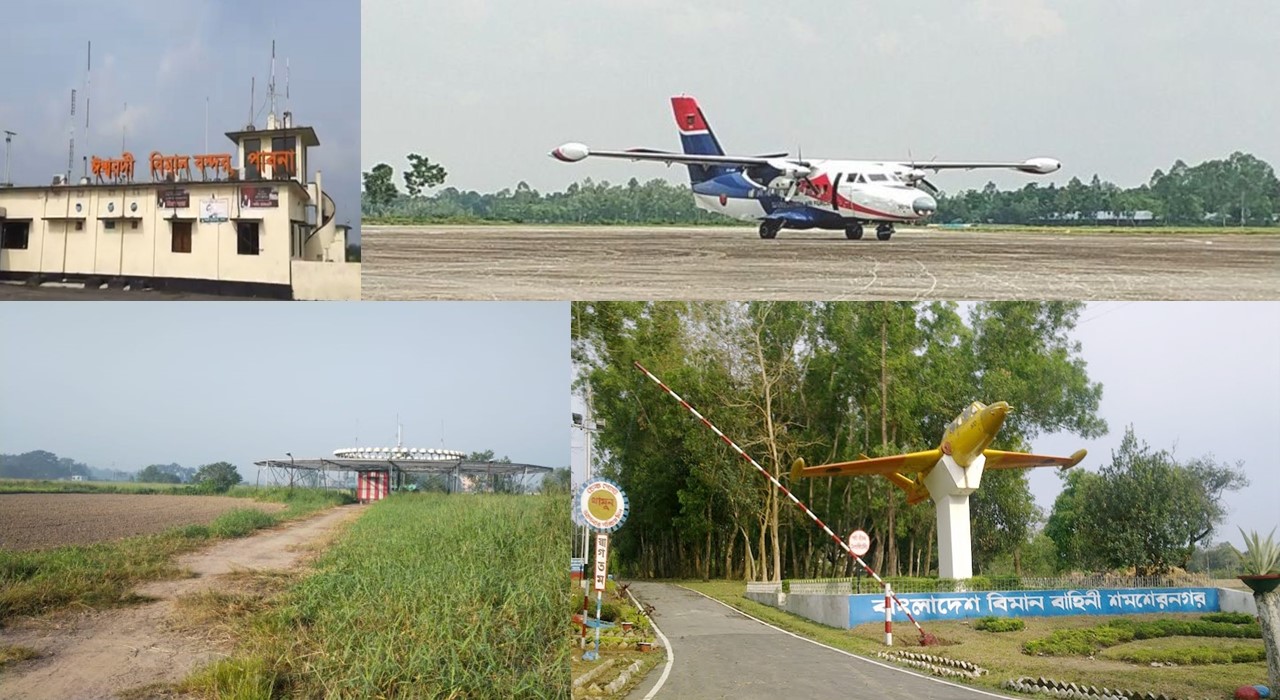
Civil Aviation Authority of Bangladesh plans to reactivate seven of 28 British-era airports starting July, with Bogura set to become operational first as government invests crores to reduce transport pressure and boost tourism economy.
Bangladesh is preparing to breathe new life into seven long-abandoned airports from the British colonial era, with officials confirming that commercial flights could resume as early as July this year. The move comes as authorities seek to ease pressure on overcrowded roads and railways while unlocking fresh opportunities in tourism and trade.
Air Vice Marshal Md Manjur Kabir Bhuiya, Chairman of the Civil Aviation Authority of Bangladesh, told media on April 13 this year that the airports would reopen in phases based on readiness. Bogura Airport, dormant for two decades, is expected to lead the way with flights beginning in July after preparatory work concludes in June. He added that full commercial operations across all seven sites could be achieved within 18 months.
Of the 28 airports constructed during British rule, only eight currently maintain regular flight operations to Dhaka. Cox's Bazar recently joined the international roster, while Rajshahi, Jessore, Saidpur and Barisal handle domestic traffic. Seven more facilities—Bogura, Ishwardi, Thakurgaon, Lalmonirhat, Comilla, Shamshernagar and Tejgaon—are now slated for revival.
Sources at CAAB revealed that Bogura Airport, whose construction spanned 1996 to 2000, will complete runway expansion within two months. Plans are already in motion to activate at least three additional airports next year. Discussions have taken place with Biman Bangladesh Airlines, US-Bangla, Novoair and Air Astra regarding increased flight frequency.
The interim government recently received a comprehensive report outlining renovation costs and logistical requirements for each site. Bogura Airport alone requires an investment of 120 crore taka, with preparations now nearing completion. The government has already allocated 10 crore taka specifically for Bogura's runway construction, and initial groundwork has been finished.
Experts point out that whilst these seven airports hold commercial promise, they currently lack infrastructure for regular operations. Runways measuring 3,000 to 3,500 feet must be extended to 6,000 to 8,000 feet to accommodate modern aircraft. A CAAB engineer, speaking on condition of anonymity, noted that livestock roam freely across some runways, whilst broken boundary walls and missing security posts plague others.
"Runway clearance, expansion and installation of security outposts are essential," the engineer said. "Some airports will require additional land acquisition to strengthen runway and taxiway capabilities."
Ishwardi Airport has gained renewed significance following construction of the Rooppur Nuclear Power Plant. Between 1962 and 1989, air links between Dhaka and Rooppur operated normally. An Export Processing Zone now adds further weight to demands for connectivity, though the airport currently lacks adequate runway length, firefighting services and traffic management systems. Government has initiated expansion works to address these shortcomings.
Comilla Airport, which served the archaeologically rich city until 1976, briefly reopened in 1994 before closing again due to poor passenger numbers. Industrial growth driven by regional EPZs has sparked fresh calls for air connectivity. Similar efforts target Dhaka's Tejgaon Airport, originally built in 1941 for military use and later serving as East Pakistan's main international gateway until the 1980s.
Shamshernagar Airport in tourism-heavy Moulvibazar and Lalmonirhat Airport near the border both lack commercial flight capability despite economic potential. Shamshernagar's location near tea estates and Sylhet's tourist destinations positions it well for tourism development, whilst Lalmonirhat was once Asia's second-largest military airbase during World War II. CAAB has begun hangar construction there as part of plans to establish a regional hub connecting Nepal, Bhutan and northeast India.
Previous attempts to restart operations at Bogura and Ishwardi were abruptly suspended, drawing criticism. Following the political transition on August 5, pressure mounted for action. Locals believe reactivating these facilities, some operational during the Pakistan era, could significantly transform the country's economy and tourism landscape.
Many abandoned airfields retain strategic value beyond civilian use. Tangail Airfield hosts regular military training exercises, whilst Tejgaon primarily handles military and VIP flights. Others like Feni, Patuakhali, Chakaria and Dohazari, all built during World War II, lie completely abandoned despite infrastructure that could serve educational institutions, maritime trade or regional cargo operations.
Because these runways already exist, government could save hundreds of crores in land acquisition costs. What is required now, according to observers, is swift decision-making and effective execution. These silent runways represent a vast foundation for Bangladesh's future economic revolution.
Lighting and
equipment for Bogura Airport are being imported through tenders. Once all work
finishes by June, the country's aviation map will begin expanding once more.