
Bangladesh passport ranks 97th globally, level with North Korea: Henley Index
প্রকাশ: বুধবার । জুলাই ২২, ২০২৬
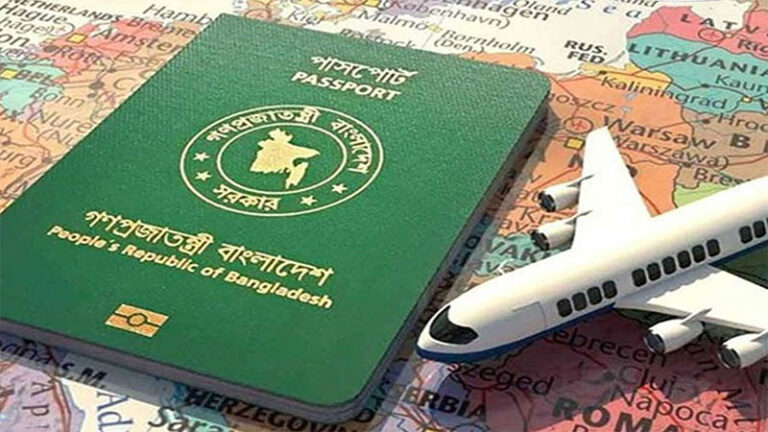
Bangladesh has been ranked 97th out of 199 passports in the latest Henley Passport Index, placing it alongside North Korea and among the weakest passports for international travel despite a three-place improvement from a year earlier, according to the London-based global citizenship advisory firm Henley & Partners.
The Bangladeshi passport offers visa-free or visa-on-arrival access to 35 destinations, the index shows. Only seven countries rank lower: Nepal, Somalia, Yemen, Pakistan, Iraq, Syria, and Afghanistan, which sits at the bottom of the 199-passport ranking with access to just 22 destinations.
The index, now in its 20th year, is compiled using exclusive data from the International Air Transport Association's Timatic database and covers 199 passports across 227 travel destinations.
Within South Asia, the Maldives holds the region's strongest passport at 52nd, with access to 93 destinations, followed by India at 81st with 55 destinations and Sri Lanka at 94th with 39. Bangladesh follows in 97th place, ahead of Nepal at 98th and Pakistan at 101st.
Singapore retained the top position globally for another year, with its passport granting visa-free or visa-on-arrival entry to 192 destinations. The United Arab Emirates, Japan, and South Korea shared second place with 188 destinations each, while Sweden ranked third with 187. A group of 11 European countries—including France, Germany, Italy, Spain, Denmark, and the Netherlands—shared fourth place with 186 destinations apiece.
Henley & Partners said the UAE was the biggest mover of the year, climbing three places since January to join Japan and South Korea in second position — a gain the firm described as the sharpest improvement of any passport since the index was first published in 2006.
Marking the index's 20th anniversary, Henley & Partners said the average passport now provides visa-free access to 108 destinations worldwide, nearly double the 58 destinations recorded when the ranking began two decades ago. The firm said the result reflects the steady expansion of reciprocal visa agreements globally, even as international travel continues to be shaped by rising geopolitical tensions and armed conflict.
"Twenty years of data show that passport power is one of the clearest expressions of a country's geopolitical capital," Christian H. Kaelin, chairman of Henley & Partners and creator of the index, said in comments carried by international media. "The world's strongest passports belong to nations that other countries want as partners—for trade, investment, security, or cooperation. Mobility is ultimately a measure of the value other countries place on their relationship with you."
The report noted a widening gap between the world's strongest and weakest passports. In 2006, Afghanistan ranked last with access to 12 destinations, a 118-destination gap from the top-ranked passport at the time. That gap has since widened to 170 destinations, with Singapore's 192-destination score against Afghanistan's 22.
Sources: Henley & Partners