
Bhimruli’s canals bloom into a guava wonderland
প্রকাশ: শনিবার । এপ্রিল ১৮, ২০২৬
by Shafiullah Sumon, back from Pirojpur
There are places you visit, and then there are places you seem to drift into.
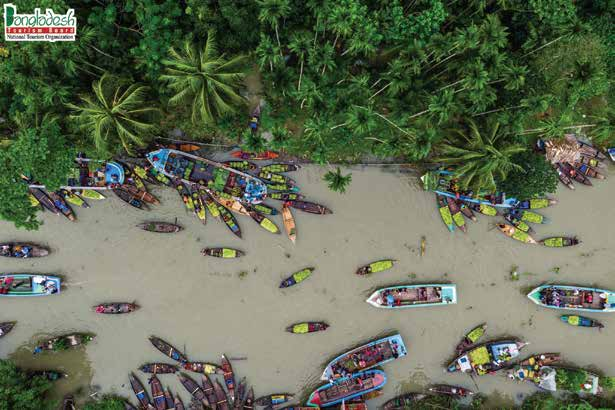
Bhimruli, in Pirojpur, belongs to the second kind. Here, the canals turn into moving corridors of life, where wooden boats arrive one after another, their bellies full of freshly picked guavas, gliding across still water beneath low-hanging branches. What begins as a market soon feels like something far more cinematic—a landscape where trade, nature, and memory move together with the tide.
From July to September, the floating guava market along the Kirtipasha canal in Swarupkathi, under Nesarabad upazila, reaches its seasonal high point. By late July, the harvest is at its richest, and the waterways begin to pulse with wholesale trading.
The journey to Bhimruli prepares you for its pace. The old river route from Dhaka to Barishal still carries a certain romance, especially on an overnight launch where dawn arrives over open water. Yet the newer road journey, eased by the Padma Bridge, has made the destination more accessible, bringing it within a six-to-eight-hour bus ride. Still, no matter how you arrive, the final approach by boat remains essential — it is the slow passage through the canals that introduces the place in its truest form.
As the boat moves inward, the world narrows into green. Guava orchards lean over both banks, their leaves brushing the edges of the water, while sunlight filters through in shifting fragments. Then the market emerges almost without warning: boats packed so closely they seem stitched together, voices rising in gentle negotiation, fruit changing hands directly over the water.
For many visitors, that first glimpse becomes the moment the place truly settles in memory. Nusrat Jahan, who travelled from Dhaka, said the real experience felt far richer than the photographs she had seen online. “The way the boats move through the green canals, filled with fresh guavas, makes the whole place feel like a painting,” she said, describing it as one of the most peaceful travel experiences she has had in Bangladesh.
Yet Bhimruli’s beauty lies beyond the transaction. The real enchantment is in the atmosphere—the sensation of floating through a living orchard, where every bend in the canal reveals another fleeting composition of boats, trees, and mirrored skies. It is a place that rewards slowness, inviting travellers to watch, linger, and let the rhythm of the water set the pace.
That sense of authenticity is what stayed most with Fahim Rahman, who visited with friends. He said what struck him most was how naturally the market blended into everyday village life. To him, it felt less like a tourist spot and more like a living landscape, where the boat ride through the orchards alone made the journey worthwhile.
Step ashore, and the orchards offer another dimension to the experience. Here the source of the floating trade stretches out in quiet abundance, rows of guava trees heavy with fruit, their scent mingling with damp earth and monsoon air. A simple lunch nearby, a little time spent walking the village paths, or even an overnight stay in Pirojpur or Barishal can turn the trip into something deeper than a day’s excursion.
What makes Bhimruli unforgettable is not only the floating market itself but also the way it captures an entire way of life shaped by water. In a country defined by rivers, this seasonal market feels like one of the purest expressions of that relationship—a place where movement, harvest, and landscape come together in one endlessly flowing scene.