
Biman’s Boeing, Airbus deals likely this month
প্রকাশ: মঙ্গলবার । সেপ্টেম্বর ১৫, ২০২৬
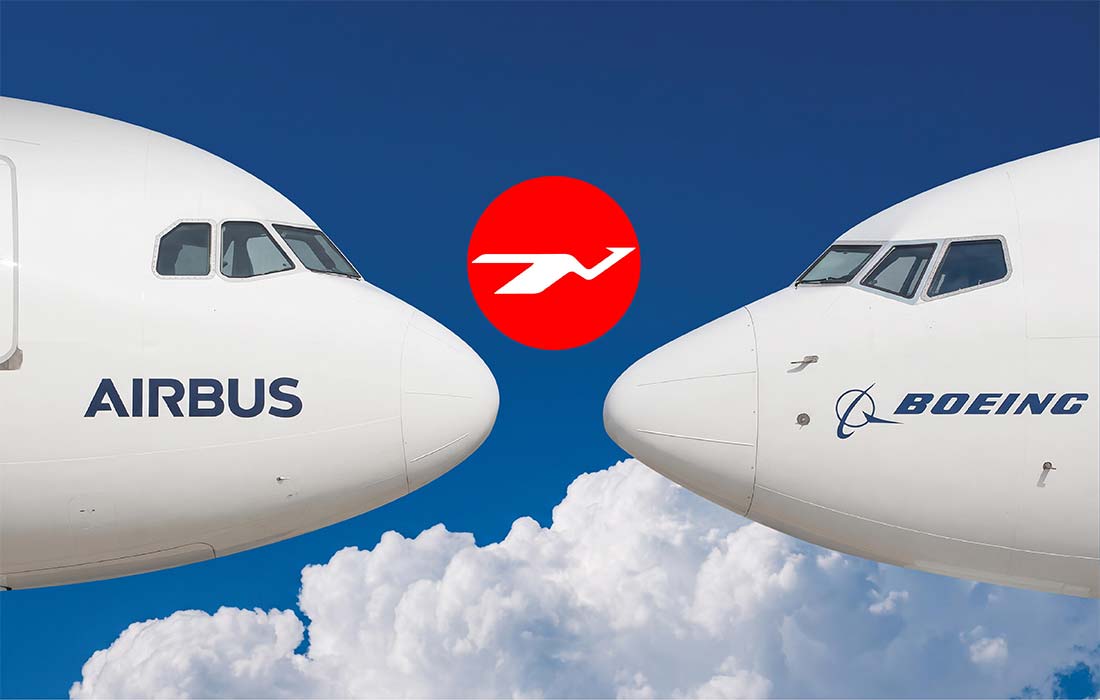
Biman Bangladesh Airlines is moving towards signing separate aircraft acquisition agreements with Boeing and Airbus this month, potentially setting in motion the largest fleet expansion programme in the national carrier’s history, Aviation Express has learnt.
The prospective deals involve another 11 Boeing aircraft and 10 Airbus jets, according to sources familiar with the process.
If concluded, they would come on top of Biman’s US$3.7 billion agreement signed in April for 14 Boeing aircraft, potentially taking its future acquisition pipeline to 35 jets - 25 Boeing and 10 Airbus.
For a flag carrier currently operating only 19 aircraft, the scale would be unprecedented.
The proposed Airbus package comprises four A350-900 widebody aircraft and six A321neo narrowbody jets, while details of the additional 11 Boeing aircraft have yet to be publicly disclosed.
A senior Biman official, requesting anonymity as he was not authorised to speak publicly, said the airline’s techno-finance committee completed its work on the proposed Airbus acquisition by August 31 and submitted its report to the Biman board.
A board sub-committee has also completed its work, with the two sides conducting a final review ahead of the proposed agreement.
“We are ready to sign the Airbus deal. Now we are just waiting for the date and the signatories to be fixed,” the official told Aviation Express.
Biman had earlier communicated its readiness to conclude the Airbus agreement by August 31. Although the deadline passed without a signature, officials now expect the process to move forward in September.
Boeing equation returns
The Boeing development adds a much larger dimension to the expansion.
Biman signed a US$3.7 billion agreement in April for 14 Boeing aircraft: eight 787-10s, two 787-9s and four 737-8s, scheduled for delivery between November 2031 and October 2035.
Sources familiar with the latest discussions said another 11 Boeing aircraft are now under consideration, potentially bringing the total Boeing acquisition to 25.
The figure is significant because sources said the previous interim government had indicated an intention to purchase 25 Boeing aircraft during trade negotiations with the United States over reciprocal tariffs.
The elected government subsequently proceeded with 14 aircraft amid financial considerations, but the remaining 11 have now resurfaced as Biman simultaneously moves towards its Airbus agreement.
The additional Boeing commitment burst into public view from Washington rather than Dhaka.
On August 30, US Special Envoy for South and Central Asian Affairs and Ambassador to India Sergio Gor said on X that President Donald Trump and Prime Minister Tarique Rahman had made “another incredible Deal”, claiming Bangladesh would spend “Billions of Dollars” on additional Boeing aircraft and significantly increase its initial order.
Trump later reshared the announcement and subsequently wrote to Rahman expressing appreciation for his “decision of purchase”.
Dhaka, however, has yet to publicly disclose the number, models, value, financing structure or contractual status of any additional Boeing acquisition.
State Minister for Foreign Affairs Shama Obaed Islam initially suggested Gor could have been referring to the existing 14-aircraft agreement, while State Minister Humaiun Kobir later acknowledged a verbal “principal agreement to buy more”, saying Bangladesh would acquire additional aircraft according to its requirements.
Neither disclosed a number.
Bigger fleet, bigger questions
Biman has a genuine requirement for fleet renewal and expansion.
Its current 19-aircraft fleet includes five turboprops, leaving 14 jets — 10 widebodies and 4 narrowbodies. Its long-term roadmap envisages around 47 aircraft by 2035, while some existing aircraft will need replacement as they age.
The new aircraft would also arrive progressively rather than simultaneously.
But the scale of the prospective acquisition raises fundamental commercial questions.
Biman has not publicly released a consolidated business case explaining why 25 Boeing and 10 Airbus aircraft represent the optimal fleet mix, which routes would absorb the additional capacity, what passenger and revenue growth assumptions underpin the expansion, or how many existing aircraft would be retired.
Nor has it disclosed a consolidated financing strategy.
The 14 Boeing aircraft already contracted carry an announced value of about US$3.7 billion. Another 21 Boeing and Airbus jets would add billions of dollars, although actual costs would depend on negotiated discounts, aircraft variants, engines, support packages and financing arrangements.
It remains unclear how much would be financed through Biman’s resources, commercial borrowing, export-credit support, manufacturer-backed arrangements or government-supported financing, and whether sovereign guarantees would ultimately be required.
Aircraft must have somewhere to fly
The ultimate challenge will not be signing contracts, but profitably deploying the aircraft.
A fleet approaching Biman’s targeted 47 aircraft would require a substantially larger network, higher frequencies, more connecting traffic, stronger revenue management, additional pilots and engineers, expanded maintenance capacity and institutional reform.
Aviation expert ATM Nazrul Islam previously told Aviation Express that aircraft selection should emerge from a comprehensive business case incorporating network strategy, demand, operating economics and maintenance capability.
“The choice of aircraft must support its long-term network strategy, market demand, operating economics and maintenance capability to avoid becoming a financial burden,” he said.
Biman needs modern aircraft to replace ageing capacity and expand connectivity. A stronger flag carrier could support Bangladesh’s trade, tourism, migrant workforce and ambitions to develop Dhaka into a regional aviation hub. But acquiring aircraft is only the beginning.
If both agreements are signed this month, September 2026 could become a defining moment in Biman’s history, transforming its fleet trajectory for the next decade.
The central questions remain: How will it be financed? Where will the aircraft fly? What returns are expected? And who ultimately carries the financial risk?
For Bangladesh aviation, 35 new aircraft represent an extraordinary opportunity.
The business case must be equally ambitious.