
BNP, Jamaat outline competing visions for aviation, tourism
প্রকাশ: শনিবার । ফেব্রুয়ারি ০৭, ২০২৬
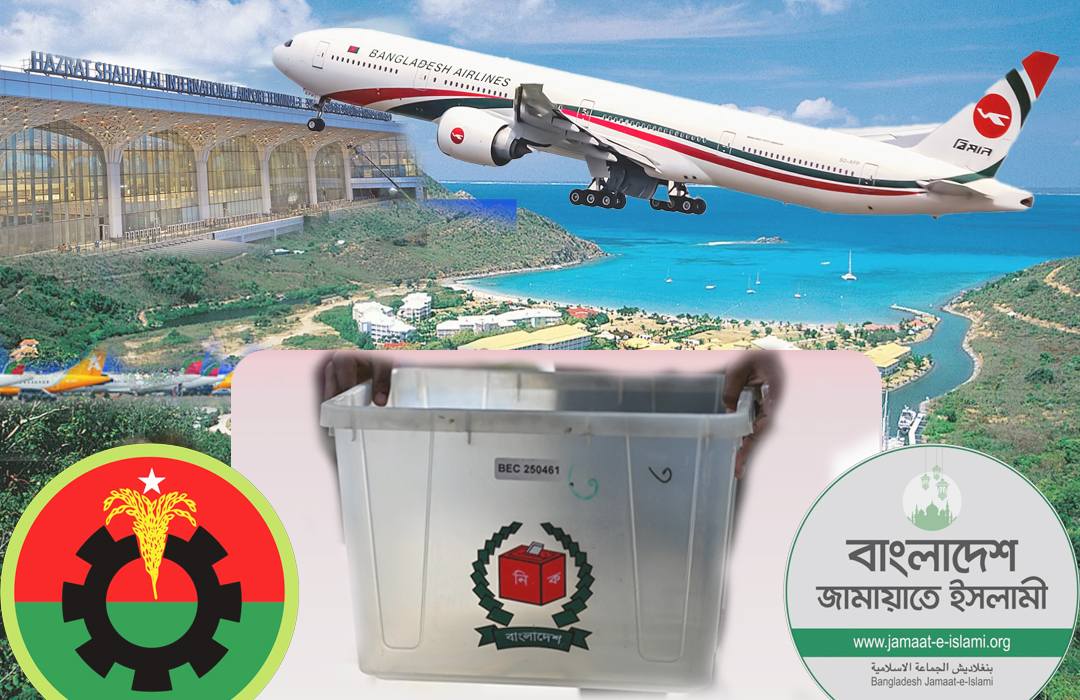
As aviation and tourism gain prominence as growth drivers, the BNP and Jamaat-e-Islami have presented competing manifesto roadmaps, outlining divergent strategies to elevate Bangladesh into a regional aviation and tourism hub ahead of the 13th parliamentary election.
Both parties acknowledge that aviation and tourism are no longer peripheral sectors but central to economic diversification, employment generation and global integration. Yet their manifestos reveal sharply different approaches, BNP favouring long-term infrastructure expansion and digital integration, while Jamaat emphasises cost competitiveness and market attraction.
BNP’s hub-centric, infrastructure-driven vision
Unveiling the BNP manifesto, party chairperson Tarique Rahman pledged to transform Bangladesh into South and Southeast Asia’s leading aviation hub by 2034 through a proposed National Air Connectivity Grid. The plan begins with constructing small airports and airstrips to connect divisional cities, followed by phased expansion to district headquarters.
At the international level, BNP promised to upgrade Dhaka, Chattogram and Sylhet into full-scale passenger and logistics hubs, while elevating Cox’s Bazar, Jashore, Rajshahi and Saidpur to international gateway status.
The party also proposed a national digital logistics platform integrating cargo tracking, booking and route planning—an initiative with direct implications for air cargo efficiency and multimodal connectivity.
BNP’s manifesto places particular emphasis on reforming Biman Bangladesh Airlines, pledging to restore profitability through structural reforms in management, route planning and service quality. Expanded bilateral air service agreements and policy support for private airlines are intended to encourage international route expansion and foster competition.
Beyond hard infrastructure, BNP highlighted “aviation literacy” through modernisation of aviation universities and technical institutions to boost sectoral employment. It also pledged dignified, harassment-free passenger services at all airports, alongside stricter action against ticket black marketing, fraud and financial irregularities.
Tourism development under BNP adopts a broad-based model. The manifesto promises to update the national tourism policy to make Bangladesh more visitor-friendly, improve cleanliness and service quality at entry points, and launch a single digital portal and mobile app for foreign tourists covering hotel booking, visa assistance, guides, translation and security information.
BNP also committed to deploying skilled tourist police, developing eco-tourism through conservation, and promoting community, ethnic and water-based tourism nationwide.
Flagship initiatives include an annual Dhaka Food and Culture Festival to brand Bangladesh globally, and making “smart tour guide” a prestigious and profitable profession for local youth. Community tourism villages with overnight facilities are planned in at least one village per district through public-private collaboration.
Jamaat’s cost-competitive aviation, focused halal tourism
Jamaat-e-Islami, led by Amir Dr Shafiqur Rahman, outlined a markedly different aviation strategy. Speaking at a manifesto programme in Dhaka, Jamaat pledged to establish Bangladesh as a global aviation communication hub primarily by reducing airport taxes and charges to attract foreign airlines.
The party promised to upgrade Saidpur to international airport status—aligning with BNP’s northern connectivity pledge—and to reform Biman into a profitable airline by strengthening its network, fleet capacity and market share. Jamaat’s manifesto also proposes developing existing international airports as regional refuelling centres, positioning Bangladesh as a cost-efficient stopover for international carriers.
Unlike BNP’s infrastructure-heavy roadmap, Jamaat’s aviation strategy relies on competitive pricing and service efficiency to draw airlines, betting that lower operational costs can offset Bangladesh’s relatively late entry into the regional hub race.
In tourism, Jamaat’s focus is narrower but distinctive. The party prioritises river-based tourism and halal tourism products, aiming to tap niche markets rather than broad-spectrum tourism. It pledged to encourage large-scale domestic and foreign investment in hotels, resorts, parks, entertainment centres and shopping complexes to build supporting infrastructure.
Competing visions, common challenges
Aviation and tourism analysts note that while both manifestos recognise the sectors’ strategic importance, their philosophies diverge. BNP offers a detailed, time-bound roadmap centred on infrastructure expansion, digitalisation and district-level connectivity. Jamaat, by contrast, prioritises affordability and airline attraction through reduced taxes and charges, coupled with selective tourism development.
However, both visions face formidable implementation challenges. Transforming Bangladesh into a regional hub would require massive capital investment, regulatory reform, skilled manpower development and sustained diplomatic engagement to secure air service agreements. Competing with established hubs such as Singapore, Dubai and Kuala Lumpur will demand consistent policy execution beyond a single electoral cycle.
On tourism, success hinges on inter-ministerial coordination, private sector participation, effective destination management and international branding—areas where Bangladesh has historically lagged despite its natural and cultural assets.
As voters weigh these pledges, the aviation and tourism sectors will be watching closely to see whether manifesto ambitions translate into sustained, credible policy action capable of lifting Bangladesh’s global connectivity and destination appeal.