
Boeing 777-9 passes extreme brake test ahead of FAA certification
প্রকাশ: শনিবার । এপ্রিল ০৪, ২০২৬
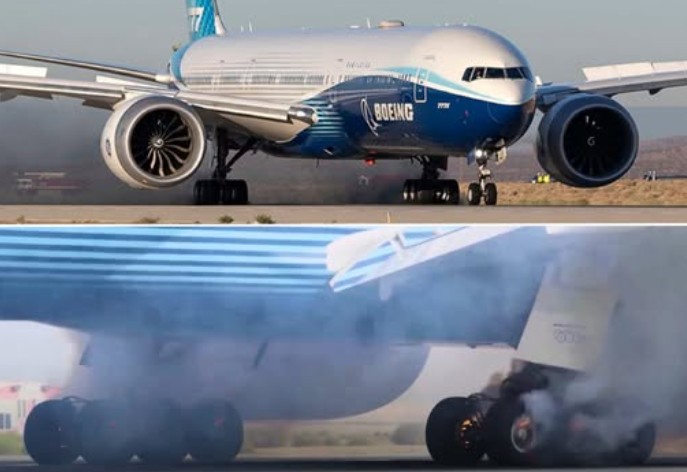
Boeing's 777-9 aircraft has completed a high-energy rejected takeoff test at Edwards Air Force Base in California, a critical regulatory hurdle in which the jet was brought to a halt from near-takeoff speed using brakes deliberately worn to their operational limit—with thrust reversers disabled.
The test, conducted as part of the aircraft's final Federal Aviation Administration certification programme, required the 777-9 to be loaded to its maximum takeoff weight and accelerated to approximately 190 knots before pilots aborted the run and applied full braking. The FAA mandates that thrust reversers be deactivated during the test, leaving the brake system as the sole means of stopping the aircraft.
"We don't use thrust reversers, so the brakes provide 100% of the stopping power of the airplane. We do the condition on brakes that are intentionally machined down to 100% worn so it's a worst-case simulation."
— Matt England, 777-9 flight test engineer, Boeing
The brakes generated over one billion foot-pounds of torque during the stop, reaching temperatures exceeding 2,500°F (1,371°C). Heat was sufficient to melt the wheels' fuse plugs—a safety mechanism designed to release tire pressure in a controlled manner under extreme thermal stress, preventing tire rupture.
Following the stop, the aircraft was left stationary for five minutes without any crew or ground intervention, as required by the FAA. The regulatory standard stipulates that the aircraft must not catch fire during this period before emergency crews are permitted to approach. The 777-9 met the requirement.
"The conditions were executed flawlessly. I'm incredibly proud of the airplane and the team."
— Captain Heather Ross, 777-9 project pilot, Boeing
The 777-9 is the largest variant of Boeing's 777X family, a twin-engine widebody designed to carry between 400 and 426 passengers in a standard two-class configuration. The programme has faced repeated delays since its initial rollout in 2019, with certification challenges, the grounding of the 737 MAX, and supply chain disruptions among the contributing factors.
Boeing said the aircraft is completing its final FAA certification testing, and deliveries are expected to begin in 2026. The company has not specified a delivery date or named launch customers in connection with this test milestone.
Source: AviationCircle