
Central Asia eyes Gulf's cargo role, but not yet a match
প্রকাশ: সোমবার । নভেম্বর ২৩, ২০২৬
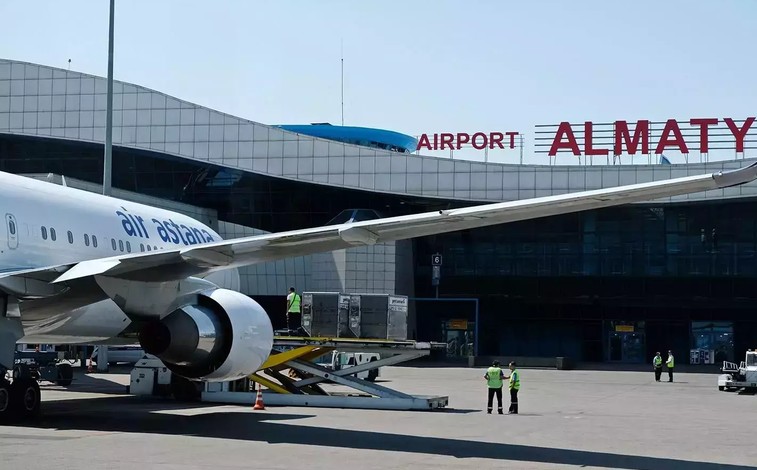
Airports across Central Asia are pitching themselves as an alternative route for Asia-Europe air cargo as airspace restrictions in the Middle East disrupt traditional Gulf routings, aviation news outlet STAT Times reported.
For years, a large share of air cargo between Asia and Europe has been routed through Gulf hubs, which sit roughly halfway between the two continents. When airspace is restricted, aircraft fly longer routes, burn more fuel, and arrive late, which hurts most during the November-December peak, according to the report.
STAT Times said a Boeing 747-400 freighter recently landed at Aktau, a Caspian port city in western Kazakhstan, carrying an oversized gas turbine from the UK. Reconstruction work had strengthened the airport's pavement to the level that 747 freighters need. Officials say the main idea in the region is a land bridge, in which cargo moves by rail or road from China and then takes a short flight to Europe.
AKTAU: The airport holds the EU's RA3 security status, received this year, which allows cargo handled in a third country to be flown into the EU. Deputy General Manager Mustafa Yiltan Oktem said Chinese e-commerce goods arrive by rail and can now be flown on to Europe. Cargo takes three to four days from China to Aktau, and the flight to Europe is five to six hours, so even narrow-body aircraft can make the trip, he said.
The airport is targeting e-commerce, perishables, and pharmaceuticals. Oktem said that irregular wide-body charters from Baku carrying spare parts for the oil industry, like the gas turbine flight, will not become regular business. A $600 million expansion, developed with Lufthansa Consulting, is set to start in early 2027 and run for about 18 months. It includes around 10,000 square metres of cargo handling space, against about 2,500 square metres now, a maintenance centre and a rail link into the cargo area. The airport hopes to handle 80,000 to 100,000 tonnes a year.
NAVOI: Uzbekistan's Navoi does not yet have RA3 but expects certification within months, Airport Director Alisher Klichev said. About 30 to 35 percent of recent requests from airlines and freight forwarders have reached the practical planning stage, he said, adding that he would not overstate the impact of the Middle East crisis.
A presidential resolution signed on February 9 lets the airport operate separately from Uzbekistan Airports and negotiate directly with airlines. Fifth and seventh freedom traffic rights are available. Fly Meta operates Zhengzhou-Navoi-Budapest flights and is raising frequency to seven or eight a week. By 2030, Navoi aims to handle 45,000 tonnes of cargo a year. Klichev named the missing RA3 certificate, the airport's image as a refueling stop, and high aviation fuel prices as obstacles.
TASHKENT: Nazim Shaymardanov, director at Uzbekistan Airports Cargo, said export volumes rose 180 percent in September as freight trucks flown from China were flown onto Europe. The company has handled 80,000 tonnes so far this year and expects more than 100,000 tonnes by December and 115,000 to 120,000 tonnes next year. Mohy Shenshen of My Freighter said the road-to-air project that began in August is promising but weighed down by fuel prices. He said it would ease the bottleneck rather than replace existing routes, and that manpower may become the biggest constraint in three years.
ALMATY: The region's largest market handles 140,000 tonnes of cargo a year, 75 percent of it inbound, said CEO Goker Kose. Exports and re-exports are needed to fill return legs. Chinese e-commerce traffic fell sharply after a minimum tax on low-value parcels was introduced, but Kose said demand had not been damaged. Kazakhstan has no local cargo carrier, which he said is a gap. He does not see Aktau and Tashkent as rivals, saying the market needs to grow bigger.
STAT Times concluded that Central Asia cannot yet replace the Gulf, whose hubs handle cargo in the millions of tonnes. It described the region as a second route rather than a substitute. Shared obstacles include certification, fuel costs, paper-based customs, a shortage of freighters, and a lack of trained staff. The report said the real test will come when airspace reopens and rerouted cargo may drift back to the Gulf, with most of the regional projects due in 2027 and 2028.