
Covid-style isolation likely awaits passengers on hantavirus-hit cruise ship
প্রকাশ: শনিবার । মে ০৯, ২০২৬
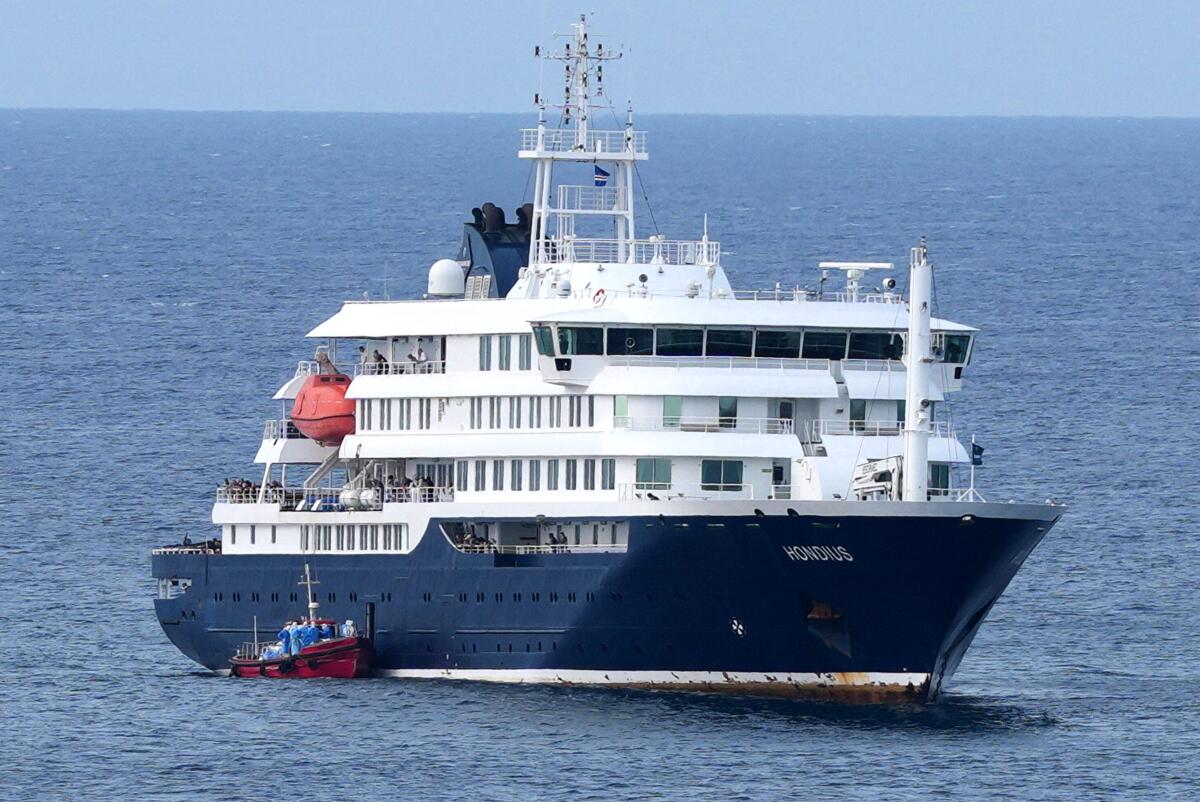
The polar cruise ship MV Hondius arrives in Spanish waters on Sunday, ending a voyage operators billed as a trip of a lifetime to see nature “up close and personal” that morphed into a battle against a deadly virus.
But the ordeal is not over for the close to 150 passengers and crew still aboard. Weeks of self-isolation or quarantine likely await, along with testing for hantavirus, which can have a high mortality rate.
On arrival, they will be screened and told what they should monitor for the next six weeks, according to Anaïs Legand, technical lead for viral hemorrhagic fevers at the World Health Organization. “Obviously, the next priority is to ensure passengers and crew feel safe enough and receive the adequate support they need in a situation that can be very frightening,” she said.
That process begins this weekend in the Canary Islands. While it may not be flying the yellow flag historically used to indicate a ship carrying infectious diseases, the Hondius will not be allowed to dock in the main port in Tenerife, a hub that accommodates hundreds of cruise vessels a year.
Instead it will anchor offshore at a smaller industrial port for checks, and passengers and crew with no symptoms of the disease — which has an incubation period as long as six weeks — will be repatriated through the nearby airport. They’ll only leave the vessel when their charter flights are standing by, and the repatriation may happen on Sunday morning.
“The entire operation is being organized in areas where passengers will remain completely isolated from the general population,” Virginia Barcones, Spain’s top civil protection official, told reporters Thursday.
Pandemic Echo
The outbreak has triggered a major international response and grabbed global headlines in an echo of the pandemic, when cruise ships became symbols of how swiftly a pathogen could move through a confined space and were dubbed “floating coffins” as they were refused access to ports around the world.
There have been three deaths linked to the outbreak, including a 70-year-old man who died on the ship and is thought to be the index case — though he was not tested for hantavirus.
The regional government of the Canary Islands, which include Tenerife, made it clear this week it does not want the Hondius anywhere near its residents. It will have no formal involvement unless any passengers require medical attention.
WHO officials have played down the wider risk to public health, saying the vessel’s arrival and repatriation of passengers will be managed safely. Hantaviruses are less transmissible than the coronavirus that caused the Covid-19 pandemic, and doctors say it’s also less adept at mutating.
Still, the Andes strain at the center of the Hondius outbreak has been shown to spread between people in limited outbreaks, raising the possibility that it has transmitted between close contacts on the vessel.
“Cruise ships are floating Petri dishes for infectious disease,” Tom Frieden, a former director at the Centers for Disease Control and Prevention, said on his blog. “Norovirus, influenza, Covid, and varicella outbreaks have all swept through cruises before. Whether Andes virus has done the same on the Hondius — and if so, by what route — remains an open question.”
Meanwhile the passengers are entering their final hours on the move, after spending days anchored offshore from Cape Verde as patients were evacuated.
‘Almost Normal’
While meals are taken in the canteen, passengers are advised to stay in their cabins as much as possible and avoid congregating in large groups, according to retired French couple Julia and Roland Seitre. Still, there is freedom to move around especially on the outside decks, they said in an emailed statement.
Life on board is “almost normal,” they said, adding that a “great psychological weight has been lifted” since the medical evacuations this week.
WHO Director-General Tedros Adhanom Ghebreyesus told reporters Thursday he was in regular contact with the captain of the Hondius, adding that morale had improved since the ship started moving again.
Onshore, though, response efforts have spread across continents, underscoring the complexity of dealing with even a small outbreak given international travel and the need for contact-tracing. While tests for hantavirus can deliver results in hours, the disease is rare and the WHO has been shifting test kits to countries that have patients showing symptoms.
Negative Test
Health authorities got a welcome boost Friday after a KLM flight attendant tested negative for hantavirus. She was among five people on a flight considered by authorities to have had intensive contact to a 69-year-old Dutch woman, whose husband died on the Hondius.
The woman flew to South Africa to connect with a flight to Amsterdam, and briefly boarded the KLM flight before she was deemed too sick to travel.
Had the KLM flight attendant tested positive for hantavirus, it might have led to a reassessment of the potential transmission of the disease given her limited contact with the sick woman.
Source: Bloomberg