
Cox’s Bazar new terminal opens Monday
প্রকাশ: শুক্রবার । সেপ্টেম্বর ২৫, ২০২৬
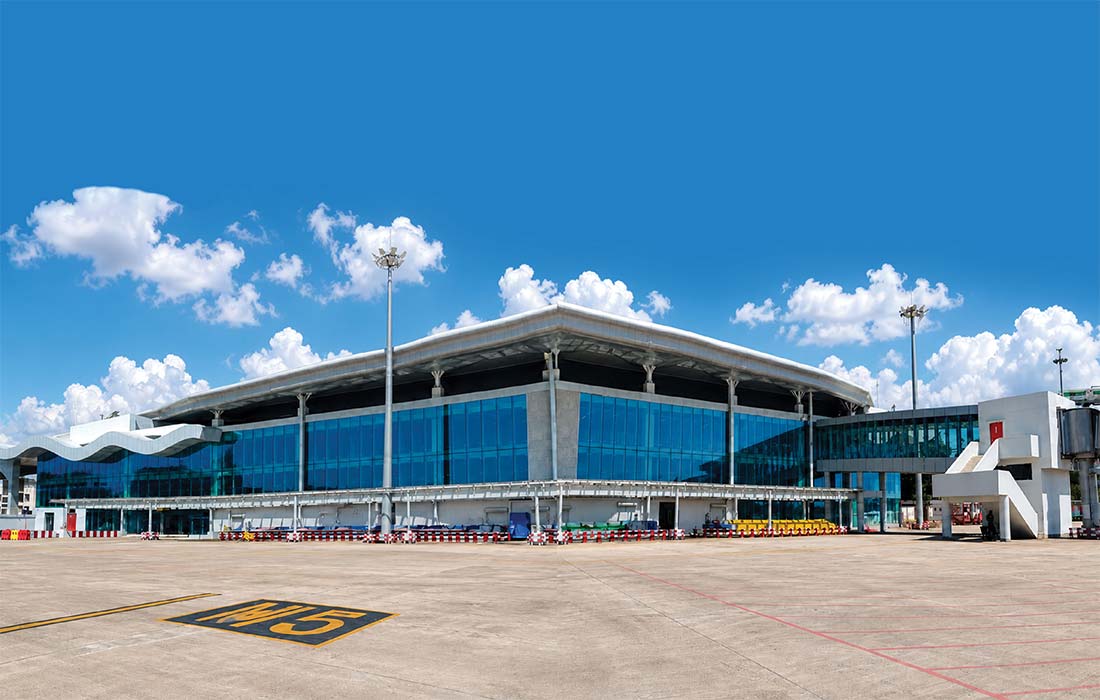
Cox’s Bazar Airport will begin domestic passenger operations from its newly built terminal on Monday, September 28, putting the country’s premier tourism gateway into the final stage of its transition towards international operations.
All domestic airlines serving Cox’s Bazar have completed preparations to shift passenger handling to the new terminal, while carriers will initially deploy golf carts to move passengers between the terminal and aircraft.
Civil Aviation Authority of Bangladesh (CAAB) Chairman Air Vice Marshal Md Mostafa Mahmood Siddiq confirmed the operational switch following a final preparatory visit to the airport this week.
“From next week, the new terminal will be used for both arrival and departure of domestic passengers,” Siddiq said.
The domestic launch will effectively serve as the operational test for the new facility before international services are introduced.
“After running the domestic operation, we will inaugurate international operations next month from this airport,” the CAAB chairman said.
NOVOAIR Director of Marketing and Sales Sohail Majid said the private carrier has completed its preparations and successfully conducted a trial run ahead of Monday’s opening.
“We have taken all preparations from our side, including deployment of golf carts to use the new terminal,” he said.
Domestic first, international next
The terminal opening is the most visible step yet in a major infrastructure programme designed to transform Cox’s Bazar from one of Bangladesh’s busiest domestic airports into an international aviation gateway.
The government is preparing for the formal inauguration of Cox’s Bazar International Airport in October after extensive investment in a new passenger terminal, runway extension and associated airfield infrastructure.
Civil Aviation and Tourism Minister M Rashiduzzaman Millat has said the government expects Biman Bangladesh Airlines as well as international carriers to eventually operate from the beach city.
Once international flights begin, however, the airport will adopt an unusual hybrid terminal arrangement to accommodate both domestic and overseas passengers.
CAAB Member for Operations and Planning Air Commodore Abu Sayeed Mehboob Khan said arriving and departing international passengers will use the new terminal.
Domestic arrivals will then shift back to the existing terminal.
Domestic departing passengers, meanwhile, will complete their check-in formalities at the new terminal before moving to the old terminal to wait for boarding.
The arrangement will allow CAAB to separate international and domestic passenger flows while making use of both terminal buildings.
Capacity jumps to 1.8 million
The new international passenger terminal covers approximately 17,956 square metres and has been developed under a project with an approved cost of around Tk 362.63 crore.
Its departure lounge can accommodate around 450 international passengers.
Facilities include a boarding bridge, duty-free shop, lifts, escalators, baggage conveyor belts, check-in counters, immigration facilities and an international arrival lounge.
Four immigration desks have been installed for departing passengers and six for arrivals, along with two baggage delivery belts for incoming international travellers.
The facility also incorporates public-address and Flight Information Display Systems, CCTV, signage and hand-luggage screening facilities.
The expansion is expected to increase Cox’s Bazar airport’s annual passenger-handling capacity from around 730,000 to 1.8 million.
A 36,300-square-metre apron capable of accommodating two widebody aircraft and three Dash-8 aircraft, together with two taxiways, has already been incorporated into airport operations.
The airport currently handles an average of 28 to 30 passenger aircraft take-offs and landings a day, making it one of the country’s busiest domestic stations.
Bangladesh’s longest runway
The terminal is only one part of the airport’s transformation.
CAAB has also extended the runway by 1,700 feet into the Bay of Bengal, increasing its total length from 9,000 feet to 10,700 feet—the longest runway in Bangladesh.
Around 43 hectares of land were reclaimed from the sea for the extension.
The runway has been designed to accommodate fully loaded widebody aircraft, including the Boeing 777-300ER and Boeing 747-400.
The runway extension project has an approved cost of Tk 3,709.61 crore, with a contract value of Tk 1,794.31 crore. Chinese joint venture CYWEB-CCECC JV implemented the project.
The project also includes approximately 2,200 feet of precision approach lighting extending into the sea and a CAT-II Airfield Ground Lighting system.
A 1.89-kilometre protective embankment has been constructed against cyclones, storm surges and other natural hazards, alongside security fencing, patrol roads and an 8,149-metre drainage network.
The airport has also received ICAO certification following verification of standards required for international operations.
Infrastructure ready, airlines the next test
With the terminal, runway and supporting infrastructure approaching operational readiness, the bigger challenge is now shifting from whether Cox’s Bazar can handle international aircraft to whether airlines see a commercially sustainable market.
No foreign airline has yet publicly confirmed scheduled international services from Cox’s Bazar.
CAAB has been approaching both domestic and international carriers to explore possible operations, while the government hopes direct connectivity will help turn Cox’s Bazar into a regional tourism destination.
Biman Bangladesh Airlines is expected to initially provide limited international connectivity, while US-Bangla Airlines has been assessing the commercial feasibility of overseas services from Cox’s Bazar.
For the government, international flights are expected to create a direct gateway to Bangladesh’s most prominent tourism destination and stimulate further investment in hotels, resorts and other tourism businesses.
But the airport’s success as an international gateway will ultimately depend on more than infrastructure.
The 10,700-foot runway can accommodate widebody jets, the new terminal can process international passengers and the apron can park them.
From Monday, the first part of that investment will face its operational test with domestic passengers.
The next—and much bigger—test comes in October: putting international flights, airlines and passengers behind the airport’s new international status.