
Etihad CEO warns jet fuel could push fares up in 2027
প্রকাশ: শুক্রবার । নভেম্বর ১৩, ২০২৬
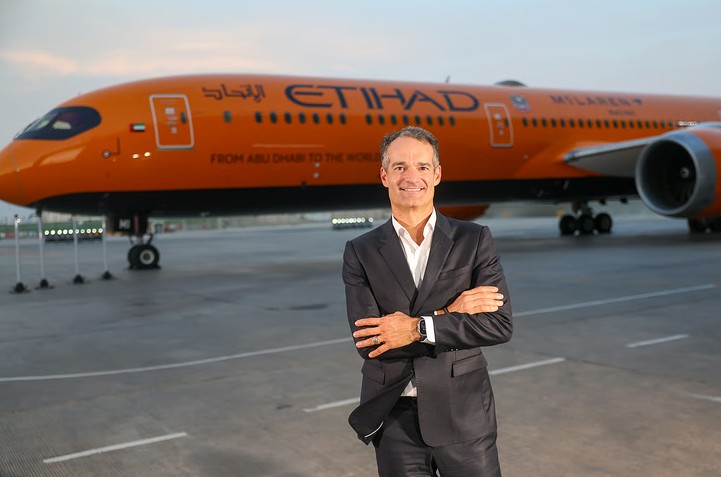
Etihad Airways chief executive Antonoaldo Neves has named rising jet fuel costs as the biggest challenge facing airlines in 2027 and warned that fares could come under pressure from the second quarter, Gulf News reported in an interview on Thursday.
Neves told the newspaper that jet fuel is currently trading at about $150 a barrel on an all-in basis, combining the Brent crude benchmark and the refining premium known as the crack spread. He estimated that fuel accounts for roughly 35 to 40 percent of airline operating costs.
Many airlines bought fuel in advance through hedging this year, but those positions are expected to be much smaller from the second quarter of 2027, he said. “Something’s got to give,” he said of the pressure on airlines, adding that he hoped prices would fall because lower prices stimulate demand.
If fuel costs do not come down, Etihad will have to pass them on through fares, Neves said, though he said the airline does not want to do so. He said the fuel challenge is not unique to Etihad. He does not expect it to change the airline’s network plans for now, because Etihad runs its routes as one system in which stronger markets offset weaker ones. He acknowledged that airlines have less room to raise fares in markets where passengers have lower purchasing power.
Neves said Etihad is entering the final months of 2026 with about 15 percent more seats than a year earlier and 15 percent higher demand. He put the airline’s load factor at about 85 to 87 percent in the week of the interview, against a typical 78 to 82 percent for network carriers. Gulf News noted that he gave no industry dataset for that comparison.
The airline serves more than 120 destinations and carries between 25 million and 27 million passengers a year, Neves said. He expects 30 million next year. For the first quarter of 2027, he said he is confident of at least 10 percent year-on-year growth.
Neves said travel between Europe and Southeast Asia is particularly strong and that corporate travel to and from Abu Dhabi is also ahead of last year. He said the airline’s plans for the November and December peak, which includes the Formula 1 Etihad Airways Abu Dhabi Grand Prix, are solid. He said the airline had “come back stronger” after reducing capacity in March, without giving details of the reasons for that reduction.
Looking ahead, Neves said Etihad will start retrofitting aircraft next year and aims to have 95 percent of its fleet in a new configuration by the end of 2028 so that passengers get a more consistent experience. He pointed to the return of the Airbus A380, an Airbus A321 with a first-class cabin, and new Airbus A330s due next year. The airline has also introduced a home luggage collection service.
Etihad is equipping cabin crew with iPads so they can access passenger preferences and resolve problems during flights, he said. He gave the example of compensating a passenger on board when a pre-ordered special meal was not delivered. He said the aim is to understand what each customer wants on an individual basis within two to three years.
Neves also described the airline’s partnership with McLaren as a way to build the Etihad brand beyond the Abu Dhabi Grand Prix, which it has sponsored since 2009, by being associated with the team across the Formula 1 calendar. He said a McLaren-branded Boeing 787 will carry the team’s colours across the airline’s network.
Source: Gulf News (exclusive interview with Antonoaldo Neves)