
From attractions to experiences: Bangladesh charts new tourism future
প্রকাশ: শুক্রবার । সেপ্টেম্বর ২৫, ২০২৬
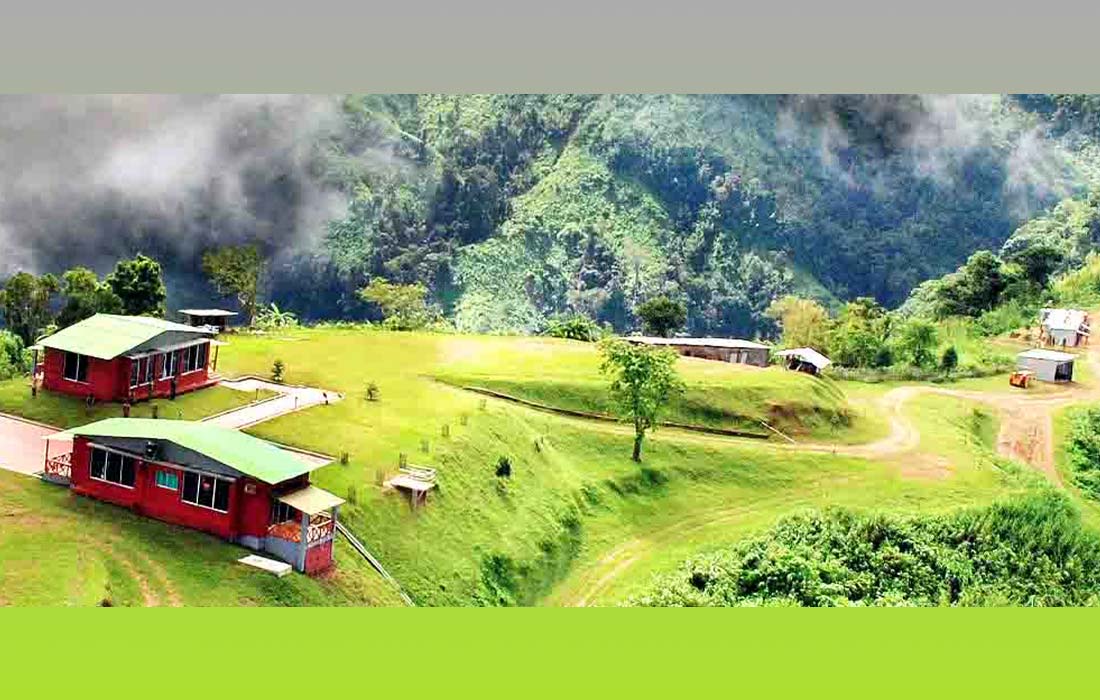
As Bangladesh prepares to observe World Tourism Day on Sunday, September 27, the country is attempting something more consequential than promoting its beaches, forests, hills and heritage sites: turning tourism into a serious economic industry.
At the centre of that ambition is a long-awaited Tourism Master Plan covering 1,498 identified attractions, alongside a proposed pipeline of 60 development projects worth around Tk 19,000 crore.
The strategy seeks to move Bangladesh from simply possessing tourism attractions to developing commercially viable experiences capable of generating investment, employment, foreign exchange and local economic activity.
Civil Aviation and Tourism Minister M Rashiduzzaman Millat says the government wants to transform the country’s scattered tourism potential into a planned, sustainable and internationally competitive industry.
“We are working on a Tourism Master Plan encompassing 1,498 tourist attractions,” Millat told BSS.
“Almost every part of Bangladesh has a story to tell,” he said, pointing to the Sundarbans, Cox’s Bazar, the Chattogram Hill Tracts, Sylhet’s tea gardens, rivers and wetlands, archaeological and religious heritage and the hospitality of Bangladesh’s people.
The government is also looking at Cox’s Bazar as a potential regional tourism hub, while putting private investment and public-private partnerships at the heart of its future tourism policy.
Tourism, according to Millat, is being positioned within the government’s broader economic diversification, employment generation and regional development agenda.
“The targets are ambitious, but achievable if the government, private sector and communities work together,” he said.
Tk 19,000 crore pipeline
The scale of the ambition becomes clearer in Bangladesh Parjatan Corporation’s latest development proposals.
BPC Chairman Md Shamimuzzaman said 60 projects estimated at around Tk 19,000 crore have been prioritised from the country’s identified tourism opportunities and submitted to the Ministry of Civil Aviation and Tourism.
If implemented successfully, BPC believes the initiatives could help raise tourism’s contribution to the national economy to 8-10% and potentially double employment from an estimated 2.4 million people.
The broader objective is to ensure tourism expenditure reaches communities outside established destinations, stimulates rural economies and creates opportunities for local entrepreneurs.
BPC currently has 54 service units across Bangladesh, while its National Hotel and Tourism Training Institute has trained around 54,000 people for tourism and hospitality-related employment.
Bangladesh’s tourism potential has been divided into eight broad product categories: nature and wildlife; sea and blue tourism; hills and adventure; tea and nature escapes; heritage and archaeology; river and cruise tourism; village and community tourism; and MICE and special-interest tourism.
That diversity gives Bangladesh something many destinations spend heavily to create—a broad portfolio of tourism assets within a relatively compact geographical area.
The challenge is monetising them sustainably.
Master plan by year-end
The long-awaited Tourism Master Plan is expected to be finalised by the end of 2026, according to Bangladesh Tourism Board Chief Executive Officer Barrister Mutasim Billah Faruqui.
“After taking responsibility, we have prioritised ensuring the best possible services and facilities for tourists. We want to move forward in line with the tourism master plan, which is expected to be finalised by this year,” Faruqui said.
The master plan has had a long gestation.
A strategic tourism master plan prepared under BTB was launched in 2019, but its implementation and final approval were delayed by bureaucratic complications, the COVID-19 pandemic and subsequent administrative changes. It was later returned for review and revision.
The latest approach seeks an integrated plan covering the 1,498 identified attractions, with greater emphasis on planned, environment-friendly and sustainable development.
Faruqui said BTB intends to accelerate projects aimed at improving tourist facilities and services.
“We have some projects to enhance tourist facilities and services. We want to implement those projects very quickly,” he said.
But physical development is only one side of the equation.
Bangladesh also needs international visibility.
Faruqui said BTB plans closer engagement with foreign missions and international stakeholders to encourage more overseas travellers to consider Bangladesh.
“We want to engage with the international community, embassies and other stakeholders to encourage their citizens to visit Bangladesh,” he said.
The 2.8-day problem
Bangladesh already possesses a sizeable domestic tourism market, estimated at around three crore travellers.
Yet one figure illustrates the challenge confronting policymakers: the average visitor stay is only around 2.8 days.
Extending that stay matters because tourism economics is driven not merely by arrivals, but by nights spent, experiences purchased and money retained in local economies.
Bangladesh therefore needs to transform natural and cultural assets into experiences that travellers can discover, reach, book and enjoy.
That requires more than hotels and highways.
Industry assessments identify inadequate foreign and private investment, insufficient tourism data, fragmented development projects and weak coordination among government agencies as persistent obstacles.
Last-mile connectivity remains problematic at many destinations, while shortcomings include toilets, parking, multilingual guides, digital interpretation, emergency response and primary healthcare facilities.
For international travellers accustomed to seamless booking, reliable transport and readily available destination information, those deficiencies can determine whether an attractive location becomes a marketable destination.
Former Tour Operators Association of Bangladesh President Rafeuzzaman has stressed that infrastructure alone cannot unlock the country's tourism potential, highlighting the need for destinations that provide complete visitor experiences.
Former TOAB Director Taslim Amin Shovon has similarly stressed destination branding, international marketing and product development to attract overseas visitors and encourage them to stay longer and spend more.
A 19-point roadmap
The emerging strategy contains 19 priority recommendations, including choosing 10 landmark attractions for integrated development within three years.
It also calls for foreign investment, public-private partnerships and easier visa and airport-arrival procedures.
One potentially significant proposal is a single digital tourism platform, designed to allow travellers to discover destinations, book services, make payments and post reviews through an integrated system.
Other proposals include homestays and community-based tourism, eco-tourism around the Sundarbans, rural and agro-tourism, greater financing and market access for women and young entrepreneurs, and conservation of archaeological sites.
A circular tourist waterway around Dhaka has also been proposed, potentially turning the capital’s surrounding rivers into a tourism product rather than merely transport corridors.
The strategy envisages a Tourism Satellite Account and real-time tourism dashboard—important tools for a sector where reliable destination-level data remains limited.
Government builds, business sells
Perhaps the clearest element of the proposed strategy is a division of responsibilities between government and business.
The public sector would concentrate on destination planning, land and zoning, roads, utilities, sanitation, safety, regulation, branding, visa facilitation, data, training and conservation.
Private investors would be expected to build and operate hotels and resorts, create attractions and experiences, provide transport and tours, develop digital booking and marketing platforms and improve service quality.
That distinction is important.
Government can build roads, airports and terminals, but it cannot by itself create the complete tourism ecosystem that convinces travellers to choose Bangladesh over competing destinations.
Cox’s Bazar illustrates both the opportunity and the challenge. Major aviation infrastructure is being developed around the tourism city, while the government wants it to emerge as a regional hub. But international connectivity will ultimately depend on airlines seeing sufficient passenger demand and tourists finding enough reasons to travel there.
The same equation applies nationally.
Bangladesh already has the raw materials: the Sundarbans, the world-famous Cox’s Bazar coastline, hill landscapes, tea gardens, haors, rivers, archaeological treasures, cuisine, crafts and living cultural traditions.
The next phase is about packaging those assets into experiences that can be accessed, booked and sold.
As World Tourism Day 2026 puts fresh attention on the sector, Bangladesh’s tourism question is consequently changing.
It is no longer simply “What do we have?”
Increasingly, it is “What experience can we offer—and will the world travel here to buy it?”