
Govt unveils Probashi Card to boost migrant welfare
প্রকাশ: বৃহস্পতিবার । জুন ১১, ২০২৬
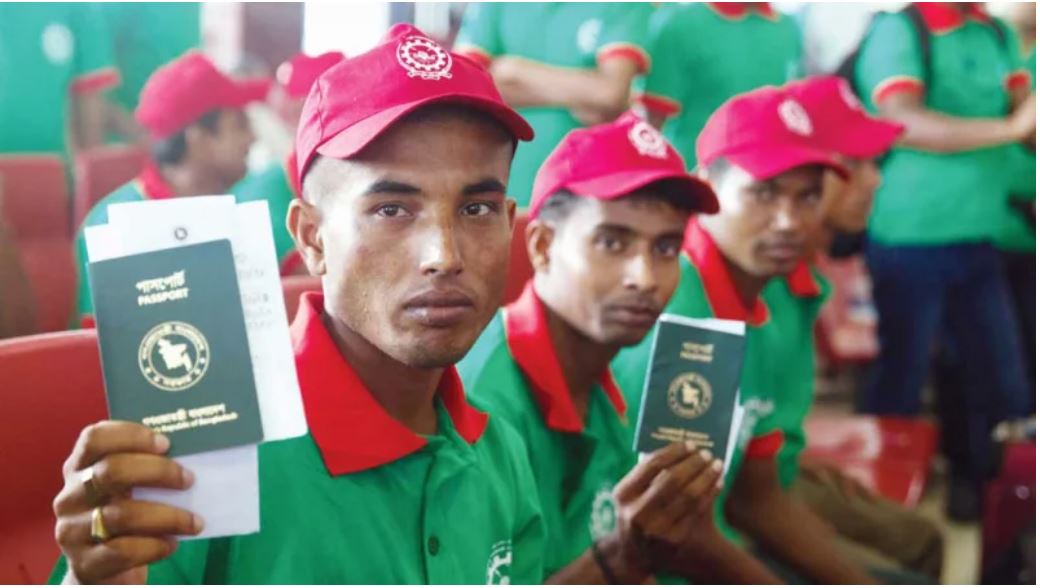
The government will introduce a digital "Probashi Card" from fiscal year 2026-27 to streamline remittance transfers, strengthen expatriate welfare services and support Bangladesh's growing overseas workforce, Finance Minister Amir Khosru Mahmud Chowdhury announced today.
Presenting the proposed national budget for FY2026-27 in the Jatiya Sangsad, the finance minister outlined a comprehensive package of measures aimed at expanding overseas employment opportunities, improving migration governance and enhancing services for Bangladeshi expatriates.
Describing expatriate workers as a key driver of the national economy, Khosru said the government is placing special emphasis on labour migration and migrant welfare, while pursuing new overseas job markets and strengthening support systems for Bangladeshis working abroad.
The proposed Probashi Card will digitally store workers' personal information, skills profiles and employment records. Integrated with banking payment gateways, the card is expected to facilitate faster, safer and more efficient remittance transfers while providing access to welfare services, insurance coverage, banking facilities and emergency assistance.
In a move that could significantly benefit overseas recruitment, the government plans to launch a Skill Verification Programme under which workers' skills, experience and qualifications will be authenticated through a Smart Skill Bank database. Internationally recognised digital certificates will be issued to qualified workers, enabling foreign employers to recruit Bangladeshi manpower directly with greater confidence.
The finance minister said Bangladesh is actively pursuing bilateral labour agreements with Russia, Portugal, Romania, Brazil, Greece, Serbia and North Macedonia, while efforts are continuing to reopen and expand labour markets in Malaysia, Oman, the United Arab Emirates and Kuwait.
To meet growing global demand for skilled workers, the government will launch practical training programmes from FY2026-27 and engage 7,500 local trainers and 1,000 foreign experts across polytechnic institutes, Technical Training Centres (TTCs) and Bangladesh Technical Education Board institutions.
Another 1,000 language instructors and native speakers will be recruited to strengthen foreign language education, a key requirement for accessing higher-paying jobs in international markets.
Khosru also announced plans to establish a Foreign Language e-Learning Centre and a Migration Market Research Institute under the Ministry of Expatriates' Welfare and Overseas Employment to better align workforce development with emerging global labour market demands.
Recognising the challenges faced by migrant workers overseas, the government will establish Bangladesh Support Centres at missions in major destination countries. These centres will provide legal assistance, rescue and rehabilitation services, employment support and emergency response mechanisms for distressed workers.
The minister further said procedures for repatriating the mortal remains of Bangladeshi nationals who die abroad will be simplified to ensure a faster and more dignified return to their families.
Highlighting ongoing reforms, he noted that the migration process has already been fully digitised through the Overseas Employment Platform (OEP), reducing processing time and enhancing transparency.
To strengthen the country's training infrastructure, the government is expanding the capacity of the existing 110 Technical Training Centres nationwide while constructing 50 additional TTCs in new upazilas.
Under a specialised programme to create a pool of internationally employable drivers, training is currently being provided to 102,400 individuals for job opportunities in Europe, Japan and the Middle East.
The finance minister also announced the continuation and expansion of low-interest migration loans of up to Tk 10 lakh through Probashi Kallyan Bank, aimed at making overseas employment more accessible to aspiring migrant workers.
The initiatives form part of the government's broader strategy to increase remittance inflows, diversify overseas labour markets and enhance the global competitiveness of Bangladeshi workers.