
High-level delegation heads to Qatar amid energy crunch
প্রকাশ: মঙ্গলবার । আগস্ট ১৮, ২০২৬
A high-level Bangladesh delegation left for Qatar early Tuesday as Dhaka steps up efforts to secure energy supplies amid a deepening gas and power crunch that has disrupted households, industries, and electricity generation across the country.
Foreign Minister Dr Khalilur Rahman is leading the delegation on the two-day official visit. It includes the prime minister's advisers on finance and planning and foreign affairs, as well as the state minister for power, among others.
The presence of senior officials responsible for economic planning, diplomacy, and energy gives the visit particular significance at a time when Bangladesh is scrambling to strengthen its energy security and reduce exposure to supply disruptions.
The Foreign Minister is scheduled to return to Dhaka on August 19.
Energy security takes centre stage
Bangladesh's energy situation has deteriorated sharply in recent months, with shortages of natural gas contributing to power cuts and forcing the government to tighten electricity conservation measures.
The crisis has exposed two vulnerabilities simultaneously: declining domestic gas availability and increasing dependence on imported liquefied natural gas (LNG).
Bangladesh normally requires around 3,800-4,000 million cubic feet of gas per day, while supply has recently hovered around only 2,600 mmcfd, leaving a substantial structural deficit.
The situation worsened after a technical failure at one of the country's two floating LNG terminals off Moheshkhali temporarily removed around 450 mmcfd from the national grid. The shortage affected power generation, industrial production, CNG stations, and household consumers.
Qatar connection becomes critical
Qatar is particularly important to Bangladesh's energy equation.
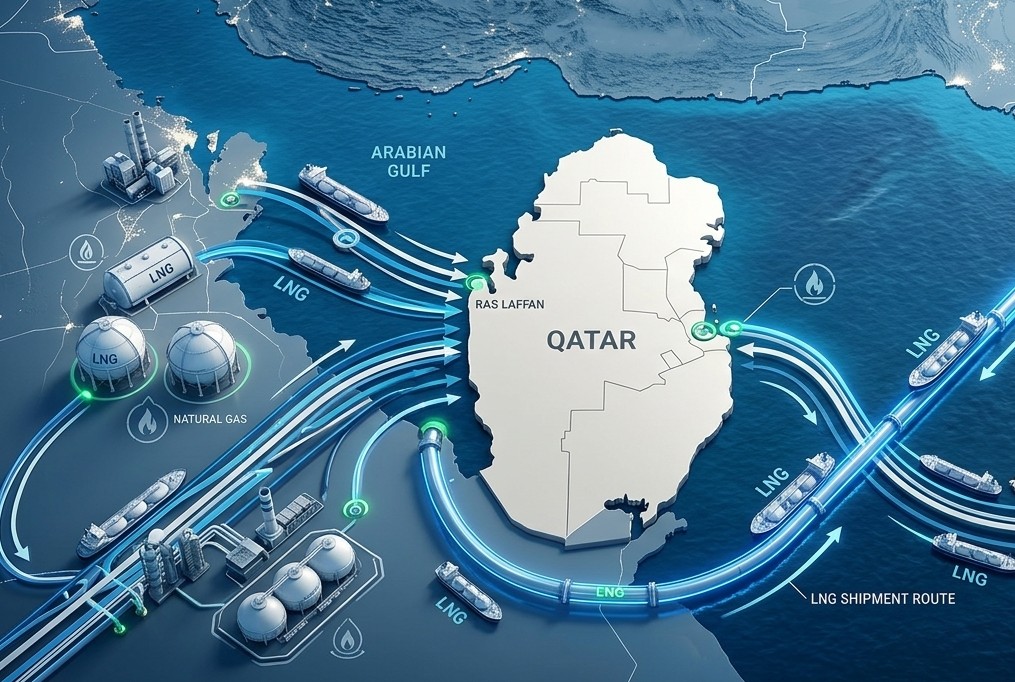
Bangladesh has two long-term LNG contracts with Qatar covering around 4.3 million tonnes annually, while the country imported nearly seven million tonnes of LNG in 2025.
But geopolitical turmoil surrounding the Strait of Hormuz has disrupted Qatari LNG exports this year. QatarEnergy halved its scheduled 2026 deliveries to Bangladesh, forcing Dhaka to turn increasingly to the more expensive spot LNG market.
The disruption has come at a steep price. Earlier this year, Bangladesh was forced to procure spot LNG at prices substantially above levels paid before the Middle East crisis, adding pressure to the country's energy bill, subsidies, and foreign-exchange requirements.
QatarEnergy has meanwhile sought alternative LNG cargoes from the United States to help maintain deliveries to key Asian customers, including Bangladesh, as disruptions affected its own export operations.
In this context, the Dhaka delegation's visit is particularly important for Bangladesh's search for dependable and affordable energy.
While the government has yet to disclose detailed negotiations or specific supply agreements expected from the visit, the composition of the delegation signals the strategic weight Dhaka is attaching to energy and economic cooperation with Doha.
For Bangladesh, the immediate challenge is no longer simply buying enough fuel. It is securing reliable, diversified, and financially sustainable supplies capable of keeping power plants running, industries producing, and households supplied despite an increasingly volatile global energy market.
The Qatar mission could therefore become an important test of Dhaka's energy diplomacy at a moment when shortages at home are making supply security an urgent economic priority.