
International Cabin Crew Day: World salutes aviation frontline guardians
প্রকাশ: রবিবার । মে ৩১, ২০২৬
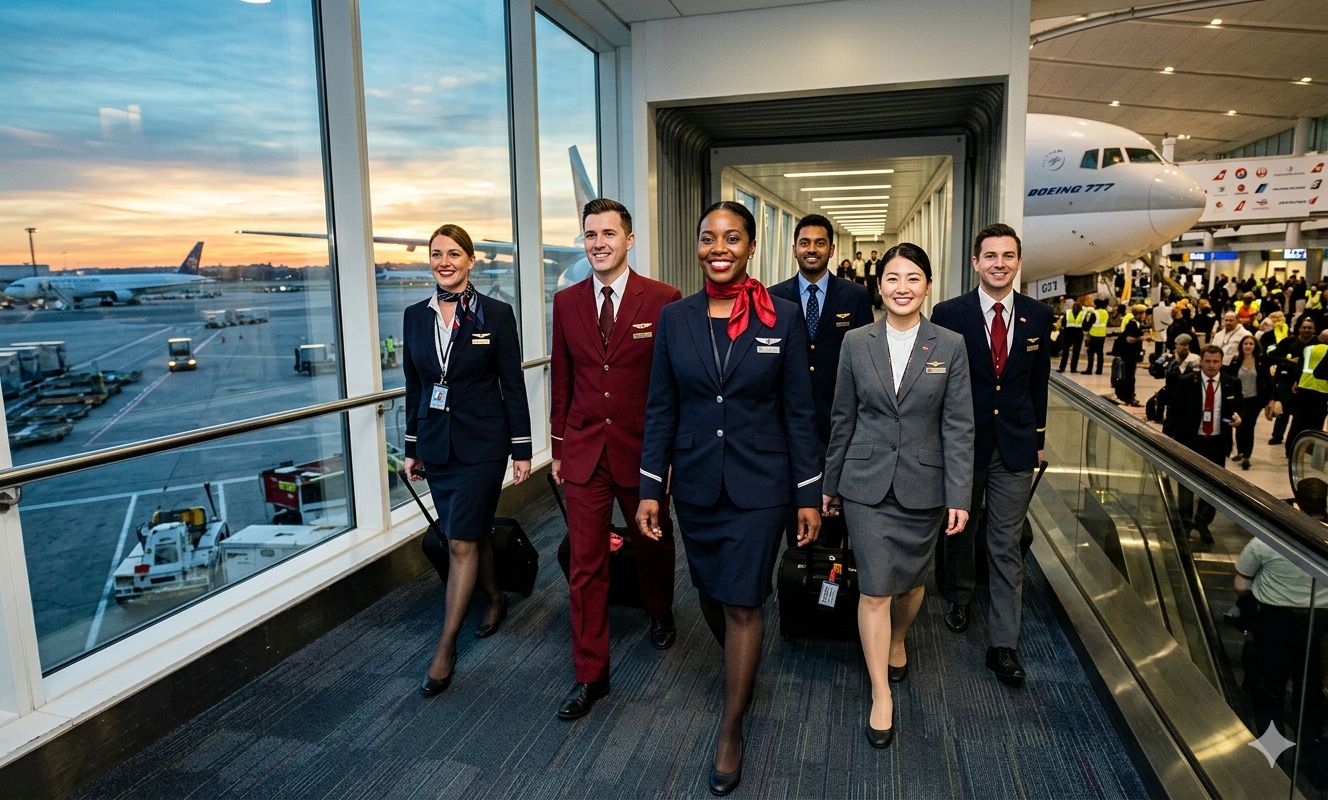
The moment a passenger fastens their seatbelt at 35,000 feet, they are entrusting their safety to a team of specialists who are far more than the friendly faces who serve them food and beverages. The annual commemoration of International Cabin Crew Day, which takes place on May 31, is a global recognition of the essential, albeit frequently overlooked, role of flight attendants in modern air travel.
Why the 31st of May?
The date celebrates the anniversary of the first ever documented in-flight service, all the way back to the early days of commercial aviation. Begun by a Canadian flight attendant union in 2015 to secure structural recognition for the safety demands of the profession. What started as a little passenger comfort idea has morphed over decades into one of the most challenging, multi-skilled jobs in the travel business. Today is a day to celebrate, reflect, and advocate, according to airlines, aviation bodies, and crew unions around the world.
More Than a Smile at 30,000'
The popular imagination likes to transform cabin crew into uniformed hospitality professionals. The truth is completely unique. Cabin crew members are primarily safety professionals. Before a single meal is served or a blanket handed out, they are trained exhaustively in emergency evacuation procedures, fire suppression, first aid, CPR, water survival techniques, and counter-terrorism protocols.
Their duties cover the full spectrum of the flight experience – from pre-flight safety checks and passenger briefings to medical issues aloft and orderly evacuations in a crisis. On many occasions, the calm professionalism of the cabin staff has turned tragedy into survival.
But beyond safety, they are conflict mediators, cultural interpreters, mental health first responders, and brand advocates—all at once, at altitude, across time zones, frequently without sleep.
How Airlines Are Marking
Airlines throughout the world are celebrating International Cabin Crew Day with public and personal tributes. Major airlines such as Emirates, Qatar Airways, Singapore Airlines, and British Airways have used social media to highlight individual crew members and their experiences and career paths. Some airlines are organizing appreciation events at their offices, including wellness seminars, recognition prizes and personalized messages from senior leadership to their crew members.
Industry associations including the International Air Transport Association (IATA) and the International Transport Workers’ Federation (ITF) have utilized the opportunity to reiterate their commitment to improving working conditions, mental health support, and equitable pay structures for cabin crew globally.
Bangladesh in the Air
Biman Bangladesh Airlines—the national flag carrier in Bangladesh—works with a cabin crew workforce, which represents the country at tens of thousands of metres above the ground on routes spanning Asia, the Middle East, Europe, and beyond. Biman’s cabin crew members are trained in the airline’s own training facility, where they learn safety protocols, customer service, and cross-cultural communication to serve a broad international passenger base.
For many young Bangladeshis—especially women—a cabin crew job has become a career-launching platform with global visibility. The job comes with cachet and privileges few other professions in the country give—travel abroad, language skills, and a front-row seat to the world.
In recent years there has been tremendous growth in domestic and regional air travel, with private carriers in Bangladesh, including US-Bangla Airlines and Air Astra, also considerably increasing the number of cabin staff. US-Bangla Airlines is one of the largest private carriers in Bangladesh with a number of overseas routes and has been involved in formal cabin crew training programmes.
On the eve of the International Cabin Crew Day, Bangladeshi aviation enthusiasts and regular fliers have been making appreciation posts on social media platforms. The hashtag is a salute to the crew members who fly the flag of Bangladesh with professionalism and graciousness on every flight.
Altitude Problems
The job might be glamorous, but cabin crew are faced with a variety of occupational hazards that are specific to the industry and seldom make the headlines.
The continuous changes between time zones and irregular sleeping patterns have a quantifiable effect on physical health. Research has linked long-term work as a cabin crew member to higher risks of certain cancers and conditions related to exhaustion and musculoskeletal issues, due to long-term exposure to cosmic radiation, pressurized cabins, and physical stress.
Major public health agencies—including the Centers for Disease Control and Prevention (CDC) and institutional bodies like the Harvard T.H. Chan School of Public Health—have verified that the commercial aviation environment introduces unique physical stressors. Long-term exposure to these conditions leads to quantifiable, long-term health anomalies.
Another hidden weight is the emotional work. Crew members have to be calm, warm, and professional no matter what they are going through personally—dealing with rowdy passengers, language issues, and the stress of delays, turbulence, and emergencies, all while appearing calm and collected.
In Bangladesh and across South Asia, cabin crew—especially women— sometimes have to confront social prejudices about their occupation.
The COVID-19 pandemic revealed new weaknesses. Cabin staff were among the first aviation workers to experience major layoffs and furloughs around the world, including in Bangladesh, when Biman and private airlines greatly scaled down operations. Many crew members were in limbo for months before they could return to work when travel bounced back.
A Need for Recognition
Ultimately, International Cabin Crew Day is a plea to customers, airlines, and policymakers alike—to look beyond the uniform and appreciate the depth of talent, sacrifice, and dedication that cabin crew offer to every trip.
For the Bangladeshi passenger checking into a Biman flight at Hazrat Shahjalal International Airport, or the traveler taking US-Bangla to Kuala Lumpur or Doha, the cabin crew at the door with a greeting means something bigger, a profession built on trust, trained for crisis, committed to bringing people home safely.
On this day and every day they deserve more than a passing thank-you.