
Jet fuel costs spike, airline hedges fail
প্রকাশ: বৃহস্পতিবার । মার্চ ১২, ২০২৬
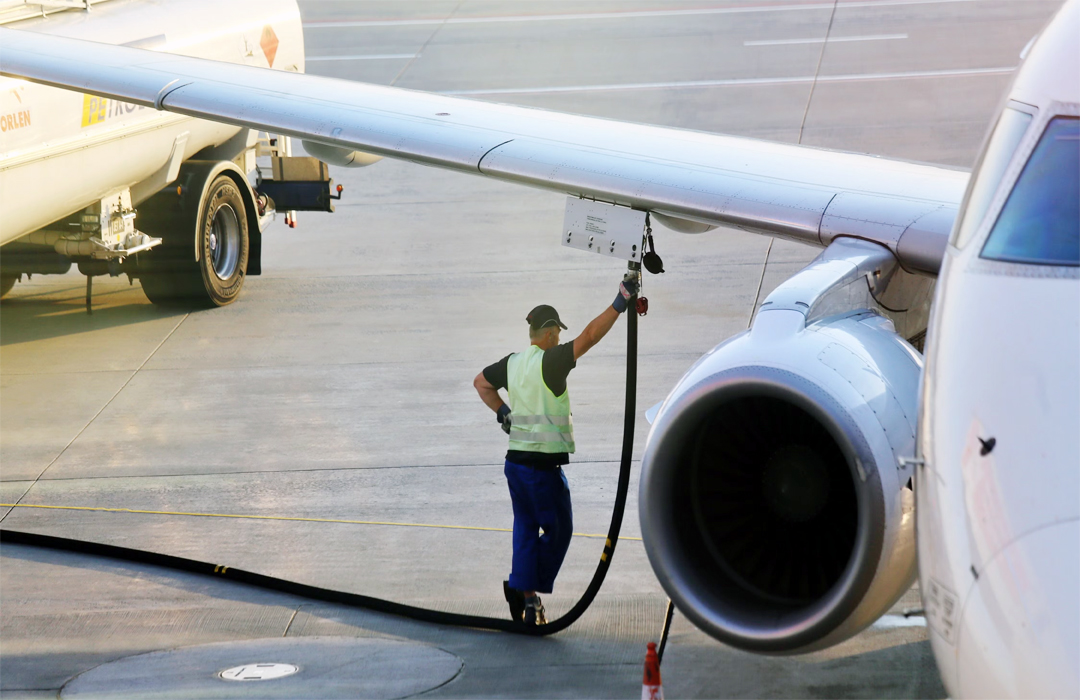
Global airlines are scrambling to respond as jet fuel prices have surged far beyond crude oil costs since the start of US-Israeli war on Iran, leaving even carriers with hedging contracts exposed to unprecedented losses.
Notably, airlines buy jet fuel in advance at a fixed price to protect themselves from fuel price increases. This is called fuel hedging. Jet fuel is expensive and its price range swings frequently. High price leap can make airlines lose money. If an airline expects fuel prices to rise, it locks in present price for future fuel. That way, even if market prices go higher later, they pay the lower, agreed-upon price. But, if fuel prices drop instead of rising, the airline ends up paying more than the market price. Bangladeshi airlines skip hedging because it is risky and costly, but that leaves them vulnerable to fuel price jumps.
Jet fuel prices have doubled since Iran conflict began, vastly outpacing the one-third rise in crude oil prices. This dramatic gap has forced airlines worldwide to announce fare increases, fuel surcharges and capacity reductions to protect shrinking margins.
Cathay Pacific Airways Chief Financial Officer Rebecca Sharpe acknowledged the crisis after reporting earnings on Wednesday. “It’s a dramatic increase. Our hedging is on crude oil rather than jet fuel. And therefore, while we do have some protection from that hedging, obviously, it’s not protecting against the jet fuel price in totality”, Sharpe said in Hong Kong.
Aviation expert Hans Joergen Elnaes noted that historically, elevated fuel prices tend to remain high for months during Middle East crises. Nathan Gee, Bank of America’s head of Asia Pacific transportation research, identified budget carriers as particularly vulnerable. “Traditionally, the history is low-cost carriers that carry the most price-sensitive customers. They’re the ones that get squeezed the most in this environment”, Gee said.
Budget carriers like US-Bangla Airlines (serving domestic and short regional routes) are especially vulnerable to prolonged Middle East fuel spikes, as noted by experts, carrying price-sensitive Bangladeshis with thin margins and no hedging.
Prolonged high fuel prices (months-long historically) squeeze these low-cost options, forcing domestic or regional fare hikes that hit rural migrants and low-income families hardest, reducing travel affordability for Gulf job commutes or family visits. Fewer affordable flights from rising fuel costs could slow Bangladeshi workers traveling to the Gulf, delaying remittances that still total USD 2,500-3,000 crore (TK 3,07,374 crore 75 lakh to TK 3,68,849 crore 70 lakh) annually and support about 15% of households.
US and Chinese major carriers like Delta, United, American Airlines, Air China, and China Eastern lack fuel hedging, making them fully vulnerable to jet fuel spikes from events like the recent Middle East tensions.
Bangladeshis, who frequently use these airlines for US study visas, family reunions, and China trade or business travel, face sharp fare hikes on Dhaka-US or China routes, as carriers pass on full costs without hedging buffers.
Higher costs delay US university plans for thousands of Bangladeshi students annually. Expensive return flights strain overseas workers’ budgets. Elevated air cargo rates hit RMG exporters shipping to US or China markets. If prices fall later, hedgers could overpay, but current spikes favor the unhedged only short-term.
In Europe, where hedging is common, JP Morgan analysis shows that sustained 10% increase in jet fuel prices could hit Wizz Air’s operating profit by as much as 31% this year. Impacts range between 3%-10% for Air France KLM, Lufthansa, British Airways owner IAG and Ryanair.
A sustained 10% increase in jet fuel prices would raise operational costs for airlines like Air France-KLM, Lufthansa, and British Airways (IAG) that serve Bangladesh, leading to higher airfares on routes to and from Dhaka. Bangladeshis, who rely heavily on these European carriers for outbound migration, education, tourism, and business travel, would face steeper ticket prices, straining remittance-dependent families and students abroad.
Elevated fares hit low-to-middle-income passengers hardest, delaying family visits or study plans. Higher logistics costs for imports via Europe could push up consumer goods prices in Bangladesh. Exporters using air cargo face margins squeeze, risking job losses in a key employment area. Wizz Air and Ryanair’s absence in Bangladesh means no low-cost alternative, amplifying the burden.
Bangladeshis are facing compounded travel and economic pressure due to Asia’s widened jet fuel refining margins (USD 65–144, or nearly TK 8,000–18,000 per barrel) between March 4–11. These widened margins push costs beyond crude oil price spikes, significantly increasing airlines’ fuel surcharges.
As a result, families sending workers to the Gulf or Malaysia may face higher expenses; for instance, Dhaka–Dubai fares could rise by more than TK 10,000 per round trip. Meanwhile, as of Wednesday, 1,200 tons of garments remain stranded at Dhaka Airport due to suspended Middle East cargo flights, delaying payments and threatening jobs. Rising import logistics costs are also pushing up prices for essentials such as food and oil, placing further strain on low-income households that depend on remittances.
“That’s what blew out last week and that’s where everyone is less protected”, BofA’s Gee said.
BofA said that Asian airlines’ 2026 net profits could drop by average 6% for each USD 10 (nearly TK 1200) per barrel increase in refining margins for 90 days, assuming no pricing offsets.
Bangladeshis may have to pay more for flights if Asian airlines’ profits fall. For every USD 10 increase in jet fuel refining costs, airlines could raise ticket prices to cover the extra expense.
Many Asian airlines had no hedging or only hedged against Brent oil price benchmark. Singapore Airlines and Virgin Australia stand out with more protection against jet fuel price rises, industry analysts said.
Singapore Airlines’ strong fuel hedging (covering about 40% of needs) shields it from sharp jet fuel price rises, keeping fares on its direct Dhaka flights more stable compared to less-hedged rivals. Cheaper access to jobs or education via Singapore hub eases costs for remittance families.
Cathay’s Sharpe explained many airlines lack jet fuel hedging because market is far smaller and more costly to hedge than oil. “The market is very thin and it makes it very expensive. Fuel prices can be highly volatile and we don’t have a crystal ball as to what the future will bring”, she said.
Her point on thin or volatile jet fuel hedging markets explains why Bangladeshi airlines like Biman or US-Bangla avoid jet fuel hedging because it’s expensive and unpredictable, leaving them vulnerable to sudden price spikes, like the recent Middle East crisis.
Source: Reuters