
Kantajew Temple: Dinajpur's Terracotta Marvel Now Emblazoned on National Currency
প্রকাশ: বৃহস্পতিবার । নভেম্বর ২৭, ২০২৫
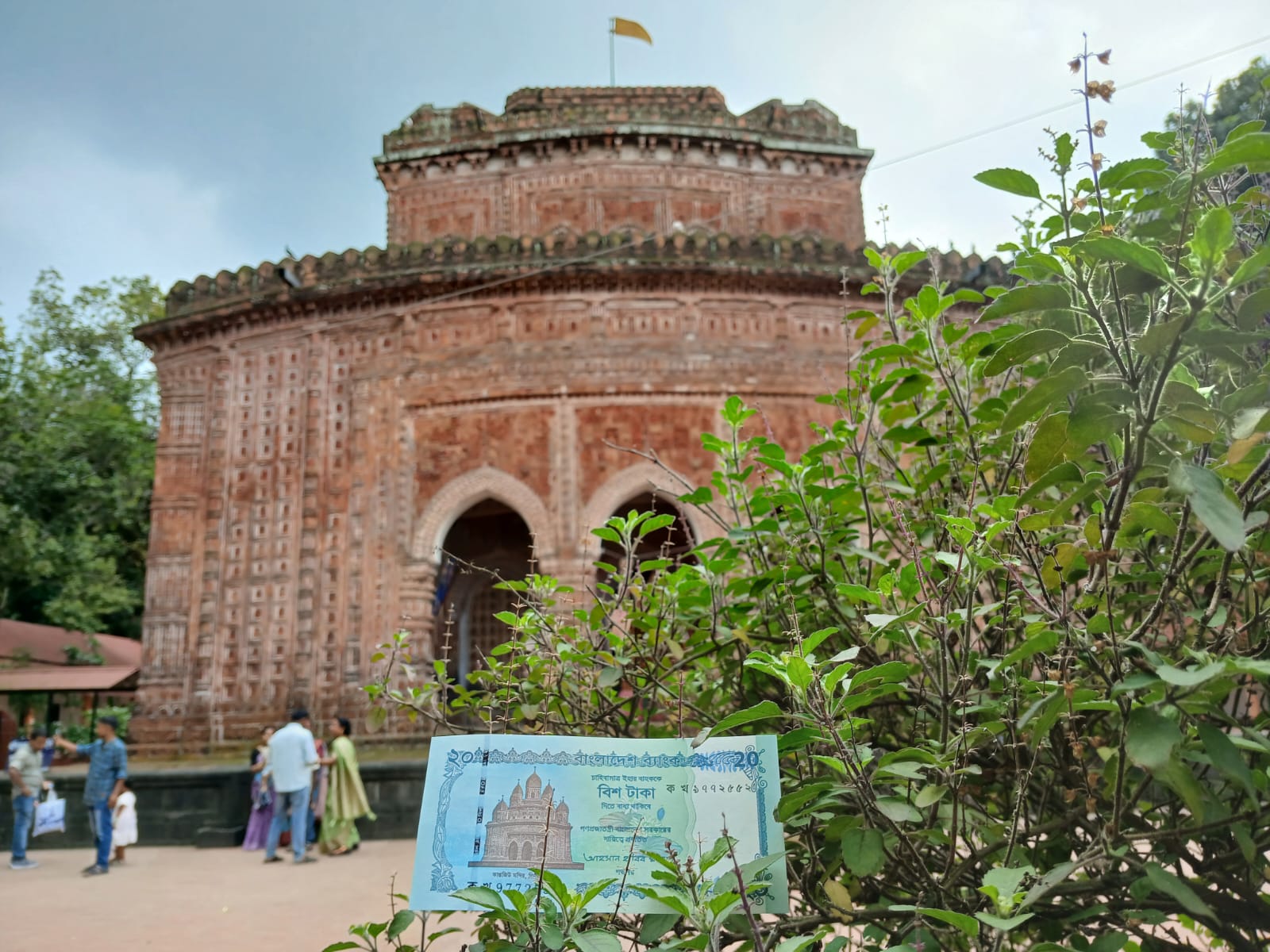
The Kantajew Temple (also known as the Kantanagar Temple), which is located in northern Bangladesh along the Dhepa River, has evolved from a Hindu pilgrimage site to a national symbol of architectural magnificence. Interest in this 18th-century terracotta masterpiece has been rekindled by its recent appearance on Bangladesh's new 20 taka banknote, which was released on June 1, 2025.
Historical Legacy: A Maharaja's Vision
Construction: Initiated by Maharaja Prannath Roy in the early 18th century and completed by his son, Maharaja Ramnath Roy, in 1752.
Purpose: Built to enshrine an idol of Lord Krishna, reflecting the region's syncretic cultural roots under the Dinajpur Raj.
Survival: Withstood the 1897 Assam earthquake, though its original nine spires (Navaratna) were reduced to one. Government-led restorations have preserved its essence.
Architectural Marvel: A Chariot to the Heavens
The temple’s three-tiered, pyramid-like structure (height: ~50 feet) mimics a celestial chariot, with intricate terracotta panels narrating timeless stories:
Ground Floor:
Scenes from Krishna’s life: Divine play (leela), battles with demons like Bakasura.
Snapshots of 18th-century aristocracy: landlords in palanquins, river festivals, and hunting expeditions.
Second Floor:
Episodes from the Mahabharata and Ramayana.
Royal processions with elephants, camels, and cavalry.
Third Floor:
The third floor features childhood tales of Krishna, which include his escape from King Kansa's assassins.
Cultural Significance: Beyond Religion
Ras Mela Festival: A month-long November fair celebrating Krishna’s dance (Rasa), drawing interfaith crowds.
Daily Worship: Continues uninterrupted, with rituals performed by descendants of the original priests.
National Recognition: A Temple on Currency
The new 20 taka note pairs Kantajew Temple (front) with Somapura Mahavihara (back), highlighting Bangladesh’s pluralistic heritage.

Farhadur Rahman, a researcher, took a picture with the architectural gem of Bangladesh while holding a 20 taka note.
Visitor Guide
Location: Kantanagar village, Kaharol Upazila, 20 km north of Dinajpur city. Accessible via van/motorbike from Baromile.
Best Time: November for Ras Mela; early mornings for serene exploration.
Nearby Gems:
Nayabad Mosque: A quaint 18th-century mosque with terracotta motifs.
Ramsagar: The largest human-made lake in Bangladesh (Dinajpur Rajbari era).
Shingra Forest: Biodiversity hotspot with rare bird species.
Why Visit?
Kantajew Temple is a living record of Bengal's artistic splendor, not just a piece of architecture. Visitors can see a time when faith and skill came together to create immortality in clay as the sun creates shadows on its worn terracotta.
Plan your trip during November’s Ras Mela to witness history in motion.