
Mideast states agree new aviation aid framework
প্রকাশ: রবিবার । নভেম্বর ০৮, ২০২৬
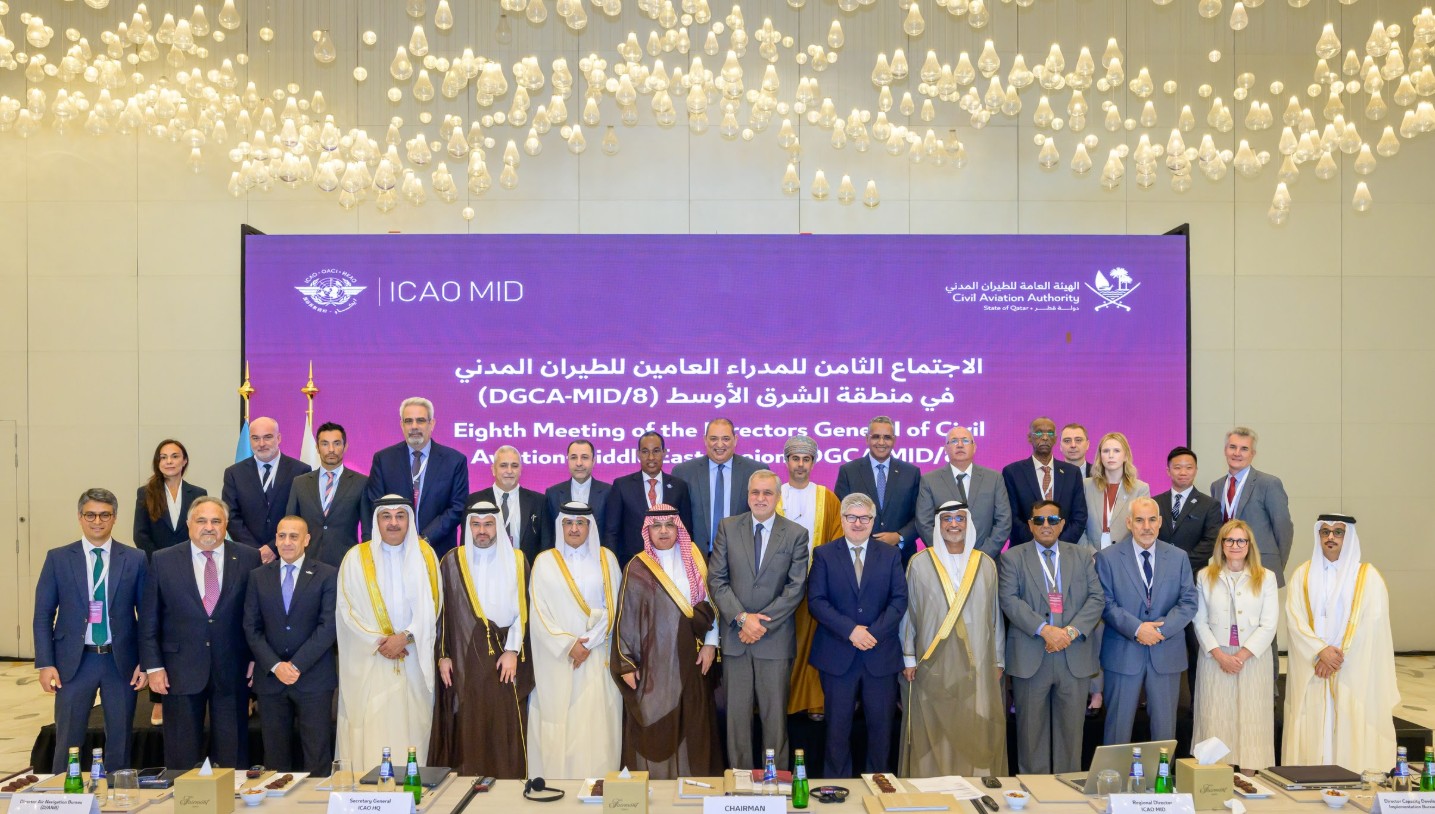
Aviation authorities from the Middle East have agreed a new framework to coordinate assistance and pool resources on shared priorities, the International Civil Aviation Organization (ICAO) said after a regional meeting in Doha.
The mechanism, called the Middle East Regional Aviation Assistance Framework (MID-RAAF), was one of the main outcomes of the Eighth Meeting of Directors General of Civil Aviation of the Middle East Region (DGCA-MID/8), held from Oct 26 to 28, 2026. ICAO organised the meeting and the Government of Qatar hosted it. According to ICAO, MID-RAAF is meant to support State-led action plans and make it easier to pool resources.
ICAO said the meeting stressed the region’s need to keep air transport running despite disruptions. Delegates highlighted contingency planning, timely information-sharing and coordinated responses to airspace closures as essential, and recognised the ICAO Middle East Contingency Coordination Team as a central mechanism for supporting safe and orderly operations. The release did not name the specific disruptions or closures.
Delegates also called for more technical assistance and capacity-building. On the sidelines, the first “MID Development Partners Dialogue” brought together regional stakeholders and international development partners to discuss strengthening partnerships and mobilising resources.
Participants reviewed progress towards setting up a Middle East and North Africa Regional Safety Oversight Organization, which ICAO said would further advance cooperation and oversight among States. Jordan also agreed to host the Middle East Regional Flight Procedure Programme, which ICAO described as a step towards expanding air navigation capacity.
ICAO Secretary General Juan Carlos Salazar, who took part in the talks, said the meeting showed strong support for the proposed ELEVATE initiative, which aims to improve air traffic management coordination between the Middle East, Asia-Pacific and Europe. ICAO said optimising route networks and cutting delays and fuel consumption is expected to bring significant efficiency gains.
In his closing remarks, Salazar pointed to broad regional consensus and the need for coordinated, needs-based support. “Implementation support remains a critical priority in the Middle East Region,” he said, adding that this reaffirms ICAO’s commitment to its “No Country Left Behind” goal. He said the meeting showed the organisation’s results-oriented approach to implementation support.
During his visit to Qatar, Salazar held bilateral meetings with Naif bin Ali Al Abri, President of Oman’s Civil Aviation Authority, and Abdulaziz bin Abdullah Al-Duailej, President of Saudi Arabia’s General Authority of Civil Aviation. ICAO said the talks covered regional collaboration and sustainable growth in civil aviation. On the sidelines, he also met officials from Iran to reinforce dialogue within the ICAO framework and review regional developments.
Salazar was accompanied by Michele Merkle, Director of the ICAO Air Navigation Bureau, Fabio Rabbani, Director of the Capacity Development and Implementation Bureau, and Mohamed Rahma, ICAO Middle East Regional Director.
Source: PR