
New Airbus A220 coming in 2027
প্রকাশ: মঙ্গলবার । জুলাই ০৭, ২০২৬
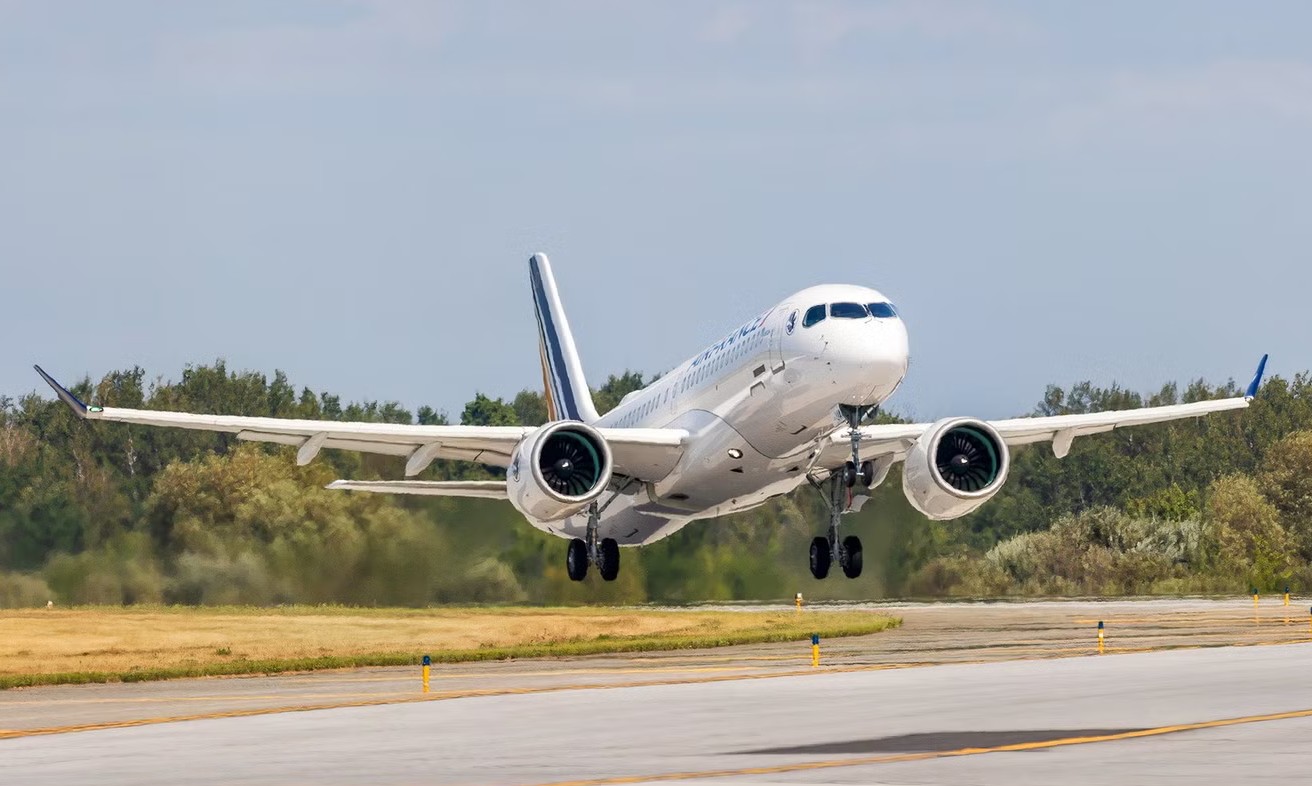
The Airbus A220 is currently preparing for a major upgrade, although the manufacturer is falling short of launching a new variant altogether. This year, new Airbus A220 deliveries will be outfitted with the manufacturer's Airspace interior, aligning the A220 with the interior feel of the A350, A330neo, and A320neo. Highlights include new upgraded extra-large overhead lockers, which will be around 20% lighter while offering more than 15% additional baggage capacity.
These aircraft will also feature 16-million-color LED lighting, allowing airlines to tailor their brand or flight phases. Airbus also intends to offer this unique interior as a retrofit option for existing Airbus A220 customers. Meanwhile, starting in 2027, a higher-density Airbus A220-300, one that features a 160-seat layout, will be offered, which provides operators with additional revenue and unit-cost gains without introducing a larger model to any given route.
However, the much-discussed Airbus A220-500 variant remains unannounced, and it does not look like Airbus has any plans to make any quick moves there as well. The manufacturer has looked to continue improving the profitability of the Airbus A220 family while also improving production rates, which offers even more flexibility for operators. Let's analyze all the upcoming changes to the Airbus A220 family.
To contextualize the upcoming upgrades to this extremely popular aircraft program, it is important to begin by breaking down the Airbus A220's origins and discussing the aircraft's industrial footprint. The Airbus A220 began as a member of the Bombardier CSeries, a five-abreast narrowbody jet that was launched on July 13, 2008, to fill the space between regional jets and larger single-aisle aircraft.
It was first introduced to the market as the CS100, and it first took to the skies on September 16, 2013, before being certified by Transport Canada on December 18, 2015. The jet entered service with SWISS on July 15, 2016. The Bombardier CS300, which flew on February 27, 2015, would be certified on July 11, 2016, and it entered service on December 14 of that year with launch customer airBaltic.
In July 2018, after Airbus took a majority stake in the company, it was quickly rebranded as the Airbus A220 and later organized as Airbus Canada Limited Partnership in June 2019. The aircraft program was now fully in the hands of manufacturing giant Airbus. The manufacturer's industrial capacity was expanded beyond Mirabel, Quebec, with a second final assembly line opened in Mobile, Alabama, in August 2019.
This allowed the manufacturer to avoid hefty import duties from US regulators. The manufacturer's ownership stake was increased to 75% in February 2020, with Bombardier electing to exit the program. The manufacturer manages the Airbus A220 as its only commercial program entirely outside of Europe. After entering service, the aircraft quickly established itself as offering strong dispatch reliability and improved passenger satisfaction over other models.
The Airbus A220 is powered by Pratt & Whitney PW1500G geared turbofan engines, and the aircraft offers a carbon-composite lightweight wing and an aluminum-lithium fuselage. Fly-by-wire controls and refined aerodynamics help deliver long legs and low-cost operations. Family weights range from 63 to 71 metric tons (139,000-156,000 lbs) of maximum takeoff weight (MTOW).
The aircraft family offers a range of 6,390-6,670 km (3,450-3,600 nautical miles), making it capable of serving almost all transcontinental niches in the United States and even longer-range lower-gauge routes within Europe. The 35 m (115 ft) Airbus A220-100 seats around 108-133 passengers, while the longer A220-300 seats a larger 130-160 passengers, depending on the specific configuration.
Ultimately, this has little impact on passengers. The upgraded A220 cabins will likely provide a marginally more comfortable passenger experience, thanks to the cabin lighting being a little nicer, and it is also less likely with these new cabins that passengers will have to place their bags far away from where they currently are.
Source: Simple Flying