
No transponder, no warning: NTSB details LaGuardia alert failure
প্রকাশ: বুধবার । মার্চ ২৫, ২০২৬
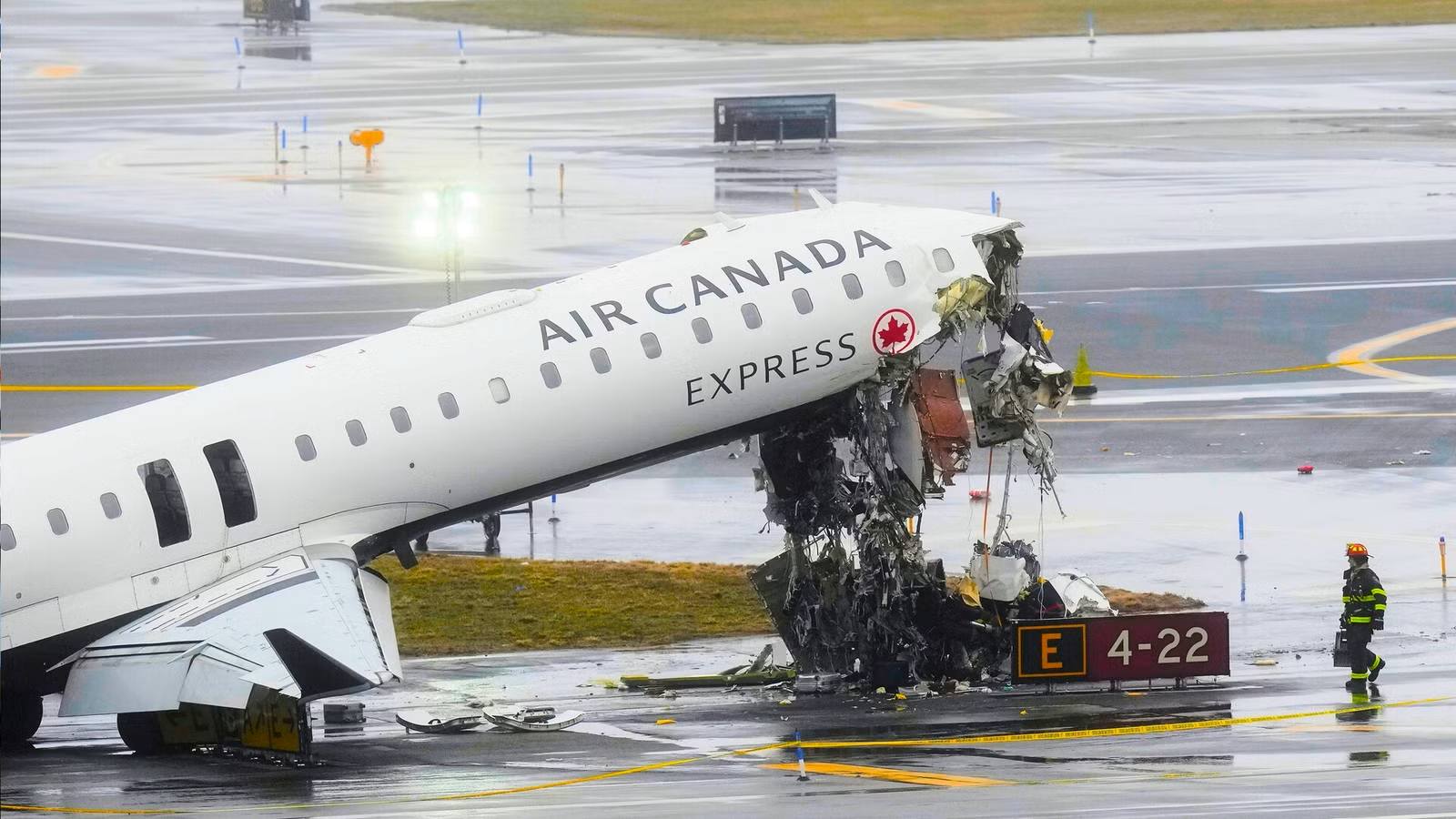
Concerning details emerged Tuesday afternoon during the second public update provided by the NTSB, following the fatal collision of Air Canada Express Flight 8646 with a firetruck on the runway at LaGuardia Airport (LGA). The briefing, given by NTSB Chair Jennifer Homendy, was provided after the agency's first full day on the scene, and confirmed that the aircraft's Cockpit Voice Recorder (CVR) and Flight Data Recorder (FDR) have been recovered and sent to Washington, DC for analysis.
While Homendy emphasized that it is still very early in the agency's investigation, she highlighted two immediate areas of concern that the NTSB has already uncovered. The first is that the airport's Airport Surface Detection Equipment, Model X (ASDE-X), designed to prevent runway incursions and ground collisions, failed to warn air traffic controllers of the impending disaster because it was "unable to alert." The second concern is that Truck One, which the CRJ-900 hit, lacked a transponder.
The Safety Equipment Failed To Alert Controllers
ASDE-X is a high-tech surveillance system used by air traffic controllers to track the movement of aircraft and vehicles on an airport's surface, aimed at preventing runway incursions and ground collisions. The system collects and integrates data from multiple sensors including radar, transponders, and multilateration sensors, to create a single, seamless map of the airport. The system also includes "safety logic" software that predicts potential conflicts, which triggers immediate visual and audible alerts in the Air Traffic Control Tower.
ASDE-X is a high-tech surveillance system used by air traffic controllers to track the movement of aircraft and vehicles on an airport's surface, aimed at preventing runway incursions and ground collisions. The system collects and integrates data from multiple sensors including radar, transponders, and multilateration sensors, to create a single, seamless map of the airport. The system also includes "safety logic" software that predicts potential conflicts, which triggers immediate visual and audible alerts in the Air Traffic Control Tower.
Homendy revealed that the ASDE-X system installed at LaGuardia "did not alert controllers" to the impending collision. While there could be multiple reasons for that, a key issue is that Truck One, which caused the collision when crossing Runway 4, was not fitted with a transponder, and was being followed by multiple vehicles. As a result, the ASDE-X system was relying solely on surface radar, which produces less precise returns, which could have affected situational awareness.
Homendy says that she personally reviewed the ASDE-X playback, and it showed "two radar targets on Taxiway Delta" but that "they are two blobs... and we don't see any of them go in front of the plane on the runway." Clearly, one of those blobs did go in front of Flight 8646, so this suggests that the system's accuracy was less than desirable. Homendy appeared to confirm this, saying that the initial analysis provided the following conclusion:
ASDE-X did not generate an alert due to the close proximity of the vehicles merging and un-merging near the runway, resulting in the inability to create a track of high confidence.
Also at the briefing was Doug Brazy, the lead investigator for the incident, who read out a summary of events from the cockpit voice recorder. This served to confirm that the fire truck was indeed cleared to cross the runway before the collision. But it also indicated that about a minute before the collision, an airport vehicle made a radio transmission to the tower that was "stepped on" by another radio transmission, and the source of that radio transmission has yet to be identified.
The captain taking control of the aircraft from the first officer just two seconds after landing is unusual, and it is likely this was in response to the impending disaster. However, he had just six seconds to react, not nearly enough time to halt the aircraft or to steer clear of the fire truck.
While passengers on board the flight reported heavier than usual braking, one of the key areas for the NTSB investigation will be the aircraft steering. On the Bombardier CRJ-900 there is only one tiller, located adjacent to the captain's seat. So it is possible that the captain saw the fire truck just seconds before impact, took control, and attempted to steer the plane to the right, away from the truck that entered the runway from the left. The NTSB investigation will determine if that is indeed what occurred.
Pilots Raised Concerns Before The Fatal Incident
Meanwhile, The Guardian reports that concerns about safety at LaGuardia had been raised well before Sunday’s fatal crash. Citing entries in NASA’s Aviation Safety Reporting System, the paper says pilots had filed anonymous reports warning about close calls, controller workload, and operational pressure at the airport.
“Please do something,” a pilot wrote last summer in one of dozens of recent reports, citing a close call when air traffic controllers failed to provide appropriate guidance about multiple nearby aircraft. Referring to the January 2025 mid-air collision over the Potomac River at Ronald Reagan Washington National Airport (DCA), which killed more than 60 people, the pilot went on to say: "The pace of operations is building in LGA. The controllers are pushing the line. On thunderstorm days, LGA is starting to feel like DCA did before the accident there.”
A different complaint from last summer described a particularly worrying moment when a departing aircraft was cleared for takeoff while another jet was only about 300 feet above the ground on final approach to the intersecting runway. The pilot said hazy conditions and possible helicopter traffic made the situation even more uncomfortable and argued that guidance on how close aircraft can safely get in such scenarios appeared unclear. Yet another report outlined how a crew was cleared to cross a runway before realizing an arriving aircraft was heading toward them.
The crash of Air Canada Express Flight 8646 will undoubtedly place even greater scrutiny on these past reports, as the NTSB works through the causes for the accident. As Homendy said at the press conference:
"We rarely, if ever, investigate an accident where there was one failure. Our aviation system is incredibly safe because there are multiple layers of defense built in to prevent an accident. So when something goes wrong, that means many, many things went wrong".
It is clear that even after its first day of investigation, the NTSB has already identified multiple things that went wrong, and it also have numerous past reports and complaints to analyze as well.
Source: Simple Flying