
Old switches, new tech: what we know about FAA outage
প্রকাশ: রবিবার । নভেম্বর ১৫, ২০২৬
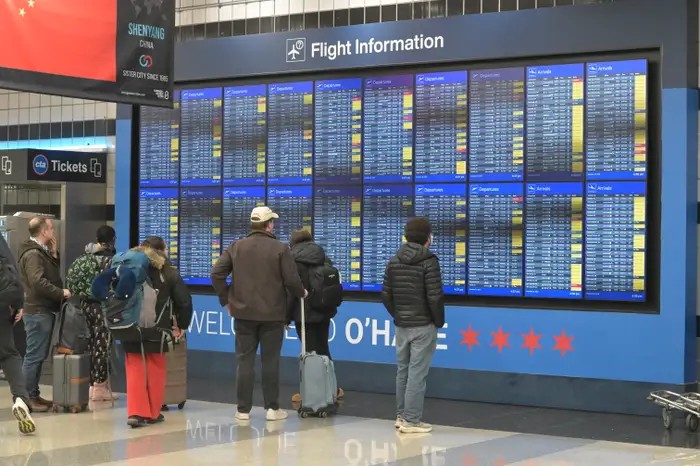
An explainer on the communications backbone behind US air traffic control, based on a report by Airways magazine, which said the network carries far more than telephone calls. It moves radar information, flight data, and other operational traffic between the systems and facilities controllers rely on. That helps explain why a communications problem can affect several functions at once, the magazine said.
What the backbone carries
The Federal Aviation Administration (FAA) calls the network the FAA Telecommunications Infrastructure (FTI). Airways said the agency’s August 2022 architecture document describes it as supporting wide-area communications across geographically separated FAA facilities and systems. L3Harris, which operates the network, says it carries voice, video, radar, weather, and flight data and is built to keep serving older systems while other parts of air traffic control are modernised.
Airways noted that a radar sensor, the network carrying its data, and the equipment displaying it do different jobs. A communications interruption can disrupt delivery without proving the sensor itself failed.
What officials have said so far
Transportation Secretary Sean Duffy attributed Friday’s disruption to overloaded older switches and routers producing inconsistent information, according to Airways. He described instability in radar information and communications at en route centres and terminal radar approach control facilities and said the FAA had not lost all radar or telecommunications. The ground stop was a precaution, he said.
At the same briefing, Homeland Security Secretary Markwayne Mullin offered a preliminary explanation involving patches and new equipment, saying newer technology was “overwhelming the older system”. Airways said he did not identify the specific changes or show how they contributed to the overload. It added that the official material it reviewed does not establish the full sequence of events.
Old technology and IP already coexist
Airways said references to legacy equipment can wrongly suggest the whole network runs on one obsolete technology. The FAA’s 2022 document already listed an Operational IP (Internet Protocol) network among FTI’s services.
It also cited a November 2023 independent safety review hosted by the FAA. That review warned that the network relied on time-division multiplexing, an older technology whose support from telephone providers was disappearing. It said an unplanned failure of such equipment could disconnect individual installations, or even an en route centre, from the wider network, and that the FAA’s July 2023 risk assessment had put FTI risk at its highest level. Airways stressed that linking that warning to Friday’s outage would require evidence identifying the affected equipment and the failure sequence.
Backup design and Friday’s evidence
L3Harris describes multiple carriers and built-in redundancy as features of FTI, Airways said. These are the contractor’s descriptions, not a record of which backup paths activated on November 13 or how they performed. The magazine said that a nationwide departure halt alone does not show that every backup failed.
Why SMART is a separate system
Airways explained that the FAA’s Strategic Management of Airspace, Routes, and Trajectories (SMART) tool is a planning aid that combines weather, traffic, and capacity data to help specialists make scheduling recommendations, which local facilities can accept or decline. Duffy said SMART was disconnected from the affected system and could not have caused the disruption. Airways described this as his stated exclusion of the tool, which does not establish what started the overload.
Modernisation and its challenges
The magazine cited a September 2026 Government Accountability Office (GAO) assessment, which found the FAA lacked a reliable lifecycle cost estimate and an integrated master schedule for the first phase of its modernisation initiative. As of May, the agency had 11,389 individual project schedules that GAO said were not integrated. The Department of Transportation partially concurred with GAO’s recommendations. Airways said these findings concern how the work is planned and do not link a scheduling weakness to Friday’s outage.
What an account still needs to establish
Airways said a full technical account must identify the affected components and facilities, what triggered the overload, how the disruption spread to multiple locations, how alternate connections behaved, and what restored stability. Until then, it said, the backbone’s documented role and past vulnerabilities provide context for the disruption, not a completed explanation of its cause.