
Opening HSIA’s 3rd Terminal Is now urgent
প্রকাশ: শুক্রবার । এপ্রিল ১৭, ২০২৬
By Tanzim Anwar
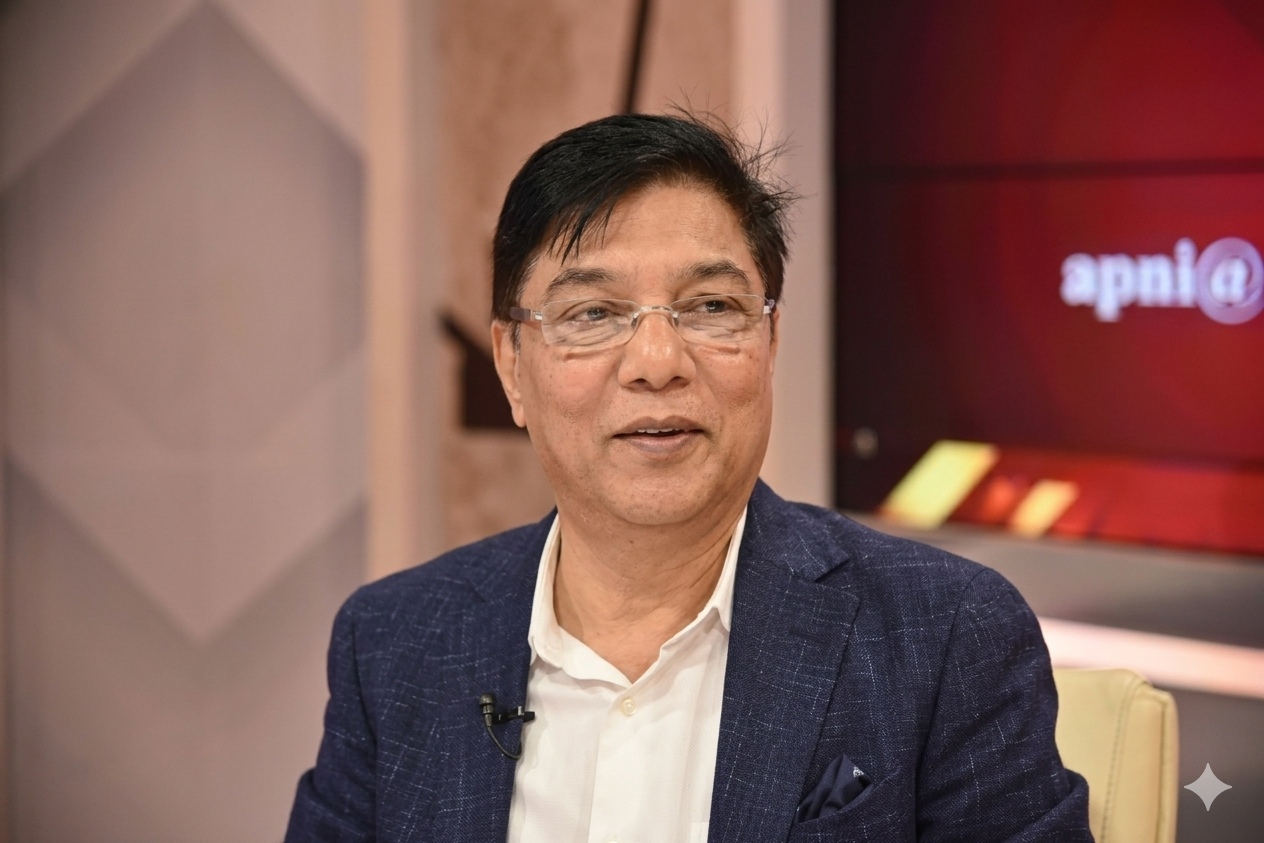
Bangladesh’s State Minister for Civil Aviation and Tourism M Rashiduzzaman Millat says the government is moving urgently to resolve the long-pending third terminal issue at Hazrat Shahjalal International Airport while advancing parallel reforms in airline capacity, passenger services and tourism development.
In an interview with
Tanzim Anwar, President, Aviation and Tourism Journalists Forum (ATJFB), the
minister outlined efforts to conclude negotiations with the Japanese side,
expand Biman Bangladesh Airlines’ fleet, improve airport discipline and unlock
tourism’s economic potential through a structured development roadmap.
The third terminal remained closed for nearly one and a half years, while the existing terminals are under heavy pressure. What is the latest situation?
From the outset, our Hon’ble Prime Minister instructed us to resolve this matter and open the third terminal as quickly as possible to reduce public suffering.
We found that the earlier contract arrangement had been cancelled during the interim period. After assuming office, we reopened engagement with the Japanese side and initiated fresh negotiations. The Foreign Ministry became involved, and high-level discussions followed, including participation from a Japanese Vice Minister.
We asked for a revised proposal, and with IFC’s support we analysed it thoroughly. The key issue is revenue sharing — aligning their expectations with our existing revenue structure. We have requested further revisions.
We recently explained the remaining financial gap to the Japanese Ambassador and highlighted the longstanding Bangladesh-Japan partnership. The response has been positive. A final round of discussions is underway involving all stakeholders.
We are hopeful of
reaching a conclusion soon. Once agreed, formal processes may take three to
five months, but importantly, the financial uncertainties will be resolved. Our
priority is clear — open the terminal as quickly as possible.
What impact will the third terminal have on capacity and aviation growth?
The impact will be transformative. The current system is overstretched. Existing facilities are handling around 12 million passengers, far beyond their intended capacity.
With the third terminal, total capacity could rise to about 19 million passengers. With additional airline operations, this could reach 24–25 million.
This is not only about numbers. It is about improving service quality, restoring operational discipline and enhancing Bangladesh’s credibility as a regional aviation hub.
Under the PPP structure
being discussed, even if profits are modest initially, there will be no loss.
More importantly, service standards will improve, and the asset will remain
with Bangladesh in the long term.
Are foreign airlines holding back due to delays?
Yes, to some extent. Airlines closely monitor infrastructure readiness. When they see congestion and uncertainty, they hesitate.
The third terminal is
more than infrastructure — it signals readiness. Once operational, it will
improve confidence and attract more foreign carriers, increasing connectivity
and frequencies.
When can the third terminal realistically open?
It depends on the
outcome of negotiations. Once discussions conclude, we will have a clearer
timeline.
If progress continues
positively, it could be by the end of this year or early next year. The key
point is that the government is treating this as an urgent priority.
What is the government’s plan for expanding Biman’s fleet?
Fleet expansion is essential. The previous administration had moved towards acquiring 14 Boeing aircraft, and the decision remains in principle.
However, delivery could take up to five years. We cannot wait that long. So we are exploring dry-lease options to bridge the gap. This may include both Boeing and Airbus aircraft.
Currently, Biman operates around 14 aircraft, whereas the country needs at least 30–35 over time. This gap affects route expansion and service reliability.
Our approach is to
proceed with the Boeing plan while using leasing — potentially including Airbus
— to meet immediate operational needs.
Will the Boeing decision be reviewed, given Airbus interest?
The decision stands in principle, but we are analysing all options. There is also a broader economic dimension — Bangladesh’s trade balance, particularly with the United States.
At the same time, we
have engaged with Airbus and European stakeholders. Our goal is to act in
Bangladesh’s best interest. If Airbus leasing helps bridge short-term gaps, we
will consider it alongside long-term commitments.
Passenger dissatisfaction at Dhaka airport has been significant. How will this change?
If the Japanese side manages operations, service quality can improve significantly. Clear benchmarks have been set — including queue times, baggage delivery speed and passenger flow efficiency.
Nearly 80 operational
service indicators have been defined. If implemented properly, they will bring
services in line with international standards.
What improvements are already being made before the terminal opens?
We have not waited.
Several immediate steps have been taken:
- Improved baggage handling
speed
- Enhanced belt
cleanliness
- Reduced theft and
tampering
- Deployment of
magistrates and body-camera monitoring
- Better passenger flow
management
We also improved exit
channel arrangements after direct inspections. These operational improvements
directly affect passenger experience and are essential for restoring
confidence.
You have conducted surprise inspections, even at night. Why?
Because real conditions
are not always reflected in reports. Direct observation is essential.
Our goal is to restore discipline. In many areas, inefficiencies had become normal. We are changing that culture.
Leadership has set the
tone — punctuality, accountability and oversight. These are the foundations of
reform.
What did you find within Biman’s internal structure?
We found significant staffing gaps. In some cases, individuals were handling multiple roles, which is not sustainable.
However, Biman is not fundamentally weak — it has recorded profits in most years. The issue is organisational efficiency.
We are reviewing
operations department by department and taking steps to fill vacancies and
strengthen management. The objective is to build a more professional,
internationally competitive airline.
What preparations are being made for Hajj operations?
Hajj operations must be smooth and uninterrupted. We have already approved the required manpower and made necessary arrangements.
Our focus is on ensuring
better coordination, improved passenger handling and overall operational
efficiency during this critical period.
What is your broader vision for tourism?
Tourism is a strategic growth sector. We aim to develop Bangladesh into an international-standard tourism destination.
The Prime Minister has directed us to attract more foreign tourists while improving services for domestic travellers, who already number around 20 million annually.
Tourism can generate
significant economic value — employment, investment and GDP growth.
What development plans are being considered?
We are working on
short-, medium- and long-term plans.
In the short term:
- Upgrade
facilities
- Complete unfinished
projects
- Improve services
- Increase international
promotion
In the longer term:
- Develop major
destinations through PPP models
- Attract foreign
investment
- Expand coastal and eco-tourism
We have already received
proposals, including for Cox’s Bazar and other destinations. Within 180 days,
we aim to finalise a structured roadmap for approval.
Has Bangladesh underperformed in tourism promotion?
Yes. Bangladesh has world-class
destinations, but they have not been properly marketed.
Countries like the Maldives demonstrate what is possible with strategic planning. We need stronger branding, investment and coordination to realise our potential.
What about Saint Martin’s Island?
No final decision has
been taken yet. It requires careful consideration. Discussions will take place
at appropriate levels, including possibly the cabinet.
What is your message to the aviation and tourism sectors?
We are moving from stagnation to action.
Our focus is on discipline, faster decision-making and improved service delivery — whether in airport operations, airline expansion or tourism development.
There are challenges,
but we are addressing them step by step. If we maintain this momentum, both
aviation and tourism can enter a stronger and more sustainable growth phase.