
Rolls-Royce Tests New Tech To Protect Jet Engines From Desert Dust
প্রকাশ: রবিবার । নভেম্বর ২৩, ২০২৫
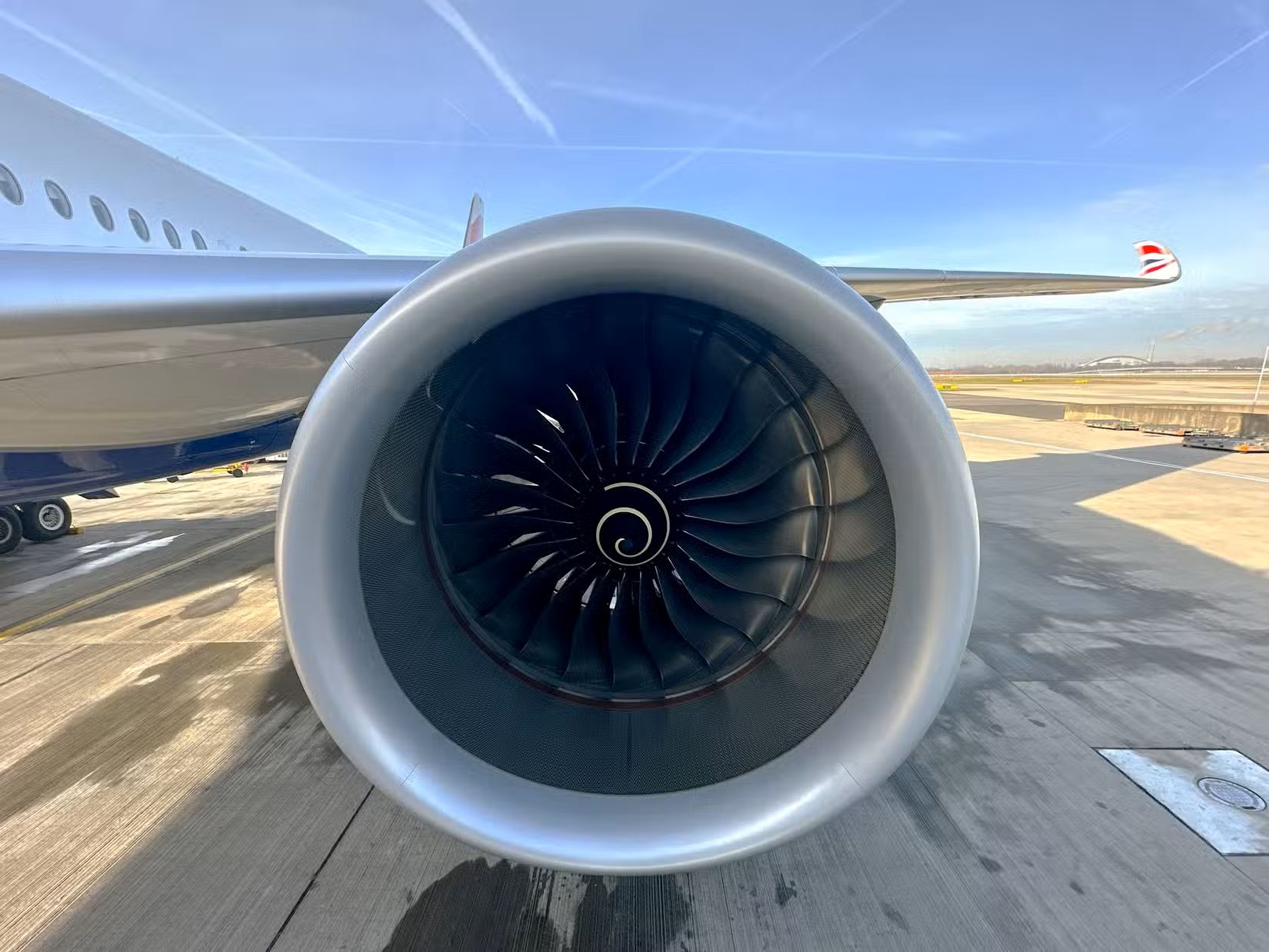
British engine manufacturer Rolls-Royce is currently in the process of testing new technology at its Derby site to protect jet engines from the damaging effects of desert dust and sand. Fine particles ingested during takeoff can enter the hottest parts of an engine, corroding components, clogging internal passages, and forcing more frequent engine overhauls, especially for aircraft flying in the Middle East.
This issue does not affect flight safety, but it does hurt efficiency, fuel burn, and overall durability. The new text campaign undertaken by the manufacturer aims to understand exactly how dust degrades hardware and to validate improved designs so that engines can stay on the wing for far longer, reducing overall disruption and life-cycle costs that airlines might have to bear.
The dust-protection work is being carried out on Rolls-Royce Trent engines at the company's Testbed 80 facility in Sinfin, Derby, and it is done using a synthetic dust developed by the University of Manchester to mimic the fine, talc-like particles that are found in the Middle East. Under a three-phase program, engineers will be trying out new alloys and revising cooling geometries on components that sit in the hottest parts of an aircraft's engine core.
Engines tested in the first two phases have already returned to airline service and can now operate around 60% longer between major visits to the engine shop, with a target to double that interval by roughly 2028, according to reports published by the BBC. The initiative sits within a wider durability program (an investment that exceeds $1 billion) and spans across several long-haul engine programs, including the high-power Trent XWB-97, a major powerplant for the Airbus A350.
When jet-powered aircraft operate in dusty desert environments, the principal challenge comes during takeoff and climb, when engines ingest concentrated plumes of fine particles. Once inside, sand and dust will melt on contact with the hottest turbine surfaces, forming deposits that alter airflow and heat loads while chemically attacking the jet engine's protective coatings.
If coolant passages are ultimately blocked, internal metal temperatures will rise significantly more, shortening component life and eroding efficiency long before the engine's safety margins are actually approached. Rolls-Royce's response combines new high-temperature alloys with a redesign of where and how cooling air is delivered so that passages are significantly less likely to become clogged.
In this way, Rolls-Royce can recreate real-world dust conditions within its facility in Derby without having to rely on scattered in-service data, which allows the company to measure exactly how different designs behave and iterate quickly, ultimately turning the harshest Middle Eastern operating profiles into a proving ground for tougher, longer-lasting engines worldwide. This results in a data-rich test campaign that solely focuses on durability.
Rolls-Royce is not the only manufacturer interested in developing the world's most durable jet engines, so clearly, there is a lot of strategic and financial value to having incredibly durable engines. For carriers, especially those based in the Gulf, the economic stakes behind Rolls-Royce's dust work are substantial. Desert operations expose engines to chronic particle ingestion, forcing more frequent shop visits, higher parts consumption, and ultimately lost revenue while aircraft sit in maintenance hangars.
Pushing overhaul intervals significantly further out, ultimately with a goal of doubling engine time-on-wing before major overhauls, could eventually translate into millions of pounds in avoided costs across a fleet. This also occurs while cutting the carbon footprint associated with manufacturing, transporting, and installing replacement hardware. This effort comes in response to customer pressure.
Emirates president Sir Tim Clark has publicly questioned the durability of the Trent XWB-97, which powers the airline's Airbus A350 fleet. Demonstrating that the toughest Middle Eastern missions can be flown with fewer shop visits and more stable performance is therefore about protecting Rolls-Royce's reputation as much as its customers' balance sheets, reliability metrics, and, most importantly, overall operational flexibility. Source: Simple Flying