
Saidpur airport’s international status stalls seven years awaiting Tk 10,000 Cr.
প্রকাশ: শনিবার । নভেম্বর ২২, ২০২৫
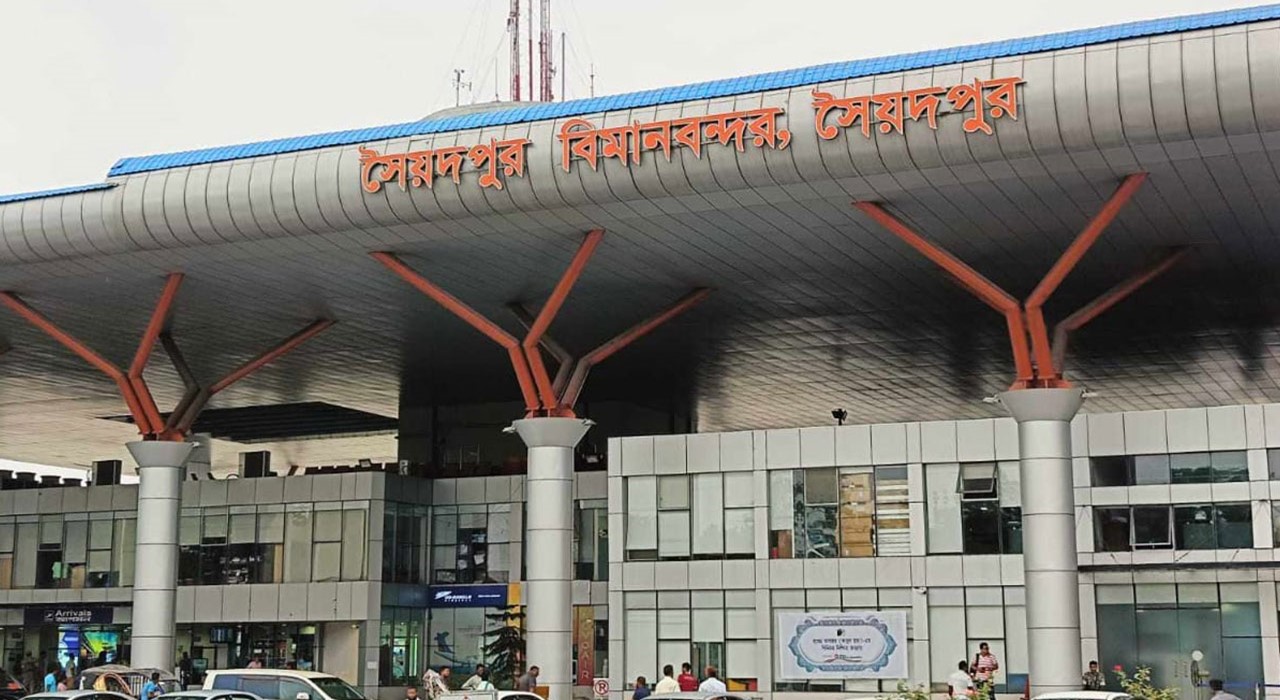
Saidpur Airport, Bangladesh's busiest domestic hub, is stuck in limbo seven years after being declared an international airport in 2017. The project, requiring Tk 10,000 crore (Cr.), remains shelved at the Finance Ministry due to lack of fund approval.
Built during War War II as an Allied airfield, Saidpur began domestic operations in 1979. It now connects Dhaka, Chattogram and Cox's Bazar through 20 to 22 daily flights operated by four airlines. Its strategic location makes it a gateway to Nepal, Bhutan and India, Nepal's Biratnagar would be just 20 minutes away once international operations begin.
Neighbouring countries have shown keen interest in using Saidpur as an alternative to their risky airports. Researchers believe this would reduce Nepal's reliance on India for importing liquid fuels and essential goods. For Bangladeshi travellers, the costs and time to reach Nepal and Bhutan would drop significantly.
2017 declaration outlined plans to extend the existing 6,000-foot runway to 12,000 feet. A field book for acquiring 912 acres of land was prepared in 2019, with notices issued to landowners under four categories. Land acquisition alone requires Tk 5,500 crore. Once funds are released, the project would take five to six years to complete.
Airport officials say the transformation could reshape the northern region's economy. Foreign investment in Uttara EPZ would increase, employment would rise, and exports of agricultural products and garments would become easier. Yet the Finance Ministry's silence continues to delay this historic opportunity.
Local
communities remember the airport's dark past during the 1971 Liberation War,
when hundreds of Bangalees were tortured and killed while building the Jamjam
airfield under Pakistani occupation. Now, they hope the airport's future will
bring prosperity instead of pain.