
Singapore imposes levy to fund sustainable aviation fuel
প্রকাশ: সোমবার । ফেব্রুয়ারি ১৬, ২০২৬
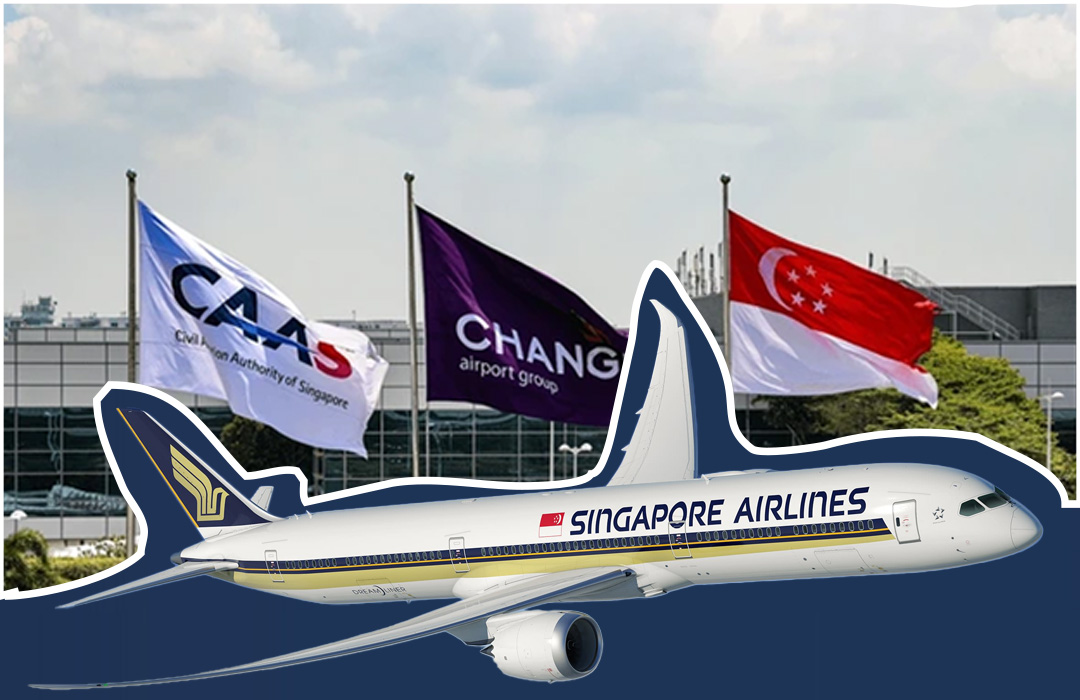
Singapore will implement its first sustainable aviation fuel levy from October 1, charging passengers between 75 cents to USD 32 per ticket to support cleaner burning fuel production.
Levy affects all flights departing from Changi International Airport, which handled a record 7 crore passengers last year. Passengers will pay surcharges based on travel distance and cabin class. Economy travellers within Southeast Asia will pay the lowest rate of 1 Singapore dollar (approximately 75 US cents), while premium cabin passengers flying to Americas will pay 41.60 Singapore dollars (about USD 32).
Daniel Ng, chief sustainability officer at Civil Aviation Authority of Singapore, told Associated Press that the levy allows ‘all aviation users to do their part to contribute to sustainability at a cost which is manageable for the air hub’. Tax will appear on tickets and air cargo contracts for transparency.
Southeast Asia is emerging as a global hub for sustainable aviation fuel production. The largest sustainable aviation fuel (SAF) producer in Southeast Asia is Neste, the Finnish renewable fuels company that owns and operates the major SAF refinery in Singapore’s Tuas district. The country began constructing a next-generation facility this year. Company has supply agreements with major carriers including JetBlue and Singapore Airlines.
Thailand launched a new SAF plant in Bangkok in 2025, operated by BSGF Company Limited, which is an affiliate of Bangchak Group (Bangchak Corporation Public Company Limited). Malaysia and Vietnam achieved domestic production milestones last year, while Indonesia announced plans to expand current operations.
Tat Chuan Goh from Aether Fuels, the Chicago-based company building Singapore's new plant, confirmed momentum is building. Region's abundant access to agricultural and forest waste positions it as a ‘pot of gold that can really be scaled up’, Goh said.
Association of Southeast Asian Nations estimates the region could produce 85 lakh barrels of SAF daily by 2050. Vietnam delivered domestically-made SAF mixes to VietJet Air in 2025, while Malaysia's first deliveries to Malaysia Airlines and European customers occurred last year.
Aviation contributes about 2.5% of annual global carbon emissions, according to International Energy Agency. UN-backed International Civil Aviation Organization set a goal of zero net carbon emissions for 2050. Using SAF could cut about 65% of industry emissions.
Global SAF production growth is forecast to slow for first time since large-scale output began in 2018, partly due to Trump administration's reversal of clean energy policies.
Source: Associated Press/KDVR