
Terminal talks stall as Bangladesh eyes Japan Deal
প্রকাশ: শুক্রবার । এপ্রিল ০৩, ২০২৬
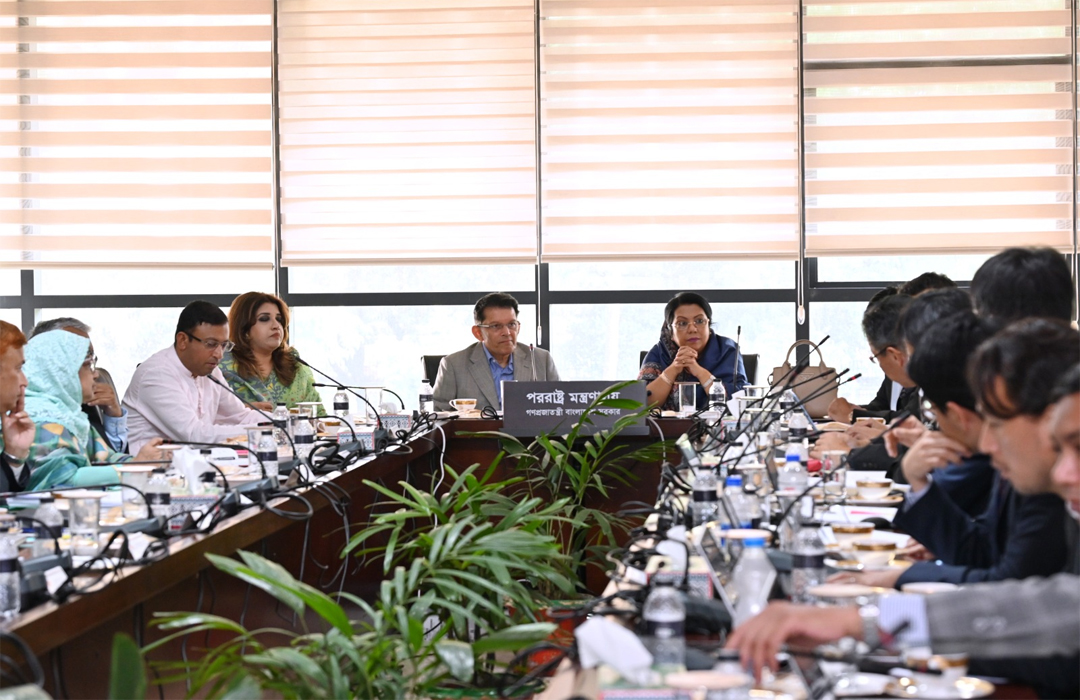
Dhaka and Tokyo fail to reach consensus in second round, though Bangladesh signals preference for Japanese consortium to run HSIA’s third terminal
Bangladesh and Japan have yet to reach a consensus on the operation and maintenance of the third terminal of Hazrat Shahjalal International Airport, even as Dhaka reiterated its preference to award the contract to the Japanese consortium through negotiations while safeguarding national interests.
The deadlock surfaced after the second round of high-level negotiations held at the Ministry of Foreign Affairs, where both sides engaged in detailed discussions but stopped short of finalising a deal.
Civil Aviation and Tourism Minister Afroza Khanam said talks are now centred on financial and revenue-related aspects widely seen as the most sensitive components of the agreement.
“We are currently working on the revenue-related aspects. That is what the discussions are focused on. Once we reach a mutual understanding on that, we will be able to arrive at a decision. So, we will sit down for discussions again,” she told reporters after the meeting.
Despite the lack of immediate breakthrough, the minister made it clear that Bangladesh prefers a negotiated settlement with Japan rather than pursuing alternative options, including open tendering.
“We are repeatedly sitting at the table to safeguard national interests. We want to make the terminal operational as soon as possible,” she added, signalling both urgency and caution.
Key sticking points: money and control
Officials familiar with the negotiations said the discussions revolved around three core issues - embarkation fees, upfront payments and revenue-sharing arrangements.
These elements determine how income generated from passenger services and airport operations will be distributed, making them central to both commercial viability and national interest.
State Minister for Civil Aviation and Tourism M Rashiduzzaman Millat acknowledged that negotiations remain fluid.
“We are in negotiations. The discussions are still proceeding, it’s an ongoing process. Hopefully, it will be finalised soon,” he said, while urging the Japanese side to submit a further revised proposal.
The Japanese delegation, led by Nakayama Rieko, presented an updated offer during the बैठक, which officials say reflects some flexibility but still requires refinement to align with Bangladesh’s expectations.
High stakes, high-level engagement
The meeting brought together a powerful Bangladeshi delegation, including Foreign Minister Dr Khalilur Rahman, State Minister for Foreign Affairs Shama Obaed Islam, and Prime Minister’s Foreign Affairs Adviser Humayun Kabir.
Senior officials such as Bangladesh Investment Development Authority Executive Chairman Chowdhury Ashik Mahmud Bin Harun and the Civil Aviation Authority chairman also participated, underscoring the strategic importance of the project.
The second round of talks follows an earlier meeting on March 13, reflecting sustained diplomatic and technical engagement aimed at unlocking the nearly completed facility.
A terminal waiting, an industry watching
The third terminal, constructed at a cost of about Tk 21,398 crore with financing from Japan International Cooperation Agency, is over 99 percent complete. Spanning roughly 542,000 square metres, it is designed to handle an additional 12 to 16 million passengers annually, along with nearly 900,000 tonnes of cargo.
Yet, despite its readiness, the facility has remained idle for over a year due to the failure to appoint an operator, an issue widely criticised by industry stakeholders as a costly delay.
The prolonged stalemate has also constrained airline expansion, with several foreign carriers reportedly holding back new operations due to capacity limitations at existing terminals.
What next?
Officials say another round of negotiations is imminent, with both sides expected to refine positions further in search of a mutually acceptable “win–win” agreement.
If consensus is reached, signing the agreement could take up to three months, with authorities targeting the terminal’s opening within this year or early 2027.
For Bangladesh’s aviation sector, the stakes are clear - resolving the impasse is critical not only to easing congestion at Dhaka airport but also to advancing the country’s ambition of becoming a regional aviation hub.