
The crown slips: Why London Heathrow won't be Europe's busiest airport In 2026
প্রকাশ: বুধবার । ফেব্রুয়ারি ১১, ২০২৬
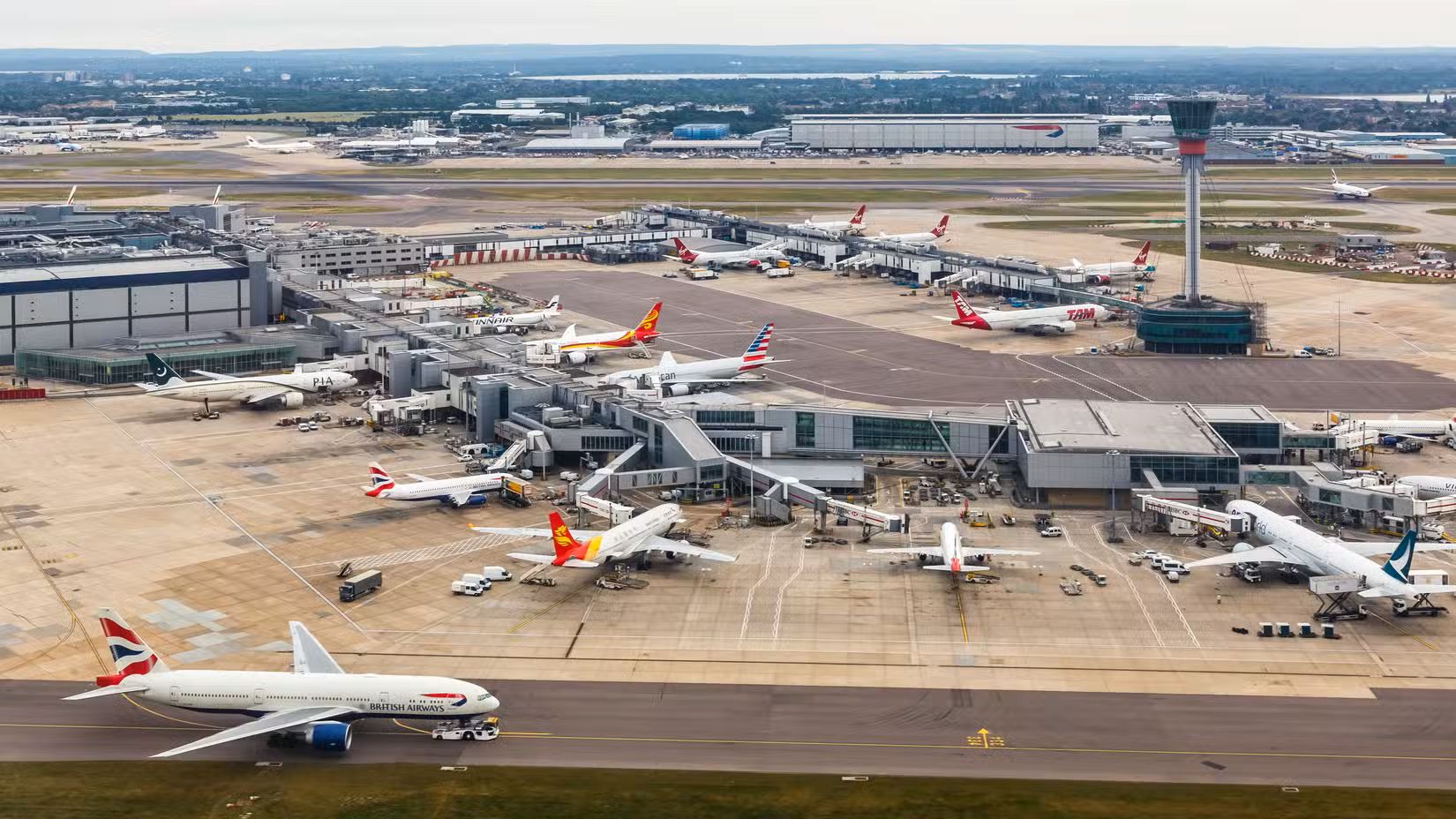
London Heathrow Airport is widely recognized as Europe’s busiest airport, and it has held the title for decades. According to ACI Europe data, London Heathrow Airport narrowly defeated Istanbul Airport in 2025, serving 84.48 million passengers, compared to Istanbul's 84.44 million. However, with traffic growth stalling in London and, in contrast, robust increases continuing in Istanbul, aviation insiders now expect Heathrow to lose the crown in 2026.
The gap between Heathrow and Istanbul is vanishing fast. Heathrow’s growth has been modest, in part because it is already operating at or near capacity and constrained by infrastructure limits. Meanwhile, Istanbul’s mega-hub is still expanding, capitalizing on geographic advantage and strong connectivity to markets across Europe, Asia, and the Middle East. What once seemed an unlikely upset now looks inevitable: the King of European skies may soon be dethroned by the Sultan at the crossroads of Europe and Asia.
Europe’s Busiest Airport Faces A Historic Turning Point
London Heathrow’s status as Europe’s busiest airport in 2025 was secured by the tiniest of margins—just 40,000 passengers separated it from Istanbul Airport. Heathrow edged ahead with 84.48 million passengers, up 0.7% from the year before, while Istanbul saw 5.5% growth to reach 84.44 million, as reported by Daily Sabah. For decades, Heathrow has been the undisputed leader, anchoring long-haul routes across the Atlantic and beyond and acting as the UK’s primary global gateway.
But the dynamics behind these numbers tell a broader story about capacity and opportunity. Heathrow’s relatively flat growth reflects long-standing runway and slot constraints. The airport's two-runway system restricts the number of scheduled flights, despite strong demand. Plans for a third runway have been approved, but construction isn’t expected to be complete until the mid-2030s. This means Heathrow’s ability to scale up traffic in the immediate term is sharply limited.
The situation is very different at Istanbul Airport: since opening in 2019, it has rapidly expanded both passenger numbers and its route network. Turkey’s geography gives Istanbul a natural advantage as a bridge between continents, and airlines such as Turkish Airlines have aggressively grown operations. What’s more, Istanbul’s airport infrastructure is newer and larger and can still absorb additional traffic.
Why Istanbul Is Closing The Gap
The looming shift at the top of Europe’s airport rankings reflects broader trends in global aviation. Following the disruption caused by the COVID-19 pandemic, traffic recovery has not been uniform. Some legacy hubs, such as Heathrow, have struggled to maintain pre-pandemic momentum due to capacity limits and regulatory hurdles. Meanwhile, newer facilities with room to expand, including Istanbul, have seized growth opportunities.
Europe’s busiest airports have also been reshaped by how airlines structure their networks. Turkish Airlines, for example, uses Istanbul as a global connecting hub, leveraging flows that bypass fragmented point-to-point markets. Both passenger numbers and flight frequency data reflect Istanbul's rise. Numerous reports show that it sometimes tops Europe in average daily flights.
Heathrow still boasts strong connectivity to North America and premium traffic segments, but scaling these services further requires slots that simply aren’t available today. This contrasts with Istanbul Airport, which, despite already high volumes, has room to grow both passenger capacity and flight operations before reaching similar levels of saturation. Furthermore, more lenient visa requirements for transiting passengers, especially with weak passports, make Istanbul an obvious choice for many travelers.
Further complicating Heathrow’s challenge is the competitive landscape among Europe’s airports. Cities like Paris, Amsterdam, and Frankfurt continue to build their own networks, offering alternatives to passengers and airlines that might otherwise transit via London.
What Happens Next For Europe’s Top Hubs
Meanwhile, the growth at Turkey’s secondary airport, Istanbul Sabiha Gokcen International Airport, has been impressive as well, with traffic increasing at a rate faster than most major European hubs. Together, the two Istanbul airports create a dual-hub system that competes strongly with single-hub airports elsewhere.
Heathrow has historically maintained its prominence as Europe's primary long-haul hub, particularly for transatlantic flights. However, changing airline strategies and shifting demand patterns are shifting some focus to airports that better balance intra-continental and intercontinental routes, while most low-cost traffic is typically directed to other London airports.
Of course, Heathrow still has resources and plans to enhance capacity once new infrastructure comes online. But those enhancements lie well into the future, and Europe’s busiest title probably won’t wait. Aviation analysts expect that Istanbul Airport will officially top the rankings in 2026 if current trends hold. This will mark a historic shift in European aviation, shifting the spotlight from a long-established Western hub to a rising multi-continental crossroads.
Source: Simple Flying