
Why are private jets flown above commercial flights?
প্রকাশ: সোমবার । আগস্ট ২৪, ২০২৬
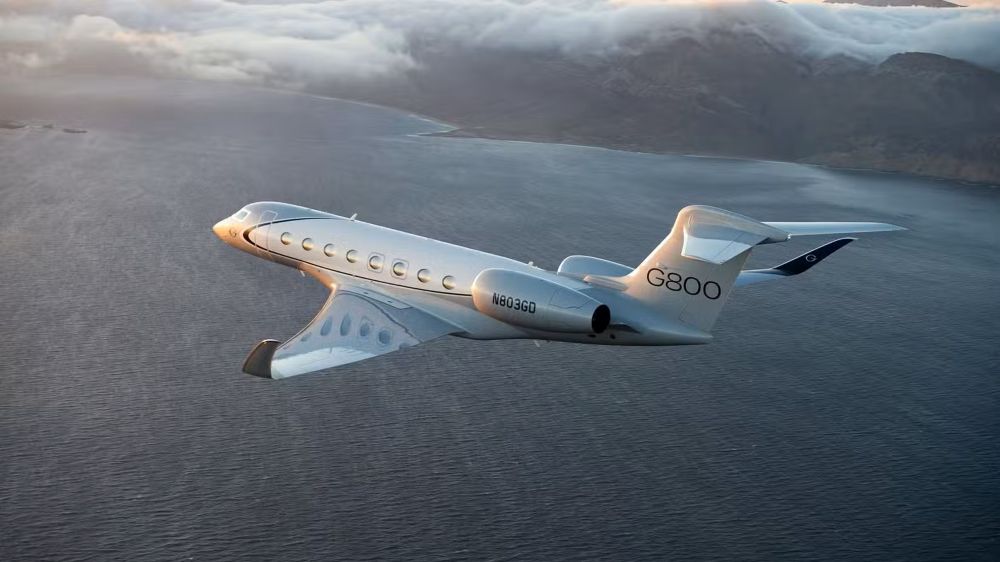
Private jets are often able to fly higher than the main cruising altitudes of commercial airliners. Some high-performance business jets are able to fly at around 45,000 feet (13,716 meters) and above. According to Simple Flying, the higher operating levels may have benefits, including less congested airspace, decreased aerodynamic drag, and greater flexibility in routing.
Most commercial jets will generally cruise at a height somewhere between about 30,000 and 42,000 feet. Many flights cruise around the mid-30,000 feet. Generally, private jets cruise between roughly 41,000 feet and 45,000 feet, but the exact cruising altitude depends on the type of aircraft, weight, weather, winds, route, and air traffic control needs.
The published service ceiling for the Gulfstream G650 is 51,000 ft (15,544 meters). However, the aircraft does not operate at this altitude as a matter of routine, as the optimum cruising level is dependent upon operational conditions.
Bombardier’s Global family of aircraft also fly at higher flight levels, giving them both speed and range. Smaller light business jets, however, usually have lower service ceilings. Aircraft labeled as private jets can be very different from each other.
Less Crowded Airspace
One of the biggest advantages of flying at higher altitudes is the ability to use less congested airspace.
Commercial aviation involves large numbers of aircraft flying along established routes, especially near major airports and congested air corridors. At higher altitudes, a capable private aircraft may have more routing options, perhaps allowing a more direct route.
VistaJet told Simple Flying that one of the biggest benefits of flying privately at high altitudes is reduced air traffic, as less crowded airspace permits more direct routing.
But private jets don’t have free reign of the airspace. They still must comply with air traffic control instructions, separation requirements, weather, airspace restrictions, and other operational considerations.
Less Air Means Less Drag
The higher altitude also gives an aerodynamic advantage since the air gets thinner as the plane climbs. The lower density of the air can reduce the aerodynamic drag and may allow an aircraft designed for the conditions to cruise efficiently.
But the relationship between altitude, speed, fuel consumption, and engine performance is complex, and no single altitude is ideal for all aircraft or flights.
Many business jets are designed to carry relatively small numbers of passengers over long distances at high cruise performance. They can also be relatively light and aerodynamic, which allows some models to achieve strong climb performance and reach flight levels that are less commonly used by commercial aircraft.
Higher Altitudes: Weather Advantages
Altitude can also provide business jets with more options in terms of weather. Most of the weather activity in the atmosphere occurs in the troposphere, and at higher altitudes, planes can sometimes fly above the layer of clouds and areas of moderate turbulence.
But severe thunderstorms can be well above normal cruising altitudes. An aircraft can’t just fly over every weather system, but it must keep a safe distance from dangerous storm cells. Pilots decide whether a route or altitude is suitable, using weather radar, forecasts, air traffic control information, and their own judgment.
But the ability to climb higher can offer pilots more choices for finding a smoother flight level when conditions and traffic allow.
Business Jets Have Different Concerns
Some private jets fly higher. This does not mean commercial airliners lack the technical ability to fly to high altitudes. The design of a commercial aircraft reflects several operating priorities, such as moving large numbers of passengers, baggage, and cargo efficiently over large scheduled networks.
If an airplane is cruising efficiently in its normal cruise envelope, an airline might not benefit from flying several thousand feet higher. The desired altitude can also change during a flight as the aircraft burns fuel and becomes lighter.
Airliners also operate within highly structured networks with fixed routes, airport procedures, and large volumes of scheduled traffic.
One of the advantages is altitude but
The higher cruising altitude does not explain the better overall travel time of private aviation.
The advantage is for a number of reasons. A private jet can leave from a smaller airport closer to its passengers, avoid connections, fly a more direct route, fly at a less congested flight level, and land at an airport closer to its final destination.
Aircraft performance can also contribute to the time savings. Business jets are high-speed, high-altitude, long-distance aircraft with a rapid rate of climb.
The Bombardier Global 8000 is known for its high speed, while the Gulfstream G650 boasts a 51,000-foot service ceiling and long-range capabilities.
The design of the aircraft, operating profile, and flexibility of the airspace all help private jets to fly above much of the commercial traffic.
Aircraft performance, weather, and air traffic control requirements limit all flights. Higher altitudes can provide thinner air, less drag, less congestion, and possibly more routing options and requirements.
Source: Simple Flying