You will call him, crying, but get unfound
প্রকাশ: মঙ্গলবার । ফেব্রুয়ারি ১০, ২০২৬
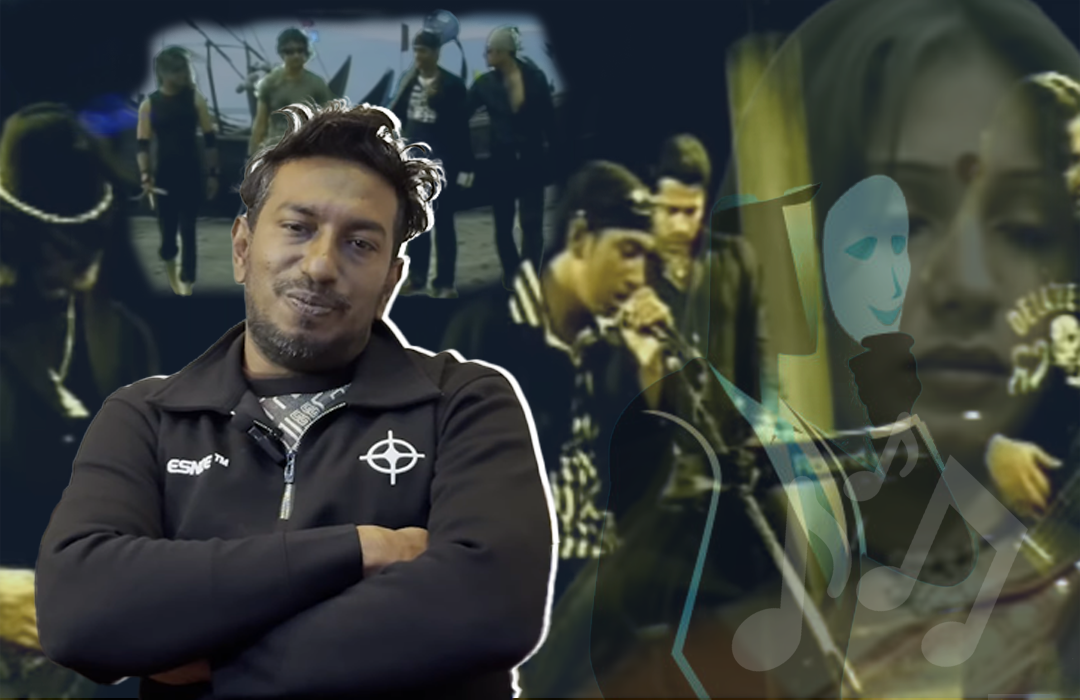
“Lal shari poriya konya,
Rokto alta pay…
Amar chokher jol mishaila,
Dila na biday …
Tumi firao chaila na ekbar,
Choila gela hay …
Jani aaj rate hoiba porer,
Ar bhaibo na amay …”
This song is profoundly heart-wrenching, especially for heartbroken Bangladeshi boys who have experienced lost love. The lyrics paint vivid, intimate imagery, ‘wearing a red sari, her feet dyed in blood-red alta’, evokes the presence of the beloved in a way that feels alive and painfully tangible, while the narrator’s tears mix with the absence of farewell, capturing the helplessness of unrequited longing.
Lines like ‘you didn’t even want to come back once, and now you’ve gone’ express deep despair, a sense of finality, and the cruel reality that the beloved has moved on. The melody complements the words perfectly: slow, soft, and lingering, rising with grief in the high notes and falling into sorrow in the low ones, mirroring the ebb and flow of heartbreak.
Together, lyrics and tune create a raw emotional landscape, reflecting loneliness, yearning, and the bitter acceptance that love has passed on, leaving only memories and pain behind. It’s the kind of song that doesn’t just reach the ears. it seeps into the heart, making listeners feel the ache as if it were their own.
The stage lights have dimmed, but Sharifuzzaman Sohag’s fight has only just begun. In a country where folk music pulses through the veins of millions, where cassette players once ruled the streets of Old Dhaka and melodies floated from every rickshaw, one artist's story reveals a troubling truth, the very companies that promised to amplify voices have, instead, systematically silenced them.
"Companies have earned crores from our work," Sohag told media on January 22, his voice carrying the weight of two decades of creative labour. "That is the absolute truth."
It's a statement that reverberates far beyond the confines of recording studios in Mohammadpur or the cluttered offices of music labels in Karwan Bazar. It speaks to a fundamental injustice embedded in Bangladesh's entertainment industry, one where artists create, audiences consume, but the creators themselves remain invisible, unpaid, and trapped in contracts that read more like indentured servitude than professional agreements.
When folk met modernity: the rise and hidden fall
Rewind to 2001. Digital platforms didn’t exist. There was no such thing called Spotify. YouTube was still four years away from its birth. In Bangladesh, music meant CDs, cassettes, and the crackling sound of FM radio. This was when Sharifuzzaman Sohag signed his first agreement with KT Media (KT Series), an audio company that would go on to distribute his work for years to come.
His debut album, Phataphati Prem, received modest attention. But then came O Konna, and everything changed.
The title track became a phenomenon. 'O Konna, Konna Mon Dila Na, Tumi Chand Chuye, O Poran Bondhua, Rokto Alta Paye, Lal Shari, these weren’t just songs. They were the soundtrack to weddings in Chittagong, to romantic evenings along the Buriganga, to countless journeys on long-distance buses from Sylhet to Dhaka. Folk music, reimagined with contemporary arrangements, found new life. Sohag was among the pioneers who modernized Bangladeshi folk, a movement that also saw contributions from Habib Wahid with tracks like Din Gelo and Tomar Pathchaiya.
But here’s where the story darkens.
“KT Media kept us completely hidden,” Sohag reveals. “We never received a proper answer as to why.”
Despite the commercial success of his albums, despite recording an estimated 400-500 songs for the label, Sohag claims he was deliberately sidelined. Bigger opportunities from other labels like Sangeeta came knocking, but KT Media's contract allegedly prevented him from accepting them. He was popular, yet invisible. Profitable, yet powerless.
The digital deception: when songs became stolen property
The arrival of digital distribution platforms should have been a renaissance for artists like Sohag. Suddenly, music wasn’t confined to physical sales. Streams on YouTube, Spotify, and other services meant potentially unlimited reach, and revenue.
But for Sohag, digitization became a new form of exploitation.
“When digital distribution emerged, KT Media, led by Bulu Bhai, gave my 400-500 recorded songs to CD Zone without informing me,” Sohag alleges. “CD Zone may have distributed these songs, but I have never received a single taka in royalties or earnings from them.”
This is the crux of the matter: Sohag claims he only granted KT Media the rights to distribute his music on physical CDs. Digital rights, he insists, were never part of the original agreement. Yet his songs appeared across digital platforms, generating revenue that never reached his hands.
The initial agreement, signed in 2001, was supposed to last until 2005-2006. But as Sohag’s popularity grew, KT Media allegedly extended the contract by another three years, stretching it to nearly a decade.
“We had to take legal steps to finally retrieve that agreement from KT”, he said, frustration evident in his words.
The Ehsan Anik affair: trust broken, again
If KT Media represents the old guard of music industry exploitation, Ehsan Anik symbolizes its digital-age evolution.
In 2021, midway through the pandemic when physical interactions were limited and digital collaborations surged, Sohag entered into a four-year distribution agreement with Anik. Initially, Sohag gave him four or five songs. When the output seemed positive, he entrusted him with more, eventually totaling 13-14 new tracks.
“When he realised I wasn't very advanced in understanding digital distribution, that I knew less about these things, he started distributing my old songs under his own name through various means,” Sohag alleges.
Calls went unanswered. Messages were ignored. Sohag issued a warning: take down the songs immediately and provide a proper accounting. Still, nothing.
“If he cannot provide proper proof, I believe I will very soon take legal action against him”, Sohag states with quiet resolve.
The financial paradox: beloved but broke
Here lies one of the most poignant contradictions of Sohag's career. He is adored by millions yet has struggled financially from his music.
His songs like Poran Bondhua, Amay Bhuilo Na are embedded in the cultural consciousness of Bangladesh. They've been played at countless events, downloaded millions of times, and continue to generate revenue for distributors. Yet Sohag himself admits, “Without the love of audiences and listeners, I don't think we've advanced much financially”.
His income comes primarily from stage performances and business ventures outside music. The songs themselves, the very creations that made him a household name, have not provided the ‘strong financial support’ that he deserved.
It's a pattern familiar to many Bangladeshi artists: create prolifically, gain popularity, but watch as middlemen and distributors capture the lion's share of profits.
Sohag has recorded over 3,000 songs to date, aiming for a personal target of 10,000. Not all are hits, he acknowledges candidly. But even his moderate successes have earned more for companies than for himself.
The changing landscape: from listening to watching
“When we made music, people used to listen to songs. Now people watch songs”, Sohag observes, highlighting a fundamental shift in the industry.
The rise of YouTube and visual content has transformed music production. A quality music video now requires significant investment, two to five lakh taka or more. Without proper producers or financial backing, independent artists struggle to keep pace.
Sohag has released new music on his own YouTube channel, Voice of Sohag, which is gradually growing. But he's acutely aware that success in today's market requires more than just talent, it demands capital, connections, and control over one's intellectual property.
Life outside Dhaka: a deliberate retreat
Sohag's physical absence from Dhaka is deliberate. “I basically don't like traffic jams”, he said with disarming simplicity.
But there's more to it than mere inconvenience. In an age of social media and online collaboration, Sohag has built a home studio that allows him to work remotely, connecting with the industry without navigating the chaos of the capital's streets.
It's a practical choice, but also perhaps a symbolic one, a gentle distancing from an industry that has caused him so much grief.
The legal reckoning ahead
Sohag's public statements signal a shift from quiet frustration to active resistance. He's no longer willing to accept vague explanations or be ignored by those who've profited from his work.
Legal action against both KT Media and Ehsan Anik appears imminent. Whether Bangladesh’s legal framework, often slow and unpredictable, will deliver justice remains to be seen. Copyright law in Bangladesh exists, but enforcement is notoriously weak, particularly when individual artists face well-established companies.
Yet Sohag's willingness to speak out is itself significant. In an industry where many artists suffer in silence, fearing blacklisting or reputational damage, his openness may inspire others to demand accountability.
The deeper question: who owns culture?
Sohag's story raises uncomfortable questions that extend beyond individual grievances.
When a company distributes an artist's work without proper compensation, who truly owns that culture? When songs become part of the national soundtrack yet the creator remains financially marginalized, what does that say about our values?
Bangladesh’s music industry operates largely without the robust royalty systems found in more developed markets. Performance rights organizations exist but lack teeth. Contracts favour labels and distributors. Artists, particularly those from less privileged backgrounds, often lack the legal literacy to protect themselves.
Sohag comes from modest roots. His father, who first put a harmonium in his hands, has passed away. His mother, his maternal uncles and aunts, his entire maternal family, supported his musical journey. Their faith sustained him, but it couldn't protect him from predatory business practices.
“Even from that time until now, I receive their full support,” he said, acknowledging the family that believed in him when few others did.
A song yet unfinished
As this article goes to press, Sohag’s legal battles remain unresolved. KT Media has not publicly responded to his allegations. Ehsan Anik has remained silent. The songs continue to stream, generating revenue for entities whose legitimacy Sohag now questions.
But perhaps the most important development is not what happens in court, but what happens in public consciousness.
Bangladesh’s music lovers, those who’ve danced to O Konna at weddings, who've found solace in Poran Bondhua during heartbreak, who’ve hummed Lal Shari while stuck in Dhaka traffic, must reckon with an uncomfortable truth: the joy these songs bring was built, in part, on the exploitation of those who created them.
Sharifuzzaman Sohag's voice, which has brought happiness to millions, now asks for something fundamental: recognition, respect, and the simple justice of being paid fairly for one's labour.
In a nation ‘committed to people's right to know’, surely we can also commit to artists' right to earn.
The melody continues, but the terms must change. And perhaps, this time, the creators will finally write their own ending.
