HIDDEN SCAM
A web of deceit behind the beauty: Tourists in Sylhet cheated through various tricks
 Senior Reporter
| Published: Saturday, April 18, 2026
Senior Reporter
| Published: Saturday, April 18, 2026
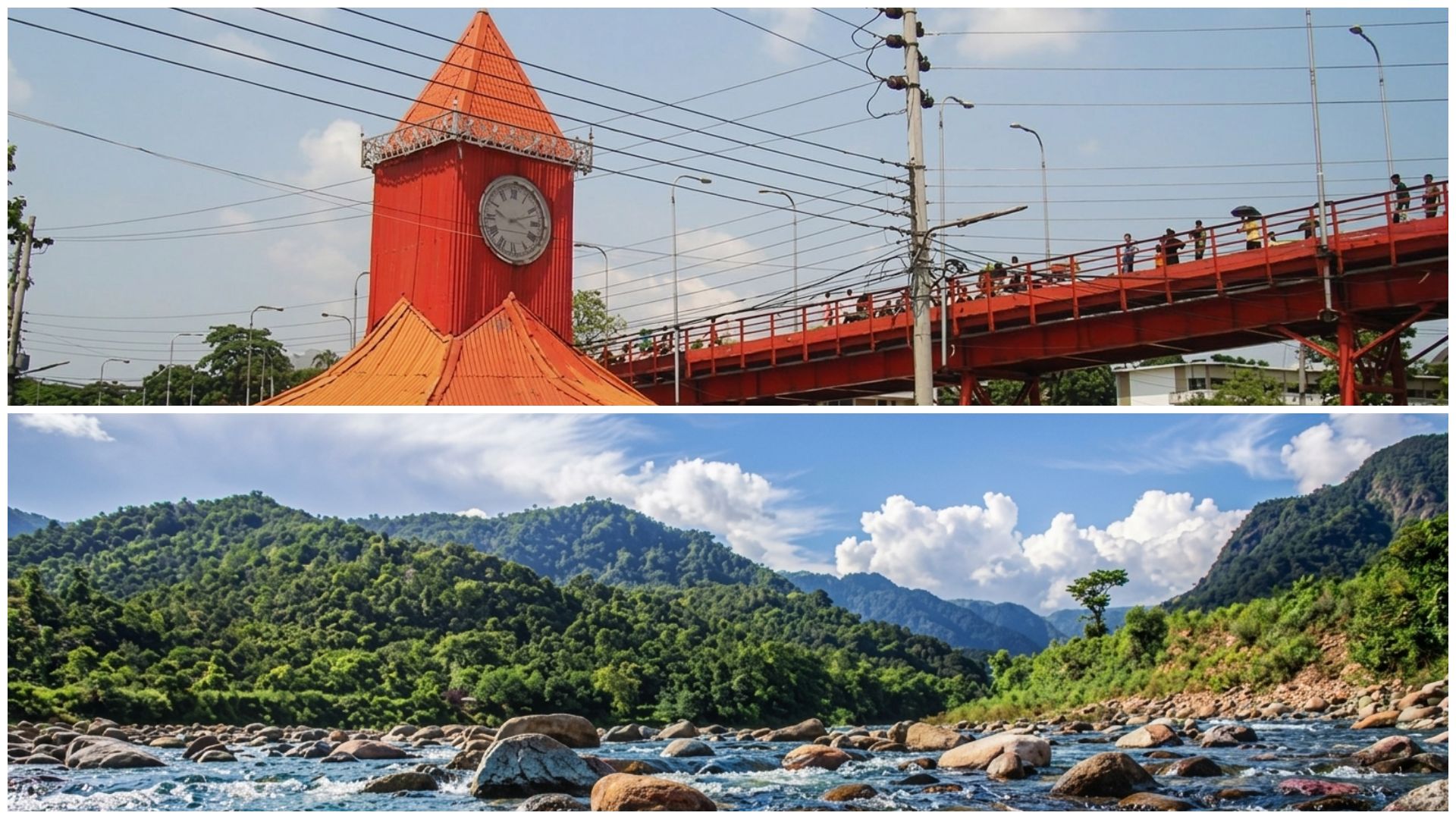
Collage Photo
by Muhammad Hassan Pallab
Millions of tourists flock to Sylhet every year to witness its boundless natural beauty and the harmony of hills, rivers, and waterfalls. From the white stones of Bholaganj to the Piyain River in Jaflong and the blue waters of Lalakhal – all attract visitors. But parallel to this beauty, a terrible culture of 'plunder' and 'syndicate' has grown. Due to a group of unscrupulous drivers, boatmen, and local influential people associated with tourism, ordinary tourists not only find their pockets emptied but also return mentally traumatised. As soon as a tourist is spotted, boatmen and transport drivers jump into a competition to 'hunt' them.
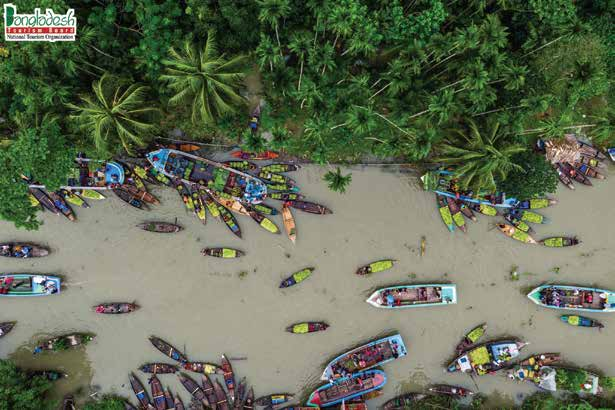
It is learned that boats are the primary mode of transport to and from Sylhet's main tourist centres. Especially at Bholaganj Zero Point (white stones), Jaflong, and Lalakhal, reaching the destination is nearly impossible without a boat. And local boat owners' associations and boatmen have capitalised on this opportunity. Although there is a government rule to display fare charts, it has no real reflection on the ground.
Investigation reveals that as soon as a new tourist arrives at the ghat, boatmen surround him. Where the standard boat fare should be Tk 800 to 1,000, they demand Tk 5,000 to 7,000 depending on the tourist's attire and apparent affluence. Many tourists, left with no choice, end up hiring boats at these inflated prices. The biggest fraud happens mid-journey. Often, boatmen cite engine problems or fuel shortages and drop tourists off before reaching the destination. As a result, tourists can neither reach their destination nor get their money back.
There are allegations that the local broker and driver network has become alarmingly skilled at identifying 'new faces' or out-of-town tourists at Sylhet's tourist spots. Whenever tourists from Dhaka, Chattogram, or other parts of the country step into Kadamtali Bus Terminal or Sylhet Railway Station, they immediately get caught in this invisible trap. By observing the tourists' attire, type of luggage, and curiosity about the surroundings, the network quickly figures out who is visiting Sylhet for the first time. Within moments, a swarm of CNG auto-rickshaw drivers and self-proclaimed 'tour guides' surround them, creating a kind of psychological pressure.
The core strategy of this network is to confuse tourists. Instead of directing them to easy routes to their destinations, they lure tourists towards their syndicate-controlled routes or hotels. Often, drivers feed tourists false information about a particular spot or resort to create fear—such as, 'There are robbers on that road' or 'All hotels over there are fully booked.' Then they take tourists to hotels where they receive commissions, effectively holding them hostage.
Consumers say the brokers present themselves as extremely amiable and hospitable people to gain tourists' trust. But once tourists board their vehicles or book hotels according to their advice, the real suffering begins. After getting off buses or trains, when tired tourists just want to reach their destination in peace, this 'fare anarchy' and the drivers' relentless harassment leave a bitter taste right from the start of their trip. Often, they even eavesdrop on private conversations of tourist groups and intervene when they see an opportunity. Because of this broker network, even ordinary CNG drivers feel emboldened to demand several times the fare from tourists.
Ashrful Alam, a tourist from Dhaka, said, I went to the white stones with my family. As soon as we reached the ghat, boatmen surrounded us. Although the government rate displayed was Tk 800, they demanded Tk 5,000. After much bargaining, I convinced them to take Tk 2,000. But midway, they said the boat had broken down and that I would have to pay another Tk 500 to switch to another boat. Fearing danger in the middle of the river with my wife and child, I was forced to pay.
Nabila Binte Kashem, a university student, said, I really wanted to see the blue water of Lalakhal. But when I got there, the boatmen tried to harass us. They didn't take us to the actual spot, dropped us off earlier, and said it was the last point. Later, I heard from other tourists that we had been dropped off much earlier.
On the other hand, the overcharging by CNG auto-rickshaw and leguna drivers on the main roads leading to Sylhet's tourist centres is now an open secret. During the tourist season, this anarchy reaches such a level that drivers completely disregard standard fares for regular distances. The first battle a tourist faces when going from Sylhet city to Jaflong, Bholaganj, or Ratargul is determining the vehicle fare. While there is an unwritten fare chart for local regular passengers, those rules change entirely when it comes to tourists.
Tourists complain that local drivers can tell from their attire and luggage that they are from outside the area. Then they start demanding three to four times the standard fare. In this case, if the regular fare from Sylhet city to Jaflong is Tk 200 per person, tourists are asked for Tk 500 to 600. For a reserved vehicle, the amount becomes exorbitant. Drivers then cite excuses like poor road conditions or that they won't get return passengers. However, the reality is that locals travel on the same roads at regular fares.
The biggest trouble arises when tourists visit places like Ratargul or Bichnakandi. Since these places are far from the city, no alternative transport is available for the return trip. Exploiting this opportunity, drivers demand double or triple the fare. Many times, tourists are forced to accept the drivers' unjust demands in the evening when they are left with no options. Additionally, if tourists ask to be shown a spot on the way, a large amount of extra money is demanded separately.
Raiyan Ahmed, a private sector employee visiting Sylhet, said, The trouble started as soon as I got off the train at Sylhet station. CNG drivers wouldn't leave us alone. One driver asked for Tk 500 to go to Amberkhana, even though the actual fare is not more than Tk 100-150. They even falsely claimed that the road was closed and that it couldn't be accessed without their CNG. I had to pay at every step. If this mismanagement continues, people will stop coming to Sylhet.
The tourist added, On local CNGs, where the fare should be Tk 100-150 per person, it becomes Tk 300-400 for tourists. For reserved vehicles, there are no rules at all. Drivers take advantage of tourists' helplessness. Especially after evening, when there is no alternative transport, drivers charge whatever they want.
In such a situation, he also demanded that to save Sylhet's tourism industry, large fare charts should be immediately displayed at every ghat and enforced, and a digital payment or token system should be introduced.

Make Comment
Login to CommentPopular News


Subscribe to News Letter
Latest News