Airbus drone intercepts Kamikaze UAV in landmark first for autonomous air defence
 Desk Report
| Published: Tuesday, March 31, 2026
Desk Report
| Published: Tuesday, March 31, 2026
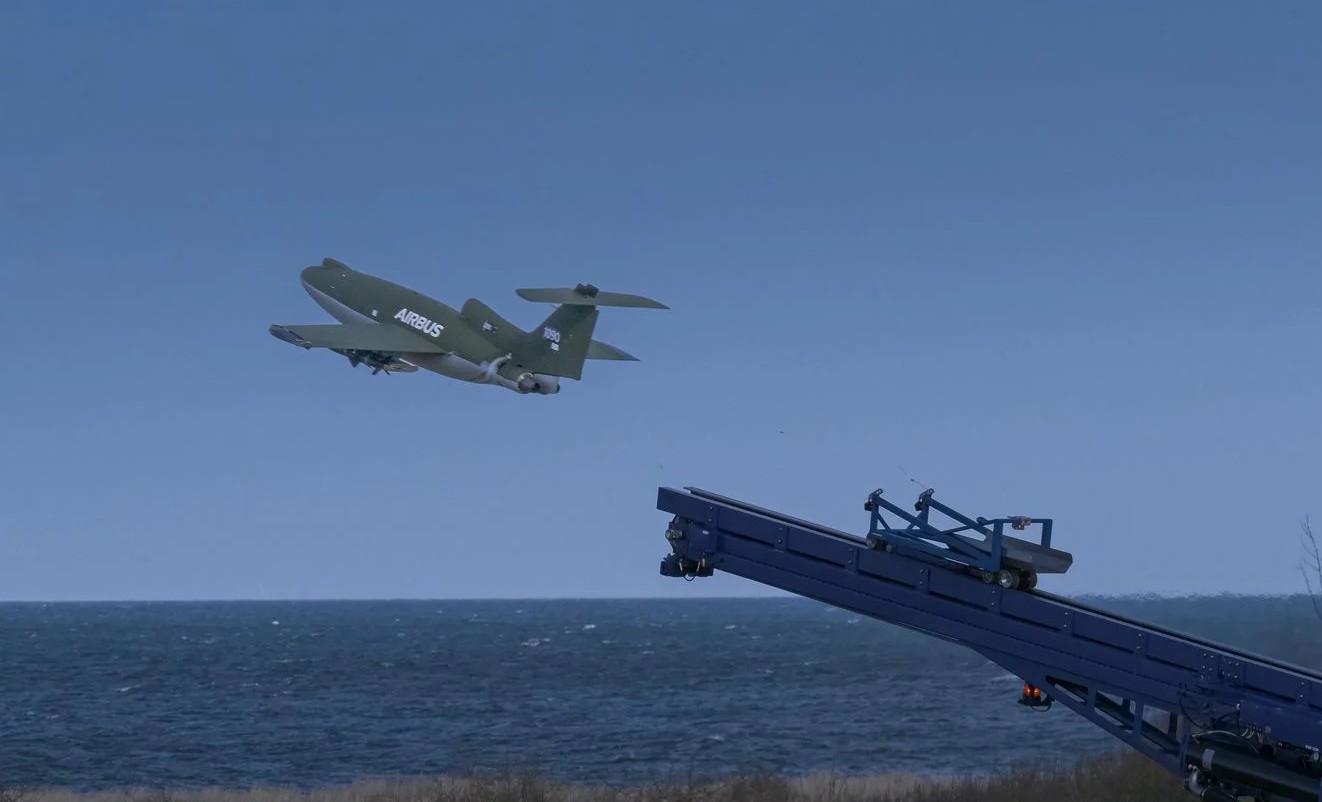
Photo: Airbus
European aerospace giant Airbus announced Monday that its uncrewed "Bird of Prey" interceptor drone had successfully completed its first demonstration flight, autonomously detecting and destroying a kamikaze-style drone in what the company described as a significant milestone in modern air defence technology.
The test, which took place at a military training area in northern Germany on Sunday, saw the Bird of Prey prototype independently search for, identify, and engage a medium-sized one-way attack drone — the type of low-cost aerial weapon that has become increasingly prevalent on contemporary battlefields, most notably in Ukraine.
A New Approach to Drone Defence
The interceptor used a Mark I air-to-air missile developed by Frankenburg Technologies, a German defence technology start-up, to neutralise the target. The missile, described by its manufacturer as among the lightest guided interceptors ever produced, weighs under two kilograms and measures 65 centimetres in length. It operates on a fire-and-forget basis, with an engagement range of up to 1.5 kilometres.
The Bird of Prey prototype is built on a modified Airbus Do-DT25 drone platform, with a wingspan of 2.5 metres, a length of 3.1 metres, and a maximum take-off weight of 160 kilograms. The current prototype carries four Mark I missiles, though the production variant is designed to accommodate up to eight — allowing it to engage multiple targets in a single sortie.
Notably, the entire project from inception to first flight took just nine months, a timeline that observers are likely to regard as unusually swift for a defence programme of this nature.
Officials Cite Urgency of the Capability Gap
Mike Schoellhorn, Chief Executive of Airbus Defence and Space, pointed to the current security environment as the driving force behind the programme's development.
"Against the current geopolitical and military backdrop, defending against kamikaze drones is a tactical priority that urgently needs to be tackled," Schoellhorn said, adding that the Bird of Prey offered armed forces "an effective, cost-efficient interceptor, filling a crucial capability gap in today's asymmetric conflict theatres."
Kusti Salm, CEO of Frankenburg Technologies, characterised the demonstration as a turning point for the wider air defence industry. The integration of low-cost, mass-manufacturable missiles onto an autonomous drone platform, he said, created "a new cost curve for air defence" — a reference to the longstanding strategic challenge of deploying expensive interceptor systems against cheap, expendable attack drones.
NATO Integration and Broader Architecture
The Bird of Prey is designed to operate within NATO's integrated air defence framework, functioning through established command and control systems and linked to Airbus' own Integrated Battle Management System (IBMS). The company positioned the platform as a mobile, scalable component of layered air and missile defence architectures — complementing existing systems rather than replacing them.
This interoperability with NATO standards is likely to be a key selling point for the system as Airbus pursues potential customers among alliance members, many of whom have accelerated defence procurement in the wake of Russia's invasion of Ukraine.
Airbus and Frankenburg Technologies confirmed that further test flights using live warheads are planned throughout the remainder of 2026, with the aim of fully operationalising the system and conducting demonstrations for prospective customers.
The Bird of Prey joins a growing field of counter-drone technologies attracting significant investment from both governments and private defence firms, as militaries worldwide grapple with the proliferation of low-cost unmanned aerial systems on the modern battlefield.
Airbus Defence and Space is headquartered in Munich and is a division of the Airbus Group, one of the world's largest aerospace and defence corporations.
Source: Press Release

Make Comment
Login to CommentPopular News





Subscribe to News Letter
Latest News