Airbus lobby gains momentum as Bangladesh rethinks fleet strategy
European diplomatic push intensifies after Biman's landmark Boeing deal, signalling a fresh contest between the world's two aircraft manufacturing giants for Bangladesh's expanding aviation market.
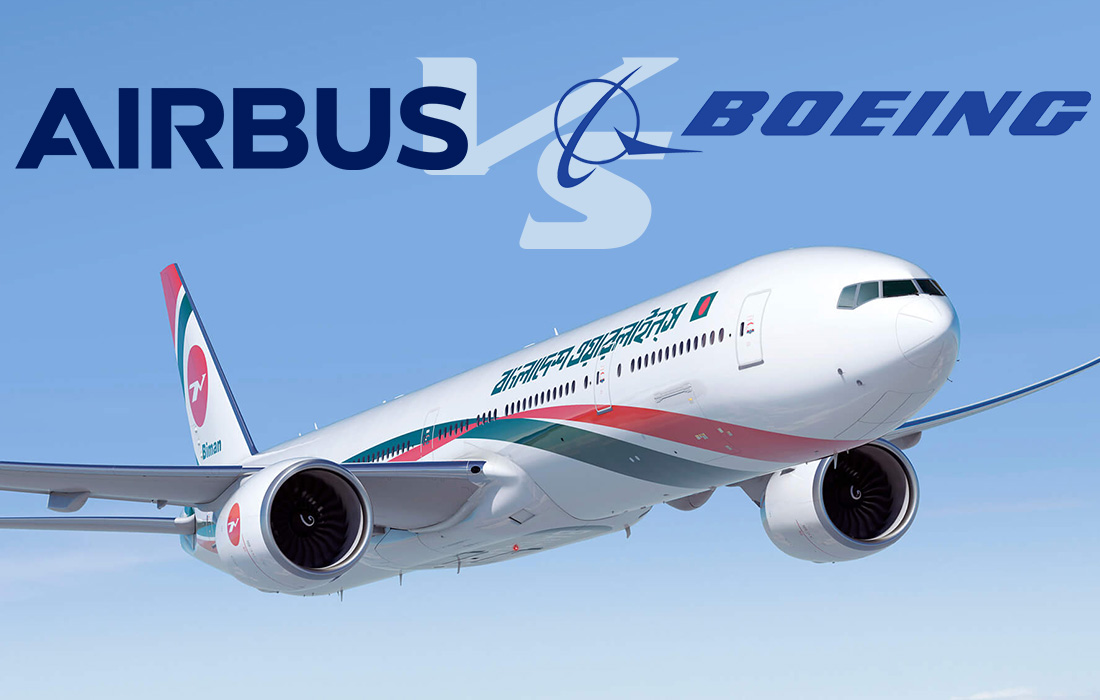
The race between Airbus and Boeing for Bangladesh's aviation market has entered a new phase, with European governments stepping up diplomatic engagement as Bangladesh weighs the future composition of Biman Bangladesh Airlines' fleet.
In what industry observers described as one of the clearest diplomatic signals yet, ambassadors and senior representatives from France, the United Kingdom, Spain, Germany and the European Union held a rare joint meeting with Civil Aviation and Tourism Minister Afroza Khanam and State Minister M. Rashiduzzaman Millat on July 15, where fleet expansion featured prominently on the agenda.
The timing of the meeting is significant.
It comes only weeks after Biman finalised its long-awaited agreement to procure 14 Boeing aircraft, one of the largest fleet acquisitions in the airline's history. While that agreement reaffirmed Boeing's longstanding dominance within Biman's fleet, the latest discussions indicate that Europe is now mounting a coordinated effort to ensure Airbus secures a place in the national carrier's next phase of expansion.
According to the Ministry of Civil Aviation and Tourism, Bangladesh expressed its interest in procuring Airbus aircraft to develop a sustainable mixed fleet while safeguarding the country's national interests. European representatives, in turn, assured Dhaka of their full cooperation.
Beyond aircraft sales
Industry insiders believed the meeting reflects more than a commercial discussion.
Aircraft procurement has increasingly become an instrument of economic diplomacy, involving trade, industrial cooperation, financing arrangements, technology transfer and broader bilateral relations.
For Airbus, Bangladesh represents one of the few remaining untapped narrow-body growth markets in South Asia. For Europe, securing an Airbus order from Biman would not only diversify the airline's fleet but also strengthen long-term industrial and economic engagement with Bangladesh.
The presence of diplomats from five European partners at a single aviation-focused meeting suggests the Airbus campaign has moved beyond corporate marketing into coordinated diplomatic engagement.
Mixed fleet or operational complexity?
Biman has historically operated an all-Boeing fleet for its jet aircraft, enabling common pilot training, simplified maintenance, spare parts inventory and engineering support.
Introducing Airbus aircraft would create a mixed fleet, a model followed successfully by many global airlines, but one that requires additional investment in pilot conversion, engineering capability, maintenance infrastructure and operational planning.
Government officials argue, however, that a mixed fleet provides greater procurement flexibility, stronger bargaining power with manufacturers and reduced dependence on a single supplier.
Such diversification also enables airlines to compare competing aircraft types across different route structures while encouraging competitive pricing from manufacturers.
Competition benefits buyers
The Boeing-Airbus rivalry has historically delivered significant commercial advantages for airlines.
Manufacturers frequently compete through discounted pricing, attractive financing packages, maintenance support, training assistance and industrial cooperation programmes.
Industry analysts noted that Bangladesh is now in a stronger negotiating position than ever before.
With Biman already committed to 14 Boeing aircraft, Airbus now faces the challenge of presenting an equally compelling commercial proposition if it hopes to establish a long-term presence within the national carrier.
Fleet decisions shape national aviation
The implications extend well beyond aircraft purchases.
Fleet composition influences maintenance capability, pilot training, engineering employment, airport infrastructure and long-term operating economics.
Bangladesh's aviation market continues to expand rapidly, driven by growing overseas employment, tourism, international trade and an expanding middle class.
The government's ambition to transform Bangladesh into a regional aviation hub will require sustained fleet expansion over the next decade, making future procurement decisions strategically important.
Europe's message
Although no procurement commitment emerged from the July 15 meeting, the diplomatic messaging was unmistakable.
European representatives reiterated their willingness to provide "all necessary cooperation" regarding Airbus acquisition while reaffirming broader aviation cooperation with Bangladesh.
For Bangladesh, the opportunity lies in maintaining a competitive procurement environment that maximises national interest rather than manufacturer preference.
For Airbus, the challenge is clear: convince Dhaka that introducing a mixed fleet offers greater long-term value than continuing with an all-Boeing strategy.
As Biman prepares for its next phase of expansion, Bangladesh finds itself in an enviable position, courted by the world's two largest aircraft manufacturers.
The coming months will determine whether Europe's diplomatic offensive translates into Airbus aircraft joining Biman's fleet for the first time or whether Boeing retains its long-standing dominance in Bangladesh's skies.

Make Comment
Login to CommentPopular News





Subscribe to News Letter
Latest News