NEGOTIATING SURRENDER
Bangladesh bows to Japanese demands on airport deal
Government accepts four disputed concession provisions and a 15-year restriction on competing airports near Dhaka, raising concerns over revenue, national interests, and Bangladesh's aviation hub ambitions.
-Representational
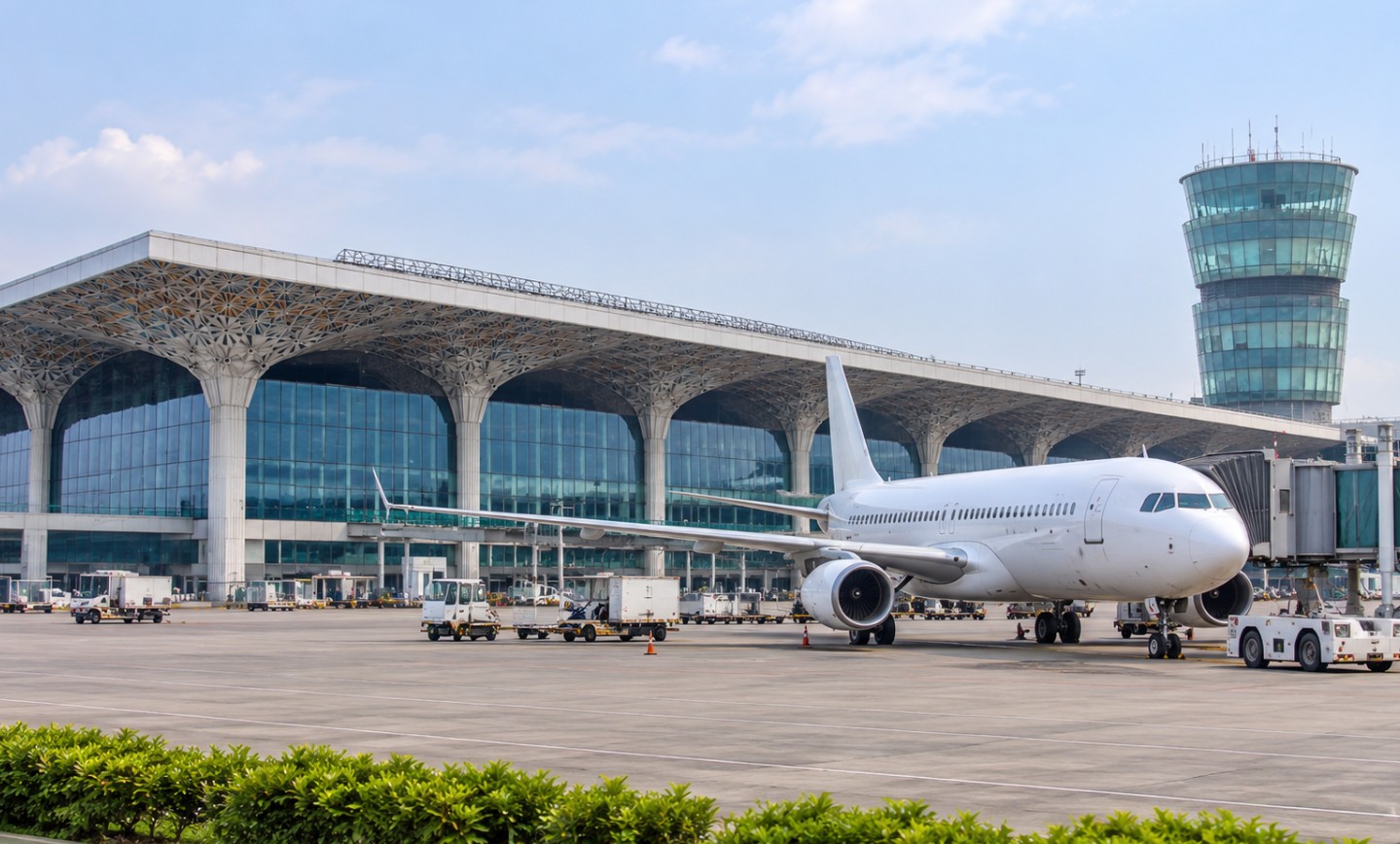
Bangladesh has conceded significant ground to the Japanese consortium negotiating the operation of Hazrat Shahjalal International Airport's (HSIA) Third Terminal, accepting four contentious contractual provisions previously challenged by its aviation regulator and agreeing to a 15-year restriction on competing civil airports within 100 kilometres of the country's principal aviation gateway.
The developments raise serious questions about the government's negotiating strength, long-term commercial interests and ambition to transform Dhaka into a regional aviation hub.
A high official of the Civil Aviation Authority of Bangladesh (CAAB), familiar with the negotiation process, confirmed the Aviation Express that the Ministry of Civil Aviation and Tourism had approved the four disputed provisions.
He also acknowledged that CAAB had agreed to prevent competing civil airports from commencing operations within a 100-kilometre radius of HSIA for 15 years.
Government overrides CAAB's objections
The four contentious issues concern revenue sharing, changes in Bangladeshi law, the defects liability period and the contractual treatment of Biman Bangladesh Airlines.
Asked whether the ministry had approved the provisions, the official replied: "Yes, the ministry has approved them."
The decision marks a significant departure from CAAB's earlier position, when the regulator maintained that the conditions could not be accepted without government intervention.
The development raises a fundamental question: were the objections resolved through meaningful negotiations, or did the government accept the consortium's position to expedite the agreement?
The distinction matters because these provisions could affect government revenue, legal protections and Biman's commercial responsibilities for years.
15-year restriction threatens aviation ambitions
Perhaps the most consequential revelation concerns the restriction on operating another competing civil airport within 100 kilometres of HSIA for 15 years. The official confirmed CAAB had accepted the condition.
He clarified that the provision would not prevent planning or constructing another airport or developing military facilities. However, a competing civil airport could not commence commercial operations during the specified period.
The implications extend far beyond the Third Terminal
HSIA operates with a single runway, while surrounding urban development severely constrains opportunities to construct another independent runway.
Although the Third Terminal will expand passenger-handling capacity, additional terminal infrastructure cannot overcome limitations in runway capacity.
A competitive international aviation hub requires sufficient runway capacity to accommodate aircraft movements, efficient connections and future traffic growth.
Without another runway, Bangladesh risks facing operational constraints despite its substantial investment in terminal infrastructure.
The restriction could therefore narrow the country's options for developing another major airport near Dhaka precisely when long-term aviation planning demands greater flexibility.
Revenue-sharing concession
Revenue sharing represents another contentious issue.
Under the agreed arrangement, Bangladesh is entitled to 27 percent of the relevant revenue generated through the concession.
However, Mehboob Khan confirmed that the Japanese operator would pay a lower percentage during the transition from partial to full operations.
"The revenue-sharing rate remains 27 percent," he said, explaining that the full rate would not apply during partial operations.
An earlier newspaper report said the consortium had proposed paying 13.5 percent during an eight-month operational preparation period.
Mehboob Khan confirmed a reduced transitional rate but did not specify the final percentage or duration.
Even a temporary reduction could involve substantial revenue, depending on passenger traffic, commercial earnings and the transition period.
Without public disclosure of the financial projections, it remains difficult to assess whether Bangladesh is receiving adequate compensation.
Biman's contractual treatment raises concerns
Another disputed provision concerns Biman Bangladesh Airlines, which operates both as an airline and a ground-handling service provider.
According to Mehboob Khan, the Japanese consortium sought to apply certain payment-related procedures governing Biman's ground-handling activities to its separate airline operations.
The CAAB official questioned the justification for treating these distinct functions identically.
He argued that Biman's ground-handling role was incorporated into the concession arrangement, whereas its airline operations constituted a separate commercial activity.
The Japanese side subsequently approached the ministry, which accepted its position, according to the official.
The remaining disputes involved change-in-law provisions and the defects liability period.
Earlier reporting indicated disagreements over special legal protections sought by the consortium and the timeframe for identifying or rectifying defects.
Although the ministry has approved the provisions, their precise final wording remains undisclosed.
Did exclusive negotiations weaken Bangladesh?
The Japanese consortium's position as the sole negotiating party has become a central concern.
Former CAAB Chairman Air Vice Marshal (Retd) M Mafidur Rahman previously warned that the absence of a credible alternative had weakened Bangladesh's bargaining position.
He argued that dependence on a single prospective operator allowed the consortium to press for increasingly favourable contractual terms.
His warning gains significance following the government's acceptance of provisions initially challenged by its own regulator.
Japan's involvement in financing and developing the Third Terminal provides important context.
Yet the arrangement raises an uncomfortable question: Is Bangladesh accepting these conditions primarily because of the Japanese-funded project, or are wider geopolitical considerations influencing
its willingness to compromise?
No evidence currently establishes geopolitical pressure, but the commercial justification for the concessions deserves transparent explanation.
Japan remains a major development partner. However, the interests of a development partner and an airport operator are not necessarily identical to Bangladesh's long-term aviation priorities.
Agreement moves towards signing
The CAAB official said negotiations had concluded and the revised concession agreement had been forwarded to the Japanese side for a final line-by-line review.
The agreement must subsequently secure approvals from the Law Ministry, Finance Ministry and Cabinet Committee on Economic Affairs.
Although signing by the current deadline of November 15 could prove difficult, he expressed confidence that the agreement would be concluded during November.
The Third Terminal offers Bangladesh a major opportunity to modernise its aviation infrastructure.
But expanding terminal capacity should not come at the expense of the country's freedom to develop the airports and runways it may need tomorrow.
The ultimate test is not how quickly Bangladesh signs the agreement, but whether its terms protect the nation's aviation ambitions for the next 15 years and beyond.

Make Comment
Login to CommentPopular News





Subscribe to News Letter
Latest News