Boeing 777-9 simulators win initial FAA, EASA approval ahead of pilot training
 Desk Report
| Published: Friday, February 20, 2026
Desk Report
| Published: Friday, February 20, 2026
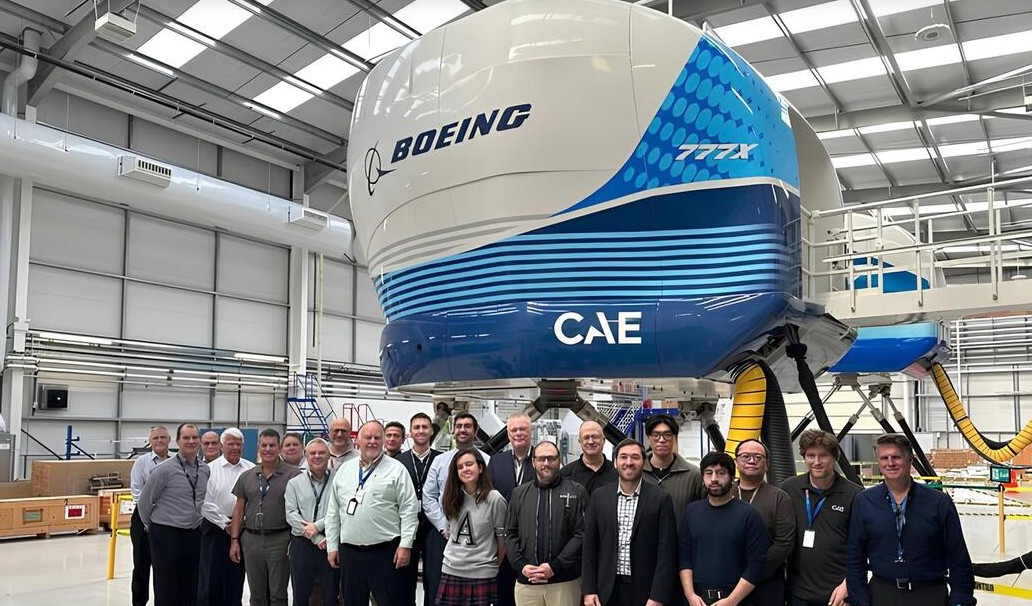
Photo: Collected
US aerospace giant Boeing said Thursday that flight training simulators for its forthcoming 777-9 widebody jet have received initial qualification from US and European regulators, marking a key step toward the start of pilot training for the new aircraft.
The US Federal Aviation Administration (FAA) and the European Union Aviation Safety Agency (EASA) issued simulator qualification certificates for the 777-9 training devices, the company said in a statement dated February 19.
The approvals allow the devices to be used for regulator-approved pilot training once courseware validation is completed, bringing the 777-9 program closer to entry into service.
“Securing these approvals is an important step as we prepare for the start of flight training,” said Capt. Gary Mandy, 777X chief technical pilot at Boeing. He added that pilots would benefit from an immersive training environment designed to support airlines’ operational readiness for the aircraft.
The training devices were developed in collaboration with Canadian simulator manufacturer CAE and are installed at Boeing’s training campus in Gatwick, United Kingdom. They include a full-flight simulator and a flight training device intended to replicate the aircraft’s advanced systems and operational environment.
According to Boeing, the simulators integrate aircraft systems and advanced modeling software to reproduce flight dynamics and environmental conditions. Following the initial qualification, regulators will use the devices to validate and approve pilot training programs before airline customers begin formal instruction.
Chris Broom, vice president of Commercial Training Solutions at Boeing Global Services, said the qualification “underscores our commitment to delivering high-quality training solutions” aligned with regulatory standards and airline needs.
Alexandre Prévost, president of civil aviation at CAE, described the milestone as the result of a multi-year collaboration between the two companies and said the partnership would continue as additional full-flight simulators are delivered to customers worldwide.
The 777-9 is the first variant of Boeing’s 777X family, a new generation of long-haul aircraft positioned as the successor to earlier 777 models. The jet features a redesigned flight deck aimed at maintaining commonality with existing 777 and 787 aircraft while incorporating new technologies such as large-format touchscreen displays, optional dual head-up displays, and integrated electronic flight bag capability. It also includes a dedicated control and indicator system for its folding wingtips, a distinctive design element intended to improve airport compatibility.
For airlines and pilots, early qualification of simulators is a critical milestone, enabling crews to train in advance of aircraft deliveries and supporting smoother introduction into commercial service.
Boeing did not specify a timeline for the start of customer training but said the devices would now support regulatory review of course materials before airlines commence pilot instruction. Industry analysts view the step as part of the broader certification and entry-into-service process for the 777-9, one of the company’s most closely watched commercial aircraft programs.
Source: Boeing

Make Comment
Login to CommentPopular News





Subscribe to News Letter
Latest News