Emirates enters winter season with strong bookings as fleet and product upgrades continue
 Staff Reporter
| Published: Tuesday, September 15, 2026
Staff Reporter
| Published: Tuesday, September 15, 2026
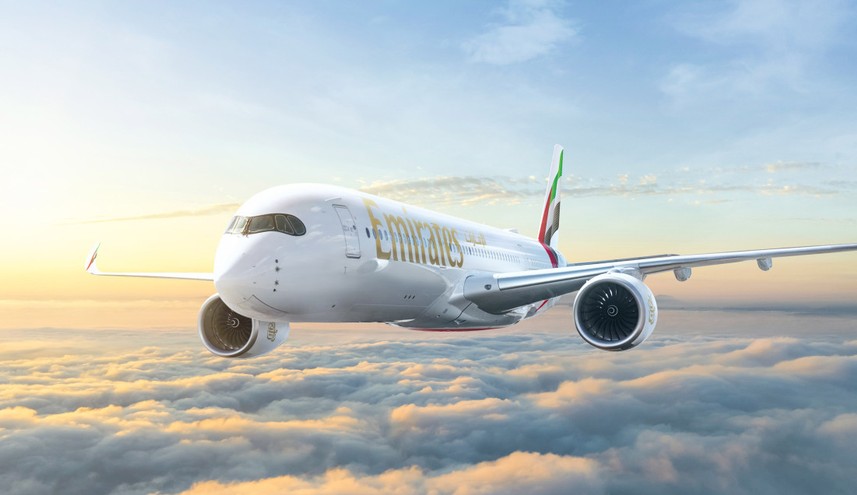
Photo: Emirates
Emirates has closed the summer travel season ahead of expectations and is entering the winter period with strong booking momentum across a widening range of markets, the airline said in a statement issued Monday.
Between July and August, Emirates carried more than 8.6 million passengers, maintaining healthy seat load factors across its network, the airline said. It is currently operating at around 93 percent of its pre-disruption capacity, with demand continuing to build ahead of the winter season, which begins in late October.
According to the statement, bookings for winter are tracking positively despite a broader trend of customers making travel decisions closer to their departure dates. Markets where demand is currently running ahead of last year include South Africa, Brazil, India, Portugal, Egypt, Ghana, Colombia, Saudi Arabia, and Pakistan, along with Nepal through Emirates' partnership with budget carrier flydubai. The airline said the UAE also remains a strong outbound market, while demand for premium travel continues to grow.
Emirates said services to and from West Asia, Europe, the Middle East, the Americas, and Africa all recorded seat load factors above 75 percent during the summer, with particularly strong performance on routes to Indonesia, Côte d'Ivoire and across the UK. Demand for Premium Economy grew across the network, with the strongest growth recorded in the Americas.
Dubai also saw strong inbound traffic over the summer. The airline said more than half a million passengers arrived in the city on Emirates flights in the second half of August alone, up 7 percent from the same period last year, a mix of returning residents, new arrivals, and visitors on late-summer trips.
To boost appeal during the summer, Emirates introduced one free date change across its network and unlimited free date changes on flights to Dubai, cut refund fees on Dubai-bound journeys, and launched what it described as a first-of-its-kind Comprehensive Travel Cover policy, which includes medical coverage against conflict and airspace disruption along with airline-managed accommodation, ground support, and rebooking assistance.

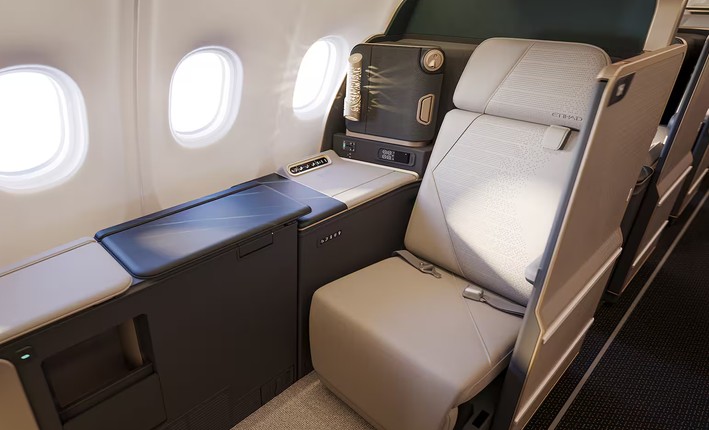
On fleet and product investment, the airline said it has taken delivery of 18 new aircraft since January—11 A350s and seven Boeing 777 freighters—with six more A350s due before the end of the year. Its retrofit programme, which upgrades older aircraft with newer cabin interiors, has been completed on 104 aircraft so far, including 53 Boeing 777s and 51 A380s, bringing the total fleet offering Premium Economy and its latest cabin products to 137 aircraft, a figure the airline expects to rise to 155 by December.
Premium Economy is now available on flights to 90 destinations, with six more—including Paris, Delhi, and Stockholm—set to be added by year-end. Close to 50 aircraft have been fitted with Starlink high-speed internet, with installations continuing alongside the retrofit programme.
The airline also highlighted product launches this year, including what it called the industry's first U-dream headrest for its A350 Economy Class, a Premium Economy seat with privacy dividers, and a new generation of Emirates airport lounges, with new facilities already open in Munich, Frankfurt, and Manchester.
On network expansion, Emirates said Helsinki will join its route map on October 1, served by the A350, which currently flies to 30 destinations and will expand to 36 by year-end. The airline is adding second daily flights to Accra, Tokyo Narita, Ho Chi Minh City, and Hanoi and will upgrade one of its daily Delhi services to an A380. The A350 will begin flying to Larnaca, Malta, Nairobi, and Hamburg from late October and to Mauritius in November, while retrofitted Boeing 777s will be introduced on the Stockholm route in October and the Frankfurt route in November.
Emirates said its codeshare, interline, and intermodal partnerships—168 in total—give passengers access to an additional 1,750 cities, with more than 13,000 Emirates customers connecting daily onto partner-operated flights.
The airline also detailed the scale of its partnership with flydubai, through which the two carriers together serve more than 214 destinations in over 100 countries, generating more than 4,600 connection opportunities through Dubai. Since the tie-up began in 2017, the two airlines have carried more than 28 million passengers on their combined network, according to the statement.
For Bangladeshi travellers, the statement noted that flydubai added Chittagong to its network in April this year as part of a series of new routes launched by the low-cost carrier in 2026, alongside Benghazi, Aleppo, Bangkok's Don Mueang Airport, and, this month, Pokhara in Nepal.
Source: PR

Make Comment
Login to CommentPopular News




Subscribe to News Letter
Latest News