SILENT GUARDIANS
International Day of the Air Traffic Controller: Honouring the People Behind Aviation Safety
 Desk Report
| Published: Tuesday, October 20, 2026
-AI Generated
The aviation industry marks the International Day of the Air Traffic Controller on October 20, recognising the professionals who help keep aircraft moving safely and efficiently through increasingly complex airspace.
The observance coincides with the 65th anniversary of the International Federation of Air Traffic Controllers’ Associations (IFATCA), founded on October 20, 1961. Beginning with 12 founding associations, the federation has grown to more than 130 member associations worldwide representing the collective interests of air traffic controllers throughout the profession.
Private airlines of Bangladesh, including US-Bangla Airlines, NOVOAIR, and Air Astra, celebrated the International Day of Air Traffic Controllers, paying tribute to the professionals who guide aircraft through the skies to ensure their safe movement.
In separate messages, the airlines praised the controllers’ dedication, precision, and vigilance, saying their behind-the-scenes decisions and around-the-clock commitment are key in ensuring safe flights and getting passengers to their destinations safely.
The people behind safe skies
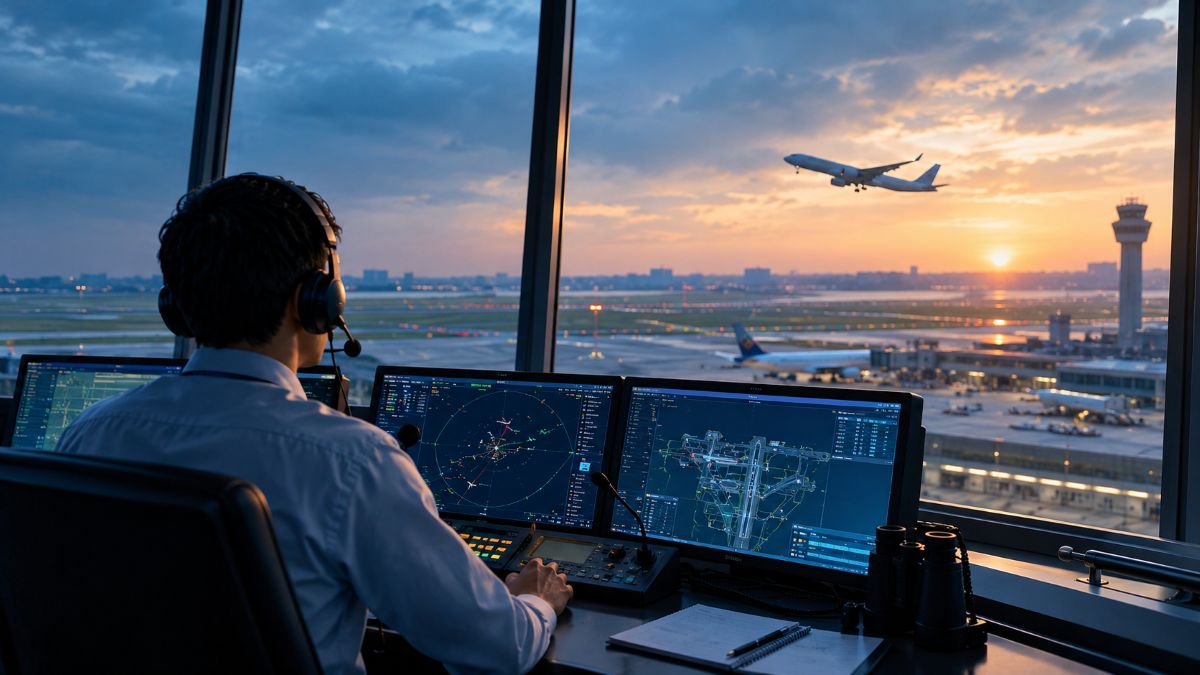
Air traffic controllers play a crucial role in aviation safety. Working in airport control towers and area control centres, they coordinate aircraft movements, maintain safe separation between aircraft, manage traffic flows, and provide instructions to pilots during different phases of flight.
Their work requires sustained concentration, sound judgment, effective communication, and the ability to make time-critical decisions. Controllers must also respond to changing weather conditions, equipment issues, unexpected traffic conflicts, and other operational challenges while maintaining established safety procedures.
Although passengers rarely see the people responsible for managing their flights, air traffic controllers are an essential part of the aviation system, working around the clock to support safe and orderly air travel.
Technology and training shape the future
As aviation systems evolve, modern technology is creating new opportunities to improve air traffic management. Digital communication, surveillance systems, automated decision-support tools, and improved traffic-flow management can help controllers maintain situational awareness and manage increasingly complex operations.
However, technology must support rather than replace professional judgement. Reliable systems, effective human-machine interaction, robust safety assessments, and appropriate training remain essential to ensuring that new tools contribute to safer operations.
In June 2026, the European Union Aviation Safety Agency (EASA) updated its guidance on licensing and training for air traffic controllers. The changes included performance standards for initial training, competency-based training and assessment, and provisions supporting the use of virtual training. The measures aim to strengthen the preparation of future controllers for complex and demanding air traffic environments.
The growing use of artificial intelligence and automation also highlights the importance of ensuring that controllers understand the capabilities and limitations of new systems. Such technologies can assist with analysis and decision-making, but their introduction requires appropriate oversight, training, and safety evaluation.
Challenges facing the profession
Despite technological progress, air traffic control remains a demanding profession. Increasing traffic complexity, staffing capacity, fatigue management, and the need for continuous professional development are among the issues that require sustained attention from aviation authorities and air navigation service providers.
Controllers must remain alert throughout their shifts, often working nights, weekends, and public holidays. Managing workload and fatigue is therefore important not only for their well-being but also for maintaining operational safety.
The integration of drones and other emerging aircraft technologies presents additional challenges. Air navigation systems must adapt to accommodate new types of airspace users while maintaining safe separation, effective coordination, and clear operational responsibilities.
International cooperation is equally important. Differences in infrastructure, training resources, and operational capabilities across countries underline the need for knowledge-sharing, harmonized standards, and continued investment in air navigation services.
Putting people at the centre of aviation safety
In its statement for the 2026 observance, IFATCA emphasised the importance of keeping the human element at the center of the systems, policies, and practices that support air traffic control.
The message is particularly relevant as aviation becomes more technologically advanced. Modern equipment can improve efficiency, but safe operations also depend on skilled professionals, effective teamwork, sound procedures, and a strong safety culture.
The International Day of the Air Traffic Controller offers an opportunity for airlines, airports, regulators, and air navigation service providers to recognise the contribution of these professionals and reflect on the support they need to perform their responsibilities effectively.
As the industry looks towards the future, investment in training, modern infrastructure, workforce wellbeing, and responsible technological innovation will remain essential to building a safer and more resilient global aviation system.
On October 20, the observance recognises not only the technical expertise of air traffic controllers but also their everyday commitment to protecting lives and keeping the world's skies moving.
- International Federation of Air Traffic Controllers’ Associations (IFATCA), IFATCA, European Union Aviation Safety Agency (EASA)

Make Comment
Login to CommentPopular News


Subscribe to News Letter
Latest News