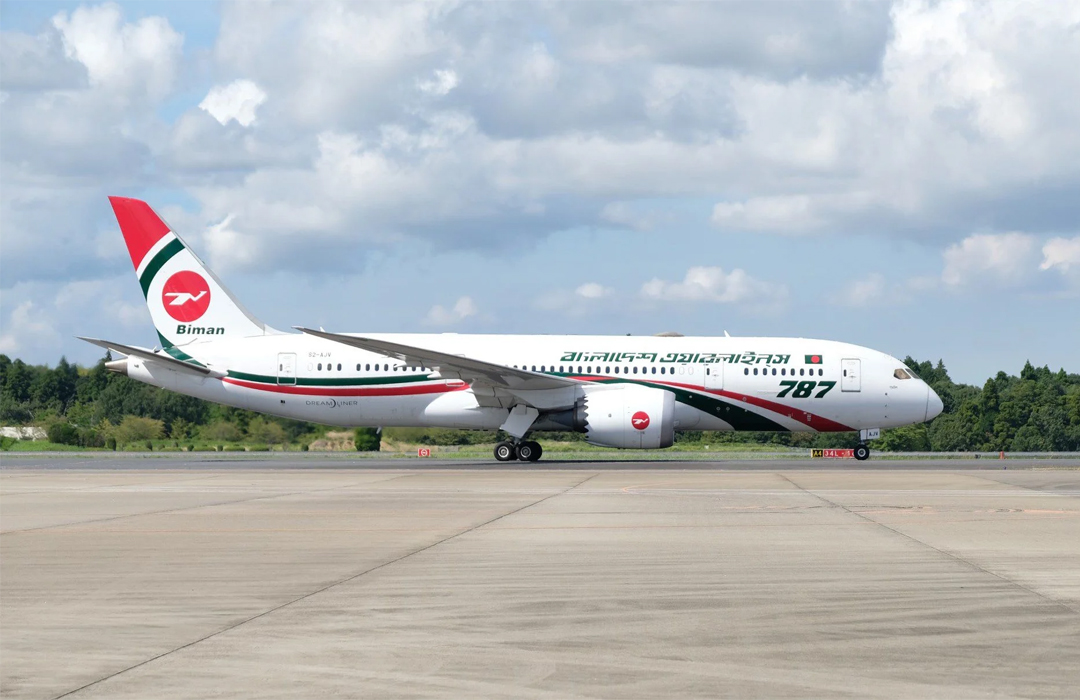
Middle East airspace closure cancels 173 Dhaka flights
Seven countries shut airspace amid security crisis, disrupting travel for thousands of Bangladeshi passengers over five days
 Desk Report
| Published: Wednesday, March 04, 2026
Desk Report
| Published: Wednesday, March 04, 2026

File photo
Seven Middle Eastern countries closed their airspace on February 28 due to security situation in the region, forcing cancellation of 173 flights from Hazrat Shahjalal International Airport over five days.
Iran, Iraq, Kuwait, United Arab Emirates, Bahrain, Qatar and Jordan shut their airspace simultaneously, causing massive disruption to air travel. Closures affected major carriers operating routes between Dhaka and Middle East destinations.
Flight cancellations began on February 28 with 23 flights grounded. Situation worsened dramatically on following days as airlines struggled to find alternative routes or suspended operations entirely.
On March 1, 40 flights were cancelled from Dhaka airport, marking the steepest single-day impact. Cancellations continued mounting with 46 flights scrapped on March 2 and 39 flights on March 3.
As of March 4 from midnight local time, additional 25 flights faced cancellation. Qatar Airways cancelled 4 flights while Kuwait Airways grounded 2 services. Jazeera Airways from Kuwait also suspended 2 flights.
Air Arabia operating from Sharjah in UAE cancelled 8 flights, representing highest cancellations among carriers on 4th March. Emirates Airways scrapped 5 flights while Bangladeshi carrier US-Bangla Airlines cancelled 4 services.
Airlines affected by airspace closure include major Gulf carriers that provide crucial connectivity for Bangladeshi migrant workers, business travellers and tourists. Middle East routes serve as vital transit points for passengers travelling to Europe, Africa and beyond.
Thousands of Bangladeshi passengers faced severe travel disruptions during peak travel period. Many passengers remained stranded at airport while others scrambled to reschedule travel plans or seek refunds.
Airlines have not announced when normal operations will resume, leaving passengers uncertain about future travel arrangements. Situation remains fluid as regional security concerns persist.

Make Comment
Login to CommentPopular News





Subscribe to News Letter
Latest News