UK replaces visa stickers with e-Visas
Britain transitions to fully digital immigration system, eliminating physical passport stickers from February 25
 Desk Report
| Published: Saturday, February 07, 2026
Desk Report
| Published: Saturday, February 07, 2026
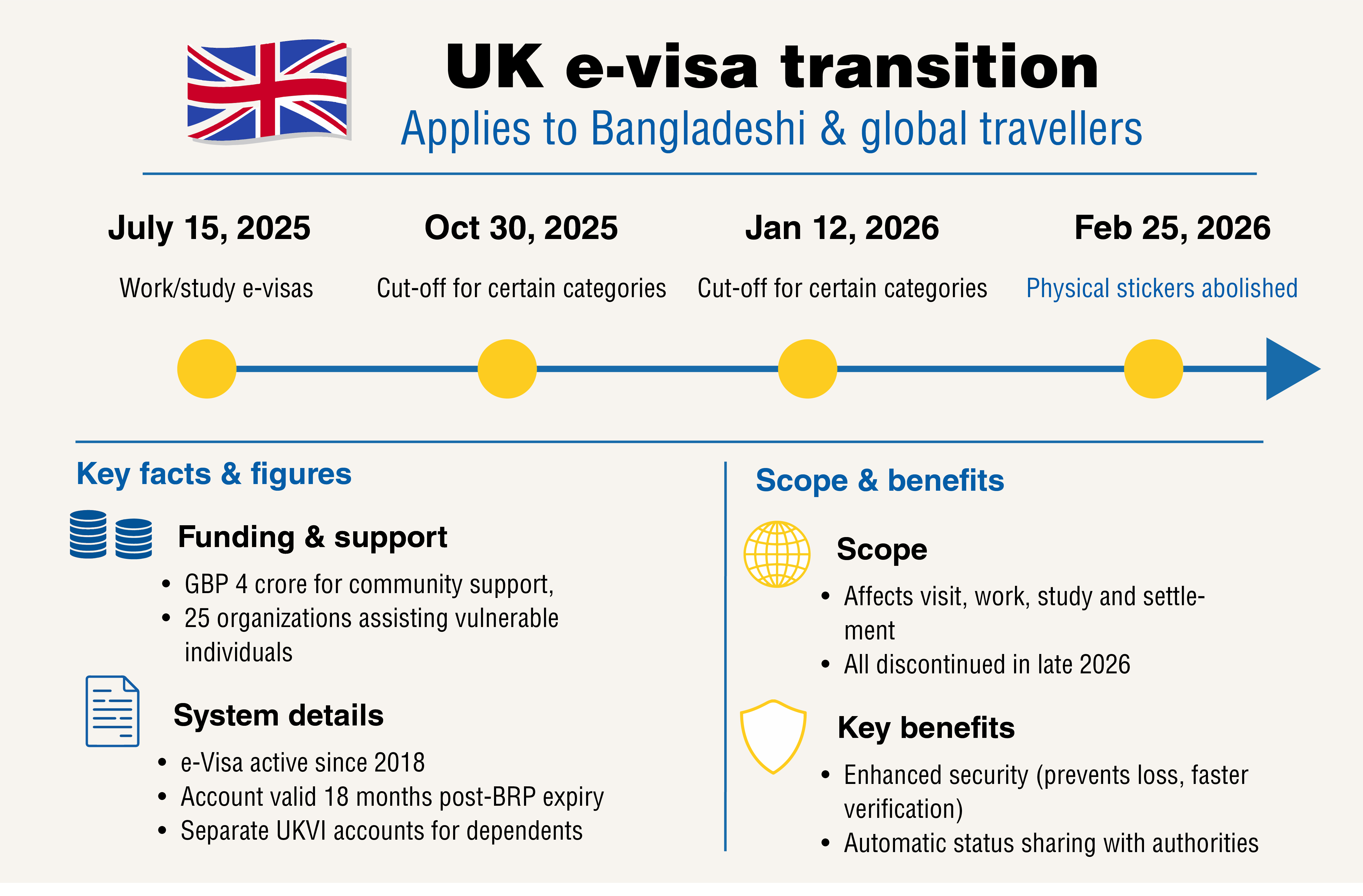
Illustration: Aviation Express
United Kingdom (UK) will no longer issue visa stickers in passports from February 25, replacing them entirely with digital e-Visas as part of a major shift to electronic immigration records.
UK Visas and Immigration announced on February 7 that travellers requiring visas to enter Britain will receive only e-Visas, ending the traditional practice of affixing physical stickers in passports. Transition affects Bangladeshi travellers and millions of global visitors who previously relied on physical documentation.
From January 12, most people granted UK visit visas and certain other visa types received both an e-Visa and physical sticker as an interim measure. However, all visa stickers will be discontinued later in 2026, making e-Visas the sole proof of immigration status.
Applicants who submitted applications on or after October 30, 2025, for specific work, study, family visas or indefinite leave to enter may not receive visa stickers at all. Instead, successful applicants must access their immigration permission through UK Visas and Immigration accounts before travelling. Main applicants on work and study visas submitted on or after July 15, 2025, already receive only e-Visas without physical stickers.
e-Visa system covers anyone with visas allowing stays exceeding six months, settlement status, or shorter stays including visit, work, study and transit visas. Dependants including partners and children must create individual UKVI accounts to access their separate e-Visas.
To create accounts, applicants need valid email addresses, phone numbers and either valid passports with visa application numbers, valid passports with biometric residence permit numbers, or expired BRP cards usable up to 18 months after expiry. Users must confirm identity and link accounts to e-Visas, typically requiring smartphones for identity verification apps.
UK government allocated GBP 4 crore to support 25 national and community organisations assisting vulnerable individuals during the transition through March 31, 2026. Officials stated e-Visas provide enhanced security, cannot be lost or tampered with unlike physical documents, and enable faster border verification.
Home Office emphasized visa eligibility and requirements remain unchanged, with only verification methods shifting to digital format. System automatically shares immigration status with government departments and public authorities upon request, eliminating need for manual status sharing.
Travellers using Electronic Travel Authorisation, diplomats, individuals exempt from immigration control, and those with permission to stay in Channel Islands or Isle of Man do not require e-Visas. People holding physical immigration documents without expiry dates proving settlement status can choose whether to transition to e-Visas by submitting no time limit applications.
Since 2018, millions of people have received e-Visas as UK gradually implemented digital immigration infrastructure. Further details are available at www.gov.uk/eVisa.

Make Comment
Login to CommentPopular News




Subscribe to News Letter
Latest News