INDUSTRY RELIEF
BB authorises taka payments for global travel packages
Policy allows licensed operators to collect taka for hotels, transport and destination services while keeping personal travel quotas intact
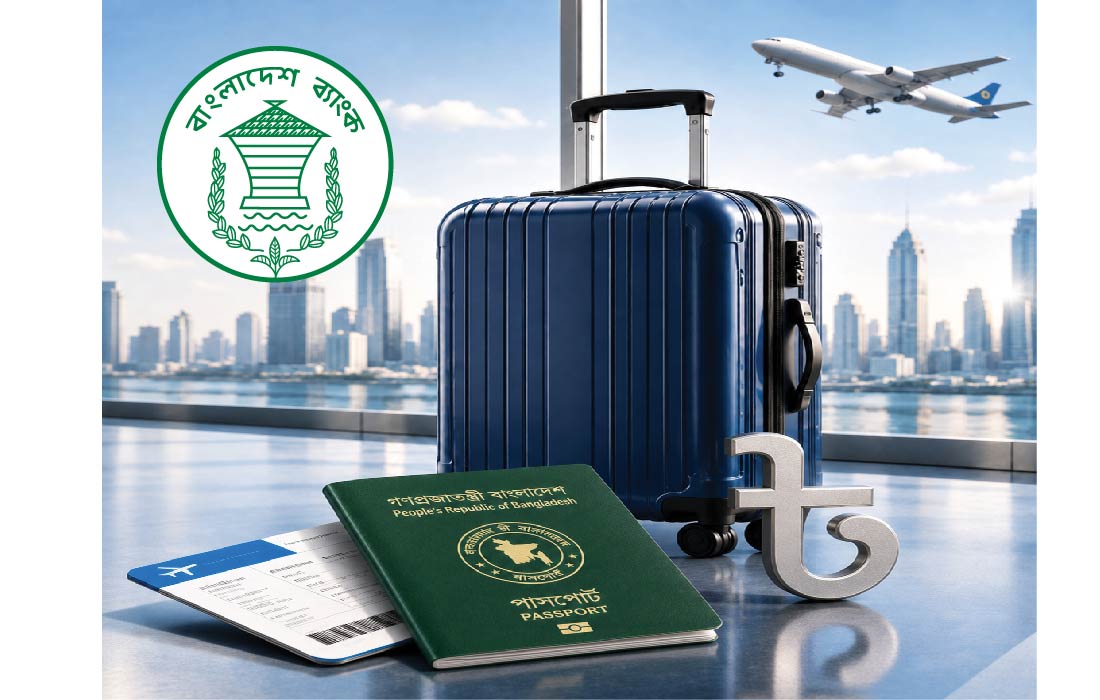
Bangladesh Bank (BB) has allowed locally licensed tour operators to collect payments in Bangladeshi Taka (BDT) for overseas tour packages, easing a long-standing foreign exchange hurdle for the travel industry.
The central bank issued the directive on August 9, 2026, allowing eligible operators to collect taka for overseas services including accommodation, transportation and other destination-related activities.
Under the new framework, Authorised Dealers (ADs) can remit foreign currency to overseas tour operators, hotels and destination management companies based on taka collected from customers at prevailing exchange rates.
Speaking with Aviation Express, Kashef Rahman, founder of ShareTrip, who was involved in developing the policy, described the move as a “great initiative” addressing years of industry “friction”.
Previously, the only legal way for operators to remit funds for non-air services such as hotels and internal tours was through specialised Foreign Currency (FC) accounts. Rahman said that although Bangladesh has around 6,000 travel agencies, fewer than five maintain active FC accounts. The difficulty often forced travellers to use their personal credit card travel quotas, which many preferred to avoid.
To use the new facility, operators must hold a valid licence, maintain membership with the Tour Operators Association of Bangladesh (TOAB) and have tie-up arrangements with overseas service providers.
A key feature is an annual foreign exchange remittance ceiling of US$3,000 per traveller for taka-funded packages. Rahman stressed that the limit is separate from the standard annual personal travel quota. A traveller’s US$12,000 endorsement therefore remains untouched.
A family of two can use up to US$6,000, roughly Tk 7 lakh, for hotels, sightseeing and other eligible services over multiple trips without reducing their personal allowance for expenses such as shopping. Rahman said this new process would be “very simple” for consumers and operators.
The operator must collect a passport copy and an “e-consent” declaration confirming that the traveller has not already used the US$3,000 annual limit through another operator during the calendar year.
Bangladesh Bank has prescribed detailed documentation to ensure the facility is used for genuine overseas travel services. Operators must maintain records against each traveller’s passport number, including invoices or contracts from overseas providers, detailed itineraries and cost breakdowns.
ADs must scrutinise the documents to verify the bona fide nature of each transaction before reporting the remittance to Bangladesh Bank within seven days.
The policy also follows tax reforms sought by industry leaders. Rahman said the National Board of Revenue (NBR) had issued a Statutory Regulatory Order removing the 20% Advance Income Tax (AIT) on these remittances, recognising that the services are provided outside Bangladesh.
The 15% VAT is now applicable only to the operator’s service charge or “margin”, rather than the total invoice amount. If an operator earns US$5 on a US$100 booking, tax is imposed on the US$5 income rather than the full US$100, Rahman said. This could make packages more affordable.
Rahman also highlighted the potential impact on Bangladesh’s international tourism standing. He said Bangladesh is among the top five traffic sources for Malaysia Airlines but often does not appear prominently in international tourism spending statistics because payments were previously routed through unofficial channels.
By bringing such transactions into formal channels, destination countries will be able to better track spending by Bangladeshi tourists. Rahman believes this could improve Bangladesh’s position in international tourism data and have a positive impact on visa processing and bilateral tourism relations.
The central bank has barred the facility from being used for unrelated fund transfers, advance remittances without confirmed bookings or capital-account transactions disguised as travel expenses.
The new instructions amend provisions introduced in May 2026 and mark a major change in the country’s overseas travel payment system. The policy is expected to reduce dependence on FC accounts, ease pressure on individual travel quotas and bring more tourism-related foreign exchange transactions into formal banking channels.

Make Comment
Login to CommentPopular News




Subscribe to News Letter
Latest News