“Biman a symbol of national dignity, we are rebuilding it”: Afroza
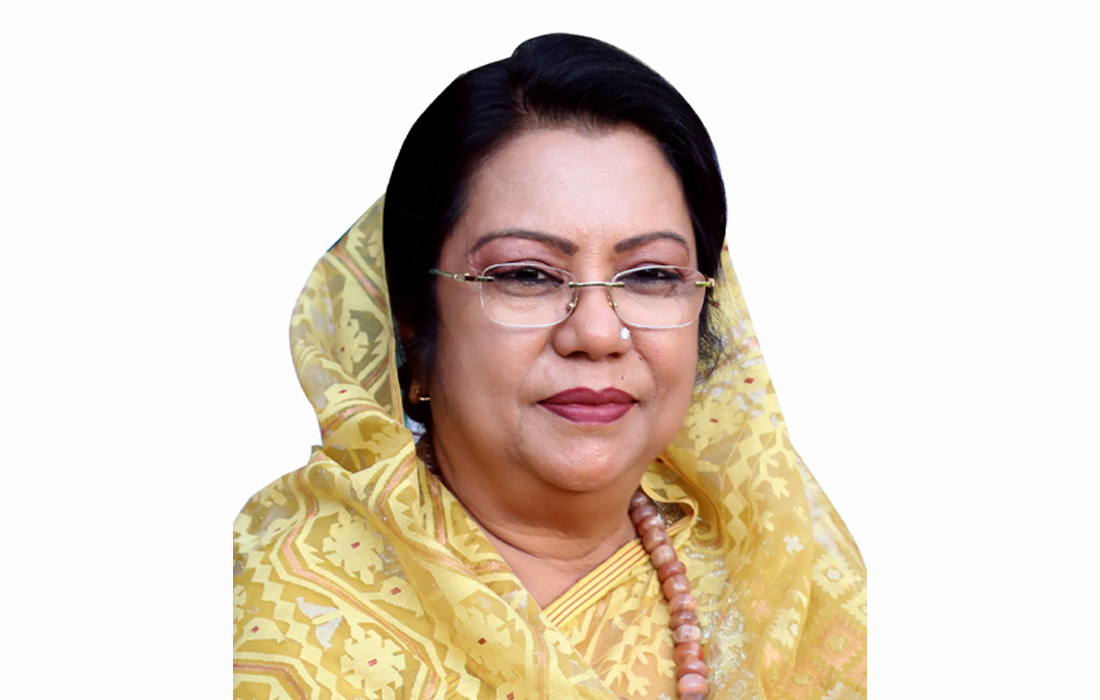
Barely months after assuming office, Civil Aviation and Tourism Minister Afroza Khanam Rita has embarked on one of the most ambitious reform agendas the sector has seen in years. From overhauling governance at Biman Bangladesh Airlines and expanding its fleet with Boeing and Airbus aircraft to preparing the long-awaited Third Terminal of Hazrat Shahjalal International Airport (HSIA) for operations, the government is seeking to reshape Bangladesh’s aviation landscape.
At the same time, the ministry is pursuing a broader vision of making Bangladesh a competitive tourism destination through global branding, simplified visa procedures, digital services and diversified tourism products, while attracting greater private investment into the sector.
In an exclusive interview with Aviation Express, Minister Afroza discussed her plans to restore public confidence in Biman, strengthen airport services, develop Bangladesh into a regional aviation hub and unlock the country’s untapped tourism potential. The interview was conducted by Tarek Alif.
What is the government’s long-term vision for Bangladesh’s aviation sector?
We want Bangladesh to emerge as a regional aviation hub connecting South Asia with Southeast Asia, East Asia and the Middle East. To achieve that goal, we are simultaneously expanding international connectivity, modernising airport infrastructure, strengthening domestic airlines and improving passenger services. Our national flag carrier will play a central role in this transformation. The government’s roadmap envisages expanding Biman’s fleet to 47 aircraft by FY2034-35, enabling the airline to serve more international destinations while supporting Bangladesh’s growing economy.
Following the Prime Minister’s directive, we are working to fully operationalise the Third Terminal by December 16, 2026. The Third Terminal will be one of the cornerstones of Bangladesh’s ambition to become a modern regional aviation hub.
You have repeatedly described Biman as a symbol of national dignity. Why?
Because Biman represents Bangladesh wherever it flies. Unfortunately, years of politicisation, weak governance and lack of accountability damaged both the airline’s reputation and operational performance. Restoring public confidence therefore requires much more than merely adding new aircraft.
Our reform strategy rests on three pillars.
The first is governance through merit-based appointments, transparency and accountability.
The second is commercial restructuring through evaluating route profitability, exploring promising destinations and strengthening commercially successful routes.
The third is service transformation through digitalisation, improved punctuality and internationally competitive passenger services.
We are determined to rebuild Biman into an airline in which Bangladeshis can once again take pride.
Is fleet expansion a major part of that strategy?
Absolutely. The government has decided to induct 24 new aircraft - 14 Boeing and 10 Airbus -creating a modern mixed fleet. In addition, initiatives have been taken to lease five aircraft to meet immediate operational requirements.
This is not simply about increasing the number of aircraft. Modern aircraft offer greater fuel efficiency, improved reliability, enhanced passenger comfort and increased operational flexibility.
What reforms are improving airport services?
A comprehensive Code of Conduct has already been introduced at the country’s three international airports, supported by regular field-level monitoring by executive magistrates.
To strengthen baggage security, we have deployed vigilance teams, introduced body-worn cameras, expanded CCTV coverage and installed a Baggage Reconciliation System.
These measures have improved baggage security and significantly reduced delivery times.
We are also investing in modern ground-handling equipment, international-standard staff training, additional manpower and technology-based operations. Coordination among immigration, customs, airlines and other airport agencies has also been strengthened to ensure faster, safer and harassment-free services for passengers.
How are you strengthening governance in aviation?
Good governance is non-negotiable.
Government procurement is being conducted through open and competitive electronic tendering under the e-GP system. We have also strengthened financial audits, project monitoring, digital tracking and performance-based evaluation to ensure the proper utilisation of public resources.
Our objective is to establish an efficient and modern aviation sector founded on integrity, professionalism, merit and accountability.
Will airlines get support for long-haul expansion?
Certainly. We view the international expansion of Bangladeshi airlines positively, provided the routes are commercially viable and operationally sustainable.
Every proposed destination is evaluated based on passenger demand, market potential, bilateral air service agreements, regulatory approvals and operational feasibility.
Destinations such as Bahrain, Malé, Jakarta, Seoul, Sydney, Kunming and New York are under consideration.
How are you making Hajj travel more affordable?
Keeping Hajj affordable remains one of our priorities. Soon after assuming office, we reduced airfare for 2026 Hajj pilgrims by Tk 12,000. For Hajj 2027, the airfare has been reduced by a further Tk 24,830, significantly lowering the overall pilgrimage cost.
We also welcome greater competition. Any qualified airline can participate in operating Hajj flights if it meets Saudi Arabian policies, bilateral arrangements and the necessary technical and safety requirements.
How will Bangladesh become a global tourism destination?
Our approach rests on three priorities - global branding, easier travel and a better visitor experience.
We are promoting Bangladesh through international tourism fairs, destination marketing, digital campaigns, documentaries and collaborations with global content creators.
Alongside traditional promotional materials such as tourism maps, handbooks, event calendars and brand books, we are placing greater emphasis on social media, short videos and digital storytelling to showcase Bangladesh’s natural beauty, cultural heritage and diversity.
At the same time, we are modernising visa procedures. Visa Policy-2026 provides for a gradual transition to e-visas, while proposals have been made to introduce Medical Tourism visas, Medical Attendant visas and Religious Tourist visas.
Equally important is improving tourism infrastructure and service standards so that visitors can enjoy a safe, comfortable and memorable experience.
How are you attracting tourism investment?
It is essential. The government is creating an investment-friendly environment through policy reforms, tax incentives, easier financing and one-stop services.
Public-Private Partnership remains one of our key tools for developing international-standard tourism infrastructure.
Projects are already moving forward, including the development of modern tourism facilities at the Hotel Shaibal compound in Cox’s Bazar.
We are also working with the Bangladesh Investment Development Authority to attract foreign investment for transforming the Bangladesh Tourism Corporation’s property near Sylhet Airport into a modern tourism centre. A demand assessment and marketing feasibility study has already been completed by the Institute of Business Administration.
Which tourism segments are your priority?
Bangladesh has enormous potential beyond conventional leisure tourism.
Alongside medical and religious tourism, we are focusing on eco-tourism, community-based tourism, sports tourism, water tourism, culinary tourism and cultural heritage tourism.
Each segment has the potential to attract different categories of international travellers while generating employment and income for local communities.
Our objective is to diversify Bangladesh’s tourism portfolio instead of depending on only a few destinations.
Finally, what changes can people expect next year?
I believe people will notice tangible improvements in both sectors. In aviation, they will see better passenger services, expanded digital facilities, continued improvements in airport operations and visible progress towards launching the Third Terminal.
In tourism, they will witness stronger international branding, easier visa procedures, new tourism products, better infrastructure and greater domestic and foreign investment.
Ultimately, our mission is simple - to provide fast, safe and internationally competitive services while positioning Bangladesh as both an attractive tourism destination and a respected regional aviation hub.
Biman, as our national flag carrier, will remain at the heart of that journey.

Make Comment
Login to CommentPopular News




Subscribe to News Letter
Latest News