Boeing-built rocket core stage powers NASA’s first crewed Artemis II lunar mission
 Desk Report
| Published: Thursday, April 02, 2026
Desk Report
| Published: Thursday, April 02, 2026
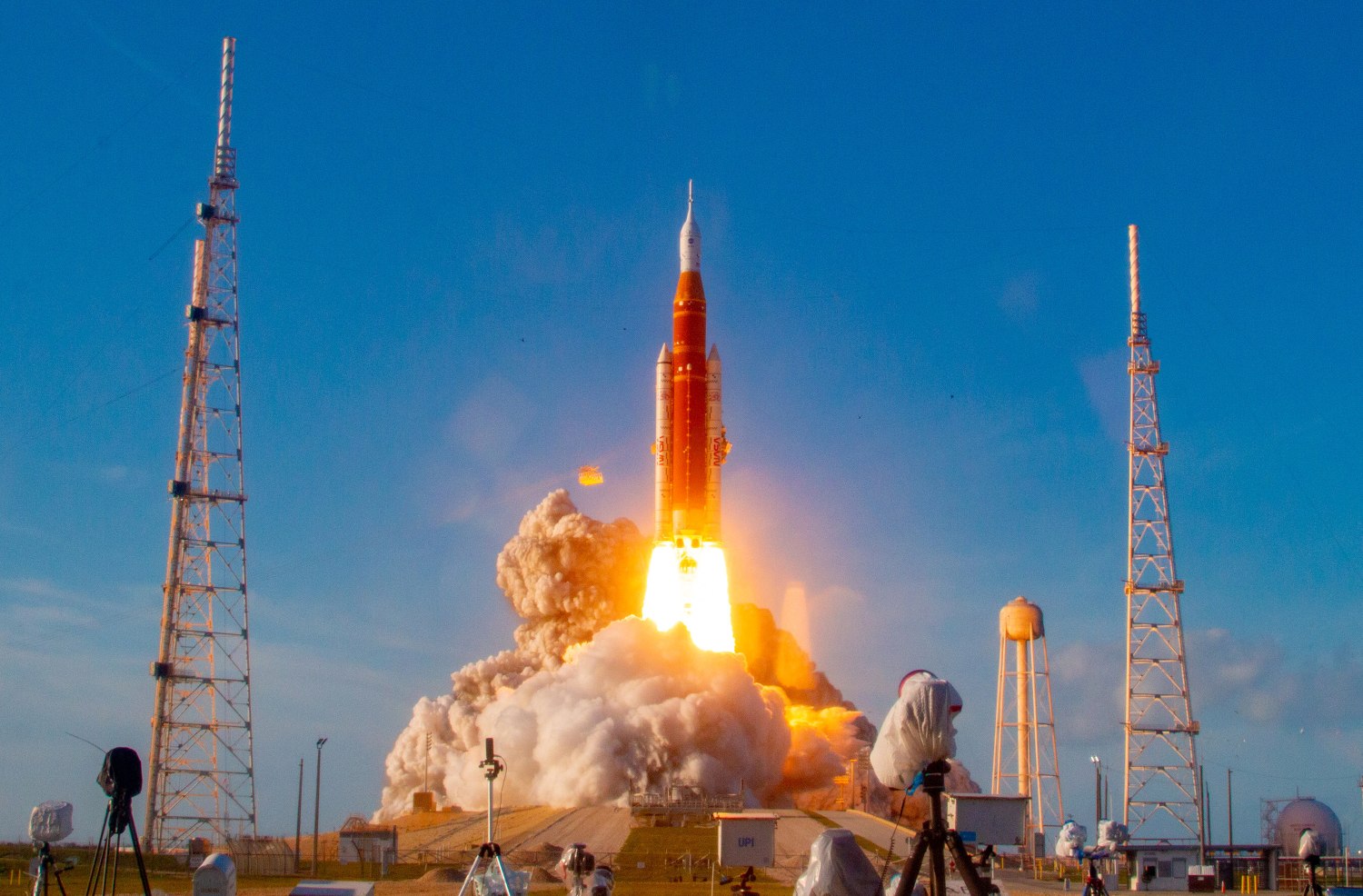
Artemis II launched from Kennedy Space Center on April 1, 2026. Photo: Boeing
Boeing said on Wednesday that the core stage it built for NASA’s Artemis II successfully powered the rocket’s launch, marking a key milestone in the United States’ return to crewed lunar exploration.
In a press release, Boeing said NASA’s Space Launch System rocket lifted off from Kennedy Space Center in Florida at 6:35 p.m. ET, with the core stage completing its primary role about eight and a half minutes into flight before separating from the upper stage. The separation enabled the Orion spacecraft, named Integrity, to continue its journey carrying astronauts on a planned 10-day mission around the Moon.
The Artemis II crew includes NASA astronauts Reid Wiseman, Victor Glover and Christina Koch, along with Canadian Space Agency astronaut Jeremy Hansen. The mission is intended to pave the way for future lunar landings under NASA’s Artemis program.
Boeing highlighted that the core stage performed a series of critical operations during launch, including fueling, engine ignition, thrust vector control and safe separation. The stage, standing about 65 meters tall, is equipped with liquid oxygen and liquid hydrogen tanks and powered by four RS-25 engines generating approximately 2.2 million pounds of thrust.
“We’re honored to support NASA in restoring a capability vital to our nation’s interests and future,” said Steve Parker, president and chief executive officer of Boeing Defense, Space & Security, emphasizing the company’s role in advancing deep space exploration.
John Shannon, vice president of Boeing’s Exploration Systems, said the rocket performed “exactly as intended,” adding that safety and quality had been prioritized throughout development.
The core stage is manufactured at NASA’s Michoud Assembly Facility in New Orleans, with contributions from suppliers across more than 38 U.S. states. Boeing said additional core stages for upcoming Artemis III to V missions are already in production.
The Artemis II mission represents the first crewed lunar flight since the Apollo era and is seen as a critical step toward establishing a sustained human presence on the Moon. Industry analysts view the successful performance of the Space Launch System’s core stage as an important validation of the rocket’s design and a boost to confidence in future missions.
Boeing said it will continue to support NASA’s Artemis program as preparations advance for subsequent missions, including planned lunar landings and expanded deep space exploration efforts.
Source: Press Release

Make Comment
Login to CommentPopular News





Subscribe to News Letter
Latest News