Govt targets cutting migration cost to Tk 300,000: Shama
 Senior Reporter
| Published: Tuesday, August 11, 2026
Senior Reporter
| Published: Tuesday, August 11, 2026
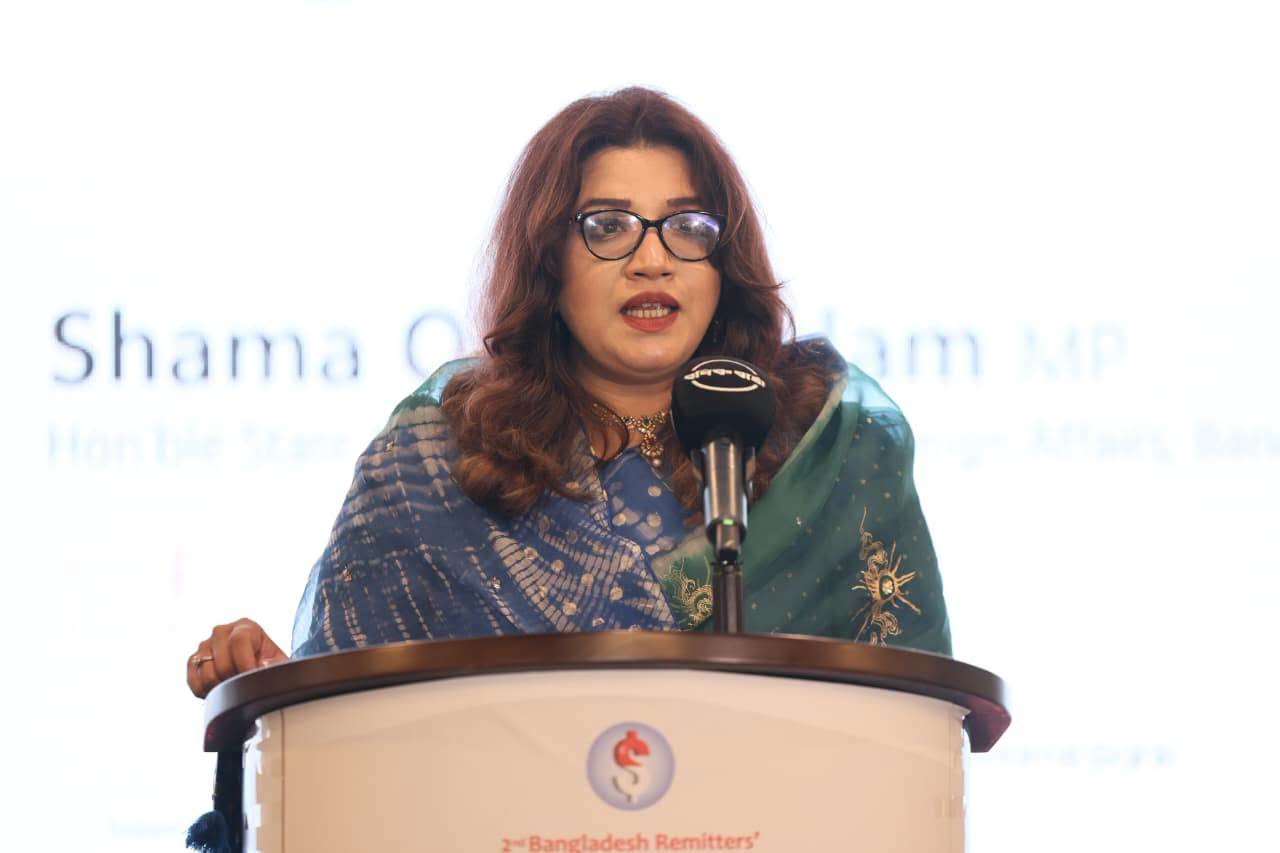
Photo: Ministry
State Minister for Foreign Affairs Shama Obaed Islam today said the government is working to reduce overseas migration costs to a maximum of Tk 300,000 to protect aspiring migrant workers from excessive recruitment fees.
She said the initiative, taken after the government assumed office, aims to curb current migration expenses, which often range between Tk 1 million and Tk 1.4 million due to syndicates and unscrupulous intermediaries.
Shama made the remarks while addressing the “Bangladesh Remittance Awards 2026” in Singapore as chief guest, according to a Foreign Ministry press release issued here today.
The event was jointly organised by the Bangla daily Bonik Barta and Singapore’s Thakral Group, recognising expatriate Bangladeshis for their contribution through remittances.
Expressing gratitude to expatriates, she called them the “pride and strength” of Bangladesh, noting that their earnings improve family livelihoods and strengthen the national economy.
She said that around 150,000 Bangladeshis currently work in various sectors in Singapore.
Highlighting remittance inflows, Shama said Bangladesh received about US$45 billion in the 2024-25 fiscal year, including US$475.03 million from Singapore.
She said the government, under the leadership of Prime Minister Tarique Rahman, is pursuing the “Bangladesh First” policy to create new investment and employment opportunities.
The state minister said a dedicated “Migration Wing” has been established at the Ministry of Foreign Affairs for the first time to provide services to migrant workers and ensure quick resolution of their problems.
The wing operates through a joint working group with the Ministry of Expatriates’ Welfare and Overseas Employment.
She said Bangladesh and Singapore are expanding cooperation in manpower and employment, with ongoing discussions on skills development, re-employment, inter-company transfers, and fair working conditions.
Urging expatriates in Singapore, Shama called for sending remittances through legal banking channels instead of hundi, respecting local laws and work culture, and using social media responsibly.
She also advised them to avoid extremist or hate-based content, uphold communal harmony, and enhance their technical, technological, and language skills.
She thanked Singaporean diplomats and officials of the Ministry of Foreign Affairs and Ministry of Manpower for their support in assisting Bangladeshi workers affected by unpaid wages and job losses.
The minister said the government is working to build a transparent, corruption-free, and investment-friendly environment with one-stop services, urging expatriates to invest in Bangladesh rather than only send remittances.
She said such investment could help create jobs for the country’s large youth population.
At the event, 15 outstanding Bangladeshi expatriate “remittance warriors” in Singapore were honoured.
In addition, four organisations, two Commercially Important Persons (CIPs), and three leading exchange houses operating under Bangladesh-based banks in Singapore received special recognition.
The state minister handed over the awards to the recipients.

Make Comment
Login to CommentPopular News





Subscribe to News Letter
Latest News