NASA advances quiet supersonic ambitions as X-59 expands flight tests
 Desk Report
| Published: Sunday, May 03, 2026
Desk Report
| Published: Sunday, May 03, 2026
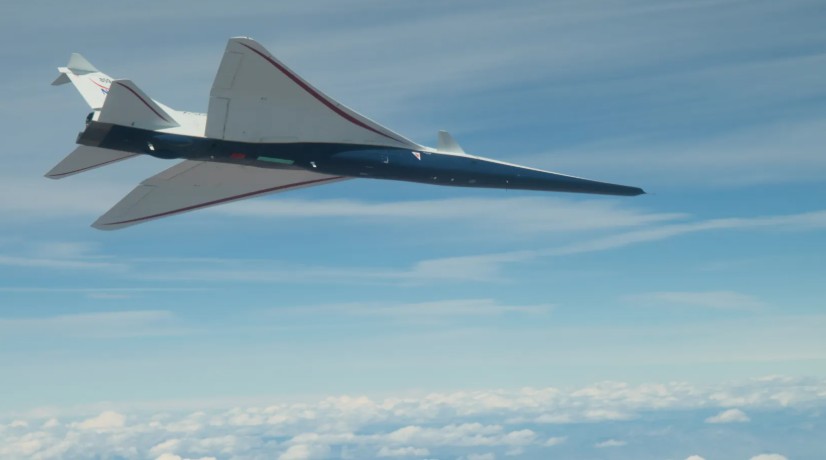
Photo: NASA
NASA said on April 30 that its experimental X-59 jet is progressing through early flight trials, performing a series of maneuvers over California’s Mojave Desert to assess stability, control, and aerodynamic performance as part of efforts to enable quieter supersonic travel over land.
The aircraft, central to NASA’s Quesst mission, has been undergoing “envelope expansion” testing—a critical phase in which engineers gradually push the jet to higher speeds and altitudes while collecting data on structural loads and flight dynamics.
During recent test flights, pilots conducted a range of maneuvers designed to evaluate how the aircraft behaves under different conditions. These included rollercoaster-style climbs and descents to study pitch response, bank-to-bank rolls to assess lateral control, and flutter excitation tests that deliberately introduce vibrations to ensure structural safety margins.
NASA said additional tests—such as wings-level pitch-down movements and controlled landing gear deployment—are helping engineers better understand how the aircraft responds to changes in drag, airflow, and stability during real flight scenarios.
The X-59 is designed to reduce the disruptive sonic boom associated with supersonic flight to a quieter “thump,” a key technological goal that could pave the way for lifting long-standing restrictions on overland supersonic travel.
As part of the Quesst mission, NASA plans to fly the aircraft over selected communities in the United States to gather public feedback on the perceived noise levels. The data will be shared with regulators in the U.S. and internationally to inform potential updates to aviation rules governing supersonic operations.
The agency said insights from the ongoing flight tests will guide future aircraft designs and support industry efforts to develop a new generation of commercial supersonic jets capable of operating more widely.
If successful, the programme could significantly shorten travel times on long-haul routes, though regulatory approval and commercial adoption remain dependent on both technical validation and public acceptance.
NASA indicated that further testing phases will continue in the coming months as engineers refine performance data and prepare for community overflight studies—a key step toward redefining the future of high-speed air travel.
Source: NASA

Make Comment
Login to CommentPopular News





Subscribe to News Letter
Latest News