What are the benefits of flying on a widebody over a narrowbody?
 Desk Report
| Published: Saturday, February 07, 2026
Desk Report
| Published: Saturday, February 07, 2026
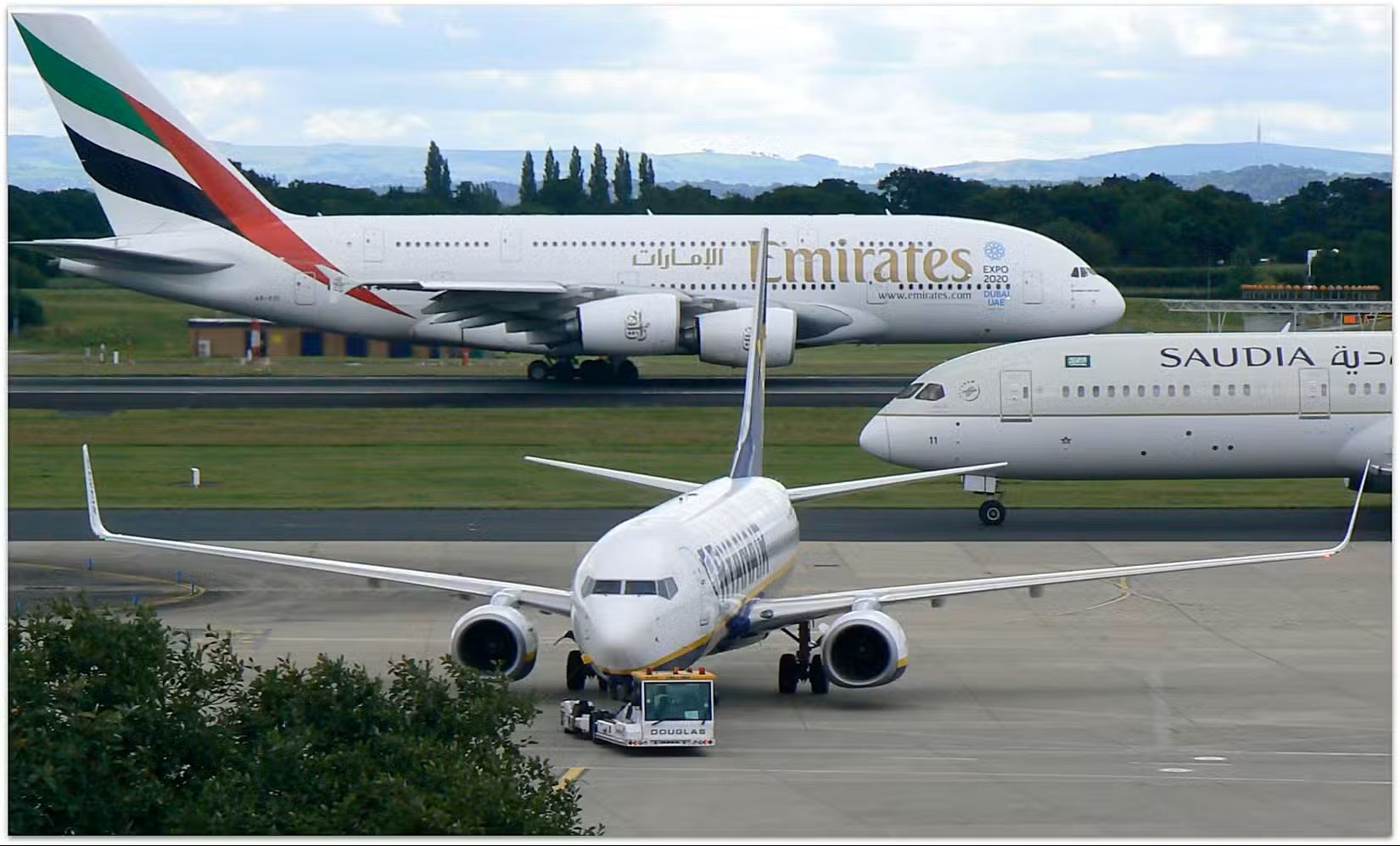
Photo: Wikimedia Commons
Narrowbody aircraft have recently gained new capabilities, with jets like the Boeing 737 MAX and Airbus A321neos, especially the A321XLR, overlapping with widebody aircraft in terms of range. As a result, passengers wanting to fly medium to long-haul often choose between widebody and narrowbody aircraft when selecting their flights.
Seasoned fliers often prefer to fly on widebody aircraft where possible. More space is available, yielding better premium products, and the jets can fly further afield. Cabin crew also often prefer working on widebody aircraft where possible. However, widebody aircraft suffer from higher emissions per passenger compared to narrowbody jets. Discover this, and more, below.
What Are The Key Differences?
At its most basic level, a narrow-body aircraft has one aisle between the seats, whereas wide-body aircraft have two or more. That makes narrowbody jets narrower, with a fuselage diameter of 9 feet, 10 inches to 13 feet, and 1 inch (3 to 4 meters) compared with 16 feet, 5 inches to 19 feet, and 8 inches (5 to 6 meters) of widebody aircraft. Narrowbody jets have the longest history and make up the majority of passenger aircraft. The most popular families are Boeing's 737 and Airbus's A320s. Other manufacturers like Embraer have also made significant contributions to narrow-body aircraft. These jets have become the most popular because they fill a huge market for domestic and short-haul flying, which has only grown as narrow-body jets' capabilities have expanded to push the boundaries of medium-haul.
Widebody aircraft are far larger and more powerful. The most famous is Boeing's 747, often known as the Queen of the Skies. Airbus's equivalent, the massive Airbus A380, has also become iconic. These jumbos are some of the world's most recognizable and can carry far in excess of 400 passengers.
The industry has made clear moves away from huge quadjets. However, it is undeniable that widebody aircraft will persist. Jets like the A350 and 777X combine widebody capacity with twinjets' efficiency, resulting in reduced emissions and operating costs.
How Does Cabin Crew Service Differ?
Narrowbody aircraft have far fewer passengers, but it is wrong to assume that they will provide passengers with better service. With a single aisle, the cabin crew can only operate a single cabin service cart. With a maximum configuration of 3-3, cabin crew must deal with up to six passengers at a time. Their job is made even harder by the limited headroom available.
Multiple aisles enable the simultaneous execution of multiple cabin services, facilitated by the increased headroom. Cabin crew only has to serve five passengers at a time, even in layouts like 3-4-3. As a result, you can expect service that is more efficient, less time-consuming, and more attentive. This also means the aisle will be blocked by cabin crew for a shorter duration of the flight, which will be less disruptive if you need the toilet. Having more aisles per seat will also make it quicker to board a widebody aircraft than a narrowbody jet.
These attributes are particularly important for widebody aircraft, as flight times are usually substantially longer. Typical narrowbody operations are between one and four hours, stretching to seven hours for the longest routes. Meanwhile, widebody aircraft routinely fly for ten hours and occasionally stretch to around 18 hours without stopping. Cabin crew need the ability to properly look after their customers for the flight to pass smoothly, and that gets even more important when flight time approaches and exceeds ten hours.
Spacious Premium Cabins
There is far more space available on widebody aircraft, and many carriers take this opportunity to develop exceptional premium products, usually with lie-flat beds, an essential for long-haul aviation. Narrowbody jets are absent from Skytrax's World's Best Business Class Airlines 2025 awards. At the top of these standings is Qatar Airways' Q-suite, a product rolled out across much of the carrier's Airbus A350s and Boeing 777-300ERs. Qatar Airways has been particularly creative in this space, creating "the quad." Whereas business class flying can be isolating, Qatar uses this configuration to make it possible for four passengers to travel, work, and socialize together, while movable dividers create customizable privacy.
The additional space can also give passengers in economy class a little more room. For example, in economy class, American Airlines offers passengers 30 inches (76 cm) of seat pitch aboard its Boeing 737-800, compared with 31 inches (78.7 cm) for the carrier's Boeing 787-9.
Travel Further With Widebody Aircraft
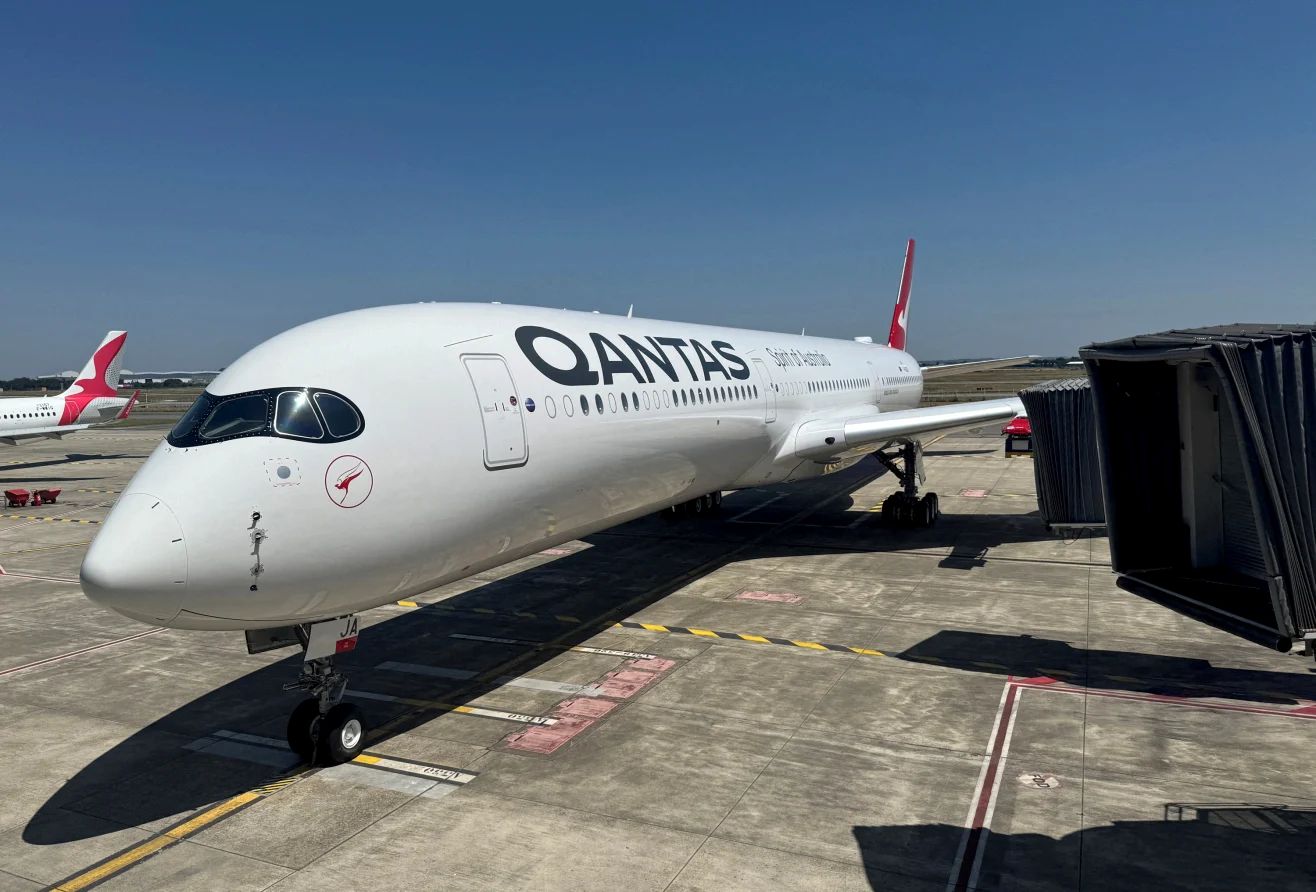
You will find a wider variety of destinations aboard widebody aircraft simply because they can fly further. This perk is clearest with the A350, which has a mind-bogglingly vast range. The A350-900ULR, flown exclusively by Singapore Airlines, has the longest range of any commercial aircraft at 9,700 nautical miles (18,000 km).
The longest route flown by this jet, and the longest in commercial aviation, is the 9,487-mile (15,268-kilometer) route from New York to Singapore. Block times for this route can exceed 18 hours. Singapore Airlines only offers business and premium economy on this service, helping the carrier to reduce weight and offer an acceptable level of comfort for such a long route. Singapore also flies its A350s to destinations on the West Coast like Los Angeles and San Francisco, although these routes are a few hours shorter.
Other airlines use the A350 for ridiculously long routes. China Southern Airlines flies its A350s nonstop from Shenzhen (SZX) to Mexico City (MEX), which averages 8,778 miles (14,127 kilometers). This route is only flown direct on the outbound leg, as Mexico City's airport is at a high altitude, which, combined with the warm weather, means aircraft cannot carry as much fuel. Another impressively long A350 route is Qatar Airways' Doha-Los Angeles service. It averages 8,301 miles (13,360 kilometers) and takes over 15 hours. The carrier typically operates the route with its stretched A350-1000s.
Cabin Crew Also Prefer Widebody For Long-Haul
Cabin crew often prefer working on widebody aircraft. A key reason is rest, which is far easier on a widebody jet. These aircraft usually have dedicated rest areas that are quiet and have beds available. Patricia Green, an experienced flight attendant, explains how the feature helps: "Widebody aircraft are often on long-haul and high-density routes, so there will be a crew rest area to ensure the crew gets adequate rest during a long work day/night."
Emissions: Where Widebody Aircraft Suffer
This article has focused on the ways in which you can have a better experience by flying on a widebody aircraft, but there are undeniable downsides. The most obvious is that widebody aircraft have significantly higher emissions per passenger. According to Iba.aero data, a transatlantic Airbus A321LR flight produces 57–72 grams of CO₂ emissions per passenger per kilometer. This rises to 74-105 grams of CO₂ for transatlantic Airbus A350-1000, Boeing 787-9, and Boeing 777-300ER flights.
There are several reasons that widebody aircraft produce significantly higher emissions. These jets are larger and have a much higher empty weight. They also have larger engines that burn more fuel, requiring the aircraft to carry more fuel. Widebody aircraft also have a larger profile, which produces more drag and therefore requires additional fuel and power to punch through the air.
However, this is not a complete account. Widebody aircraft have more cargo space than is captured in per-passenger emissions data. Furthermore, it's important to note that the figures presented at the beginning of this section pertain to cutting-edge aircraft. Meanwhile, a modern widebody will usually be more efficient than an outdated narrowbody jet.
Source: Simple Flying

Make Comment
Login to CommentPopular News




Subscribe to News Letter
Latest News