99% Empty Beds
Tk 200 a Night: A Shelter Migrant Workers Miss
 Senior Reporter
| Published: Monday, February 02, 2026
Senior Reporter
| Published: Monday, February 02, 2026
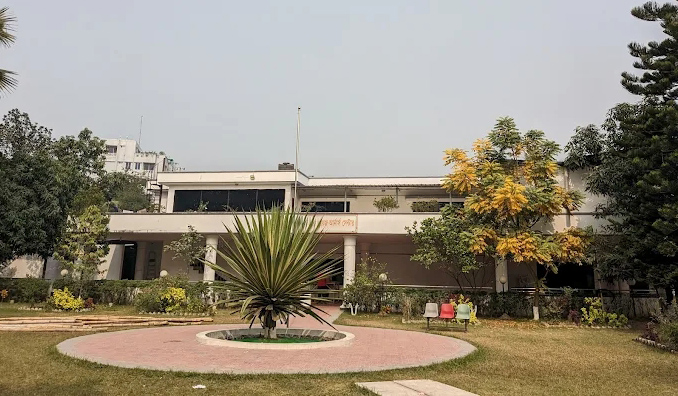
Photo: Collected
By Musa Ahmed
On the fringes of Dhaka’s aviation ecosystem, where long queues, missed flights and sleepless nights are routine for migrant workers, stands a little-known facility offering what many travellers need most: rest, safety and certainty.
Just six kilometres from Hazrat Shahjalal International Airport, migrant workers can stay overnight for only Tk 200 at the Wage Earners’ Centre, a government-built facility designed to ease one of the most persistent pain points in Bangladesh’s outbound labour journey: temporary accommodation before departure or after return. Yet despite its proximity to the country’s busiest airport and its minimal cost, the centre remains largely underused.
A solution built, but largely empty
Located in Boruar Lanjanipara of Khilkhet, the Wage Earners’ Centre was built at a cost of nearly Tk 300 crore in a semi-rural, green setting near the airport. With manicured grounds, a walled compound and dormitory-style rooms, it resembles a modest retreat more than a transit shelter.
Operated by the Wage Earners’ Welfare Board, the centre provides short-term accommodation for outbound and returning migrant workers, the backbone of Bangladesh’s remittance economy. For a one-time registration fee of Tk 100 and Tk 200 per night, workers can stay for up to two nights.
Facilities include free transport to and from the airport, lockers for valuables, internet access, uninterrupted power supply, basic medical services and counselling. Despite this, officials say nearly all beds remain vacant on most nights.
“The problem is not the service. The problem is awareness,” said a board official. “Most workers simply don’t know this place exists.”
The cost of not knowing
For migrant workers, Dhaka is often the most stressful leg of an overseas journey. Those arriving from districts outside the capital typically come a day or two early to avoid missing flights amid chronic traffic congestion. Without affordable accommodation, many end up sleeping on benches inside airport terminals or paying high rates at nearby hotels.
Mostak Hossain, a Saudi expatriate from Jamalpur, arrived nearly 20 hours before his scheduled departure to avoid traffic delays. “Hotels near the airport are too expensive,” he said. “So I just sat here.”
When told about the Wage Earners’ Centre, he was visibly surprised. “I didn’t know anything about it,” he said.
Dubai-based migrant worker Badrul Haider echoed the frustration. “We are expected to send remittances, but basic facilities are missing,” he said. “If this centre exists, why don’t people know about it?”
Infrastructure meets awareness gaps
The centre currently accommodates 40 male and 10 female workers, with clean rooms housing three to four beds each. Yet during a recent visit, no workers were staying overnight. The canteen was closed, and the compound remained quiet.
Caretaker Sahari Atikur Rahman said usage declined sharply after road repair work began in front of the facility about a year ago.
“Initially, 15 to 20 workers used the centre every day,” he said. “Now it’s down to one or two.”
From an aviation standpoint, the underuse of such a facility carries wider implications. Airport authorities acknowledge that congestion on access roads—exacerbated by infrastructure projects and seasonal rain—is a major cause of missed flights. For migrant workers, a missed departure often means rescheduling fees, financial loss and extended hardship.
Officials believe wider use of the centre could significantly reduce missed flights by allowing workers to stay close to the airport before departure.
Proof of value—when known
For Majharul Alam of Chandina, Cumilla, the centre proved its worth. After missing a flight earlier this year, he stayed at the facility before catching another departure days later.
“I learned about it from someone I knew,” he said. “The environment is good. The service is satisfactory.”
His experience highlights what the centre can offer—when information reaches those who need it.

Make Comment
Login to CommentPopular News





Subscribe to News Letter
Latest News